





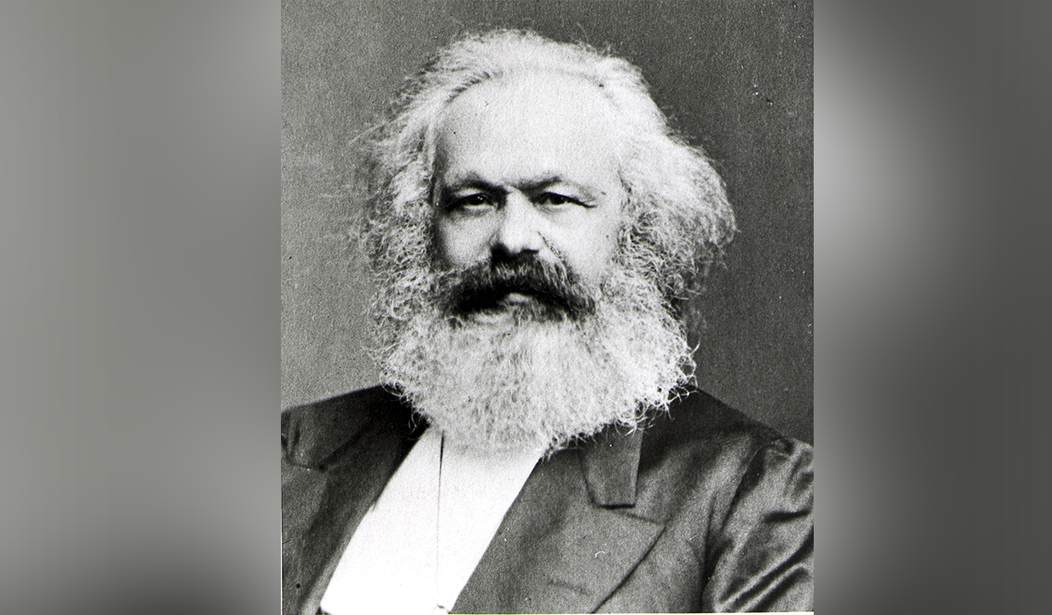
Many know him. There are many ways to learn about Karl Marx—through "The Communist Manifesto," through "Das Kapital," through the revolutions waged in his name, or through the biographies that attempt to reconcile the contradictions of the man. As a biographer who has spent the last five years immersed in his papers, correspondence, journalism, and influence, I found Marx less a straight line than a labyrinth. Was he the affectionate “Moor” who played Santa Claus to his daughters? The devoted husband to Jenny? Or the quarrelsome exile who alienated friends, drank too much, and sacrificed nearly every stable relationship to ideology?
Like many who attempt to pin him down, I encountered a conundrum.
And then, unexpectedly, I encountered a chessboard.
Marx played chess later in life, particularly during his London exile. There is one recorded game attributed to him—played in the 1860s against a man named Meyer. The moves survive. The game is sharp, aggressive, and revealing. As someone who has played enough chess to understand that openings betray temperament, I studied it closely. My son trained for a time under Dean Ippolito, an international master, and I had watched enough of their sessions to appreciate how much a master can read in the first ten moves of a game.
So I printed the moves of Marx’s recorded game. I removed his name from the top.
And I met Dean for dinner.
At one point over dinner, I slid the sheet across the table and said, “Without knowing who played this, tell me what kind of person this is.”
Dean studied the score quietly.
His answer was immediate and clinical: this is someone willing to sacrifice almost anything early in order to seize initiative later. And once committed, someone who cannot let up without collapsing. If he hesitates, he dies.
I told him the player was Karl Marx.
The opening was the King’s Gambit Accepted.
For the uninitiated, the King’s Gambit begins with a deliberate sacrifice. White offers a pawn on the second move to accelerate development and attack the opposing king. If accepted, White may fall significantly behind in material early. The position becomes volatile. The player must maintain relentless pressure. There is no half-measure in a gambit. You either justify the sacrifice—or you perish.
Two common misunderstandings about Marx dominate contemporary debate. The first is dismissal: Marx as a failed radical dreamer whose ideas were later hijacked by tyrants. The second is sanitization: Marx as a pure economic critic whose humane vision was tragically distorted by Lenin or Stalin.
The chessboard suggests something more unsettling.
The King’s Gambit is not reckless chaos. It is calculated extremity. You knowingly destabilize the position in order to reorder it. You accept devastation in the short term for structural dominance in the long term. Marx’s intellectual project follows that same pattern. He was willing to destabilize religion, property, nationhood, even the family structure, because he believed history itself justified the sacrifice.
In his framework, the old world had to be exposed—like a king dragged into the open.
Defenders of Marx are correct to insist that he did not design the gulag or the famine. The 20th century cannot be reduced to a single 19th-century philosopher. Yet ideas carry internal logic. When history is framed as perpetual class war, when morality is treated as economic superstructure, and when revolutionary transformation is described as inevitable, you are not playing a slow positional game. You are advancing toward collision.
The Cold War, the purges, the forced collectivizations—these were not accidents of temperament. They were, in part, endgames played from an opening that normalized sacrifice in the name of historical necessity.
In chess, the sacrificed pawn is wood.
In politics, it is flesh.
Here is the more uncomfortable truth: Marx won his recorded game. From an inferior material position, he applied unrelenting pressure and prevailed. He never eased off. That quality—discipline after risk—is what made his thought endure. He was not simply a theorist scribbling in the British Museum. He was an ideologue with an attacker’s temperament. Once he committed, he pressed forward.
And that is perhaps the synthesis we miss.
Marx was neither cartoon villain nor harmless economist. He was a revolutionary mind animated by a willingness to sacrifice stability for vision. That intensity is powerful. In measured hands, it can produce reform. In unmoored hands, it can rationalize ruin.
The King’s Gambit tempts with initiative. It flatters with boldness. It convinces you that audacity itself is virtue. But it always carries cost. You must bleed early. And if your calculation is flawed—if your moral compass is abstracted into ideology—the board will not forgive you.
Marx’s single recorded game is not a biography. But it is a snapshot of temperament. A man willing to wager the opening for the endgame. A thinker convinced that destruction could midwife history.
The lesson is not merely about Marx. It is about any ideology that treats sacrifice as strategy and upheaval as progress. The question is not whether gambits can win. They can.
The question is who pays for them—and who decides they are worth the cost.
Because in the real world, the King’s Gambit is never played on a board. It is played on nations, on families, on entire classes of people who are told—explicitly or implicitly—that their loss is necessary for a future they will never live to see.
That is the part Marx’s defenders still struggle to confront. The violence was not incidental. The sacrifice was not a corruption of the idea. It was always there, embedded in the logic of the move itself.
You do not get to promise transformation at that scale without accepting destruction at that scale.
And that is why Marx still matters.
Not because his system worked. It didn’t. Not because his predictions came true. Many didn’t. But because the temptation he represents—the belief that you can break the world in order to save it—remains one of the most dangerous ideas ever put into motion.
The King’s Gambit flatters the player. It tells him he is bold, visionary, ahead of his time. It hides the fact that he is also gambling with everything on the board.
Marx made that move.
The 20th century paid for it.
The only question now is whether we recognize the gambit when it is offered again—or whether we accept it, one more time, convinced that this time, the sacrifice will be worth it.
Editor’s Note: Do you enjoy Townhall’s conservative reporting that takes on the radical Left and woke media? Support our work so that we can continue to bring you the truth.
Join Townhall VIP and use promo code FIGHT to receive 60% off your membership.



Join the Conversation
VIP members get the ability to comment on articles.