





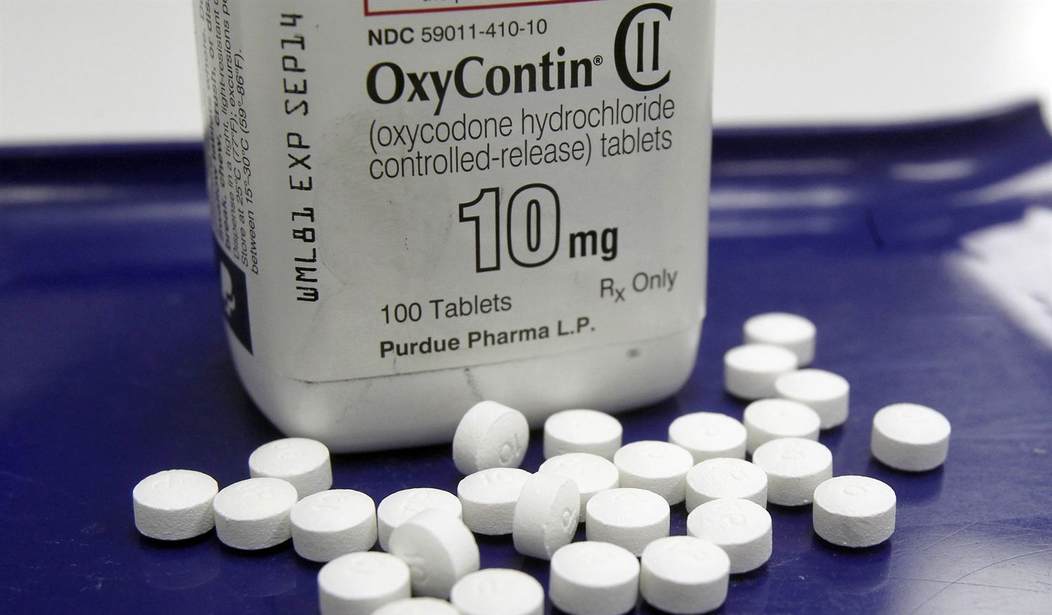
If any lobby in Washington can be said to lead a charmed life, it is the pharmaceutical industry. Having co-opted everyone from Cory Booker to frequent Trump ally Chris Collins, the industry enjoys wide bipartisan support, despite frequently slicing away at every conceivable protection Americans can use against being priced into ruin. And, of course, then proceeding to do precisely that once those protections are gone.
Again, this is an industry that most of Washington is afraid to cross, even though they have done such politically nigh-suicidal things as bleeding cancer patients dry for their money, testing opioids on children in order to maintain their patents, and then turning round and creating the opioid crisis by bribing doctors to prescribe the drugs. This is the sort of behavior that even Bernie Madoff and Martin Shkreli would shrink from if someone suggested it to them. Yet so bulletproof has Pharma been in DC that they kept right on doing it, thinking there would never be a price to pay.
What’s worse, they even tried to co-opt the Trump administration. Thanks to the ministrations of Vice President Mike Pence, numerous Pharma cronies were installed in influential places throughout the Trump administration early on. And so, despite the fact that President Trump ran on an anti-Pharma platform and accused the industry of “getting away with murder,” somehow Trump’s administration found itself doing things like gutting the voluntary 340b drug pricing program, which was one of the few programs capable of forcing the industry to behave in a public spirited fashion in exchange for billions of Medicare and Medicaid tax dollars. Only when Health and Human Services (HHS) Secretary Alex Azar, and Food and Drug Administration head Scott Gottlieb, began to get their sea legs, did the Trump administration even begin to right the ship from a regulatory perspective. Thankfully, Azar and Gottlieb have both expressed impatience with Pharma in the meantime.
But even if the administration had started to hold their feet to the fire, Pharma still had Congress mostly buttoned up, being able to argue to just enough Republicans that their ability to effortlessly dominate the drug market was not the result of horrific monopolistic power and regulatory capture, but was instead just the good old fashioned American free market. But while this move insulated them in the most recent Congress, this transparently disingenuous attempt to exploit an ideological blind spot also gave Democrats a winning issue to run on in 2018: health care costs in general, and drug prices in particular.
The result is that the new Congress looks poised to go after Pharma extremely fiercely. In fact, so stiff are their spines on the subject that even the current Congress has begun standing up to the drug companies. Very recently, Congress raised the amount of money that Pharma must pay for prescription drugs covered under the Medicare Part D drug pricing program to 70 percent -- a move that effectively cost the industry billions. Naturally, Pharma mounted a lobbying campaign to try to change it back. At any other time, Congress would have listened, and acted accordingly.
Not now. In a move that the Washington Examiner describes as “foreshadow[ing] a treacherous 2019,” Congress politely told Pharma to go pound sand and refused to include their language ending the 70 percent change in the upcoming spending bill. If this kind of dogged refusal to let Pharma complain lasts into the new year, and there’s every indicator that it will, we might see some reforms that, until now, had all the bipartisan consensus behind them, but none of the political will: reforms like the CREATES Act, which cracks down on methods by which Pharma tries to obstruct generic drugmakers from competing with them, and thus from lowering the prices for their drugs. What’s more, unlike more politically fraught industries like tech, Pharma is the one sector of the economy that both President Trump and soon-to-be Speaker Pelosi want to cut down to size, and neither politician is known for their restraint in pursuing their political enemies.
Yes, it’s a catchphrase in Washington that Pharma always wins. But at some point, politicians end up saying “no mas.” And judging by the midterm election results, Americans aren’t tired of winning, but they’re certainly tired of Pharma winning.


Join the Conversation
VIP members get the ability to comment on articles.