





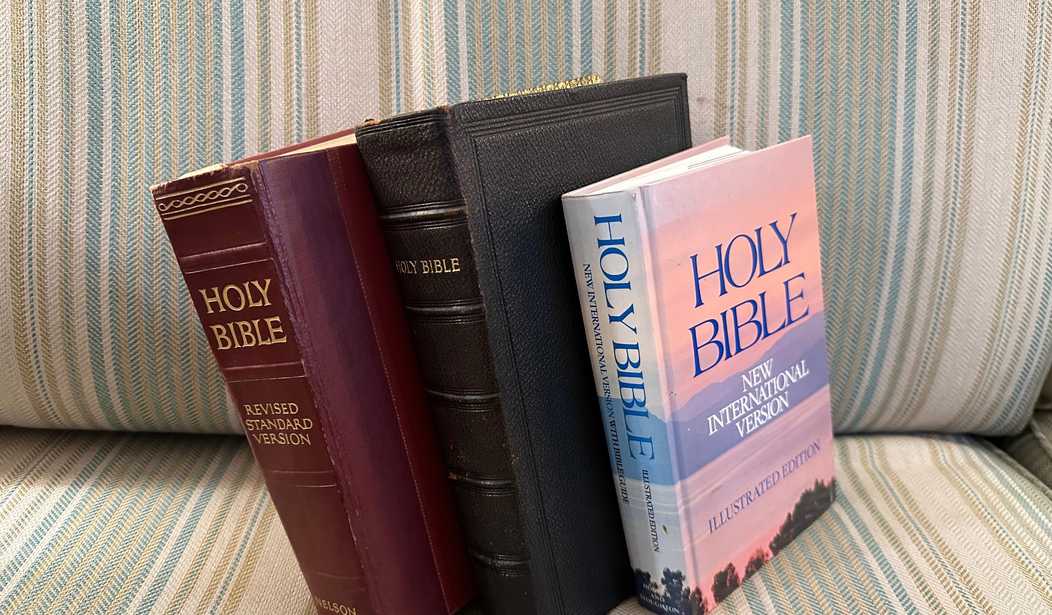
Author's Note: All previous volumes of this series are available here. The first 56 volumes are compiled in the book "Bible Study For Those Who Don't Read The Bible." "Part Two," featuring volumes 57-113, was published in December 2022
Thanks for joining today’s study. I appreciate my loyal readers and welcome newcomers. My goal is to simplify Bible topics and concepts so as not to intimidate those with little biblical knowledge or no faith. This is an interactive study where comments are encouraged to enhance the discussion, since the Bible is complex, open to interpretation, and shaped by one's faith walk or tradition.
I am always thrilled to receive emails from readers, especially those who have returned to the Bible or are beginning to read it because of this study. Keep sending them.
Moving on, today’s topic affects us all. Regular readers know that God is my “assignment editor.” I felt “called” to write about death immediately after learning of the untimely passing of Sen. Lindsey Graham and what he said shortly before. While reportedly experiencing severe chest pain, Graham “joked”:
“I can’t die now. I still need to do the Russia sanctions, get Iran sorted out, and do Israeli-Saudi normalization.”
The senator’s “I can’t die now” quote was widely reported. Initially, I saw it without the second sentence. My first thought was that God’s timing is beyond our control. Graham’s “joke” confirmed my favorite saying: “How do you make God laugh? Tell him your plans.”
Only God knows when our time on earth will end, and those with faith in Christ hope to spend eternity with Him. In the meantime, we must strive to glorify Him by using the gifts and talents He has given us, while also loving our neighbors and helping those less fortunate.
Now let’s review some verses that address this uncomfortable topic, starting with the Old Testament/Hebrew Bible and continuing with the New Testament next week.
The first biblical mention of death appears in the second chapter of Genesis, where God warns Adam not to eat from a certain tree in the Garden of Eden:
"But of the tree of the knowledge of good and evil, you shall not eat, for in the day that you eat of it you shall surely die" (Genesis 2:17). (Dig deeper in Vol. 110.)
Two chapters later, the first human death (a murder) was recorded when Cain, out of jealousy, murdered his brother, Abel (Genesis 4:1-15). Cain, a farmer, was angry that God partially accepted his harvest sacrifice but fully accepted his brother Abel's sacrifice, which “brought fat portions from the firstborn of his flock.” The verse reads:
“Now Cain said to his brother Abel, ‘Let’s go out to the field.’ While they were in the field, Cain attacked his brother Abel and killed him” (Genesis 4:8).
A few chapters later, the Bible records the first of three mass-casualty events: the death of all earthly human and animal life, except those saved on Noah’s ark. Humankind’s wickedness grieved the Lord, so He took drastic action, granting Himself a “do-over”:
“So the LORD said, ‘I will wipe from the face of the earth the human race I have created—and with them the animals, the birds and the creatures that move along the ground—for I regret that I have made them.’ But Noah found favor in the eyes of the LORD” (Genesis 6:7-8).
The second event with massive death, the destruction of Sodom and Gomorrah, was also due to wicked behavior.
Third came the Plagues of Egypt, most notably the 10th plague, which killed all the firstborn Egyptian boys but “passed over” the firstborn of God’s people. Led by Moses, they were saved by the blood of the lamb on their doorways, as God instructed (Exodus 12:23). (See Vol. 214 for more details.)
Obviously, God determines when death will occur and spares those He chooses. His reasons are sometimes harsh and difficult to understand, especially in tragic circumstances involving children, entire families, war, and, most famously, God’s Son.
Returning to Moses, here is his death passage, which many consider unfair (in bold below) given his leadership as a faithful servant of God:
“Then the Lord said to him, ‘This is the land I promised on oath to Abraham, Isaac and Jacob when I said, ‘I will give it to your descendants. I have let you see it with your eyes, but you will not cross over into it.’ And Moses the servant of the Lord died there in Moab, as the Lord had said. He buried him in Moab, in the valley opposite Beth Peor, but to this day no one knows where his grave is” (Deuteronomy 34:4-8).
Do you know why God forbade Moses from entering the Promised Land? (See Vol. 86.)
Next, we explore the most popular death-related Psalm, number 23. Written by King David, it offers a comforting message often read at funerals:
“The Lord is my shepherd; I shall not want. He makes me lie down in green pastures. He leads me beside still waters. He restores my soul. He leads me in paths of righteousness for His name’s sake.
“Even though I walk through the valley of the shadow of death, I will fear no evil, for you are with me; your rod and your staff, they comfort me. You prepare a table before me in the presence of my enemies; you anoint my head with oil; my cup overflows. Surely goodness and mercy shall follow me all the days of my life, and I shall dwell in the house of the Lord forever” (Psalm 23).
For those who believe in the Lord, no words better summarize death: it is not to be feared, and if you believe in Him, you “shall dwell in the house of the Lord forever.”
Finally, two verses from Ecclesiastes beautifully frame death (if that is possible for someone in mourning). First is a famous passage, incorporated into the classic 1960s pop song “Turn! Turn! Turn!” that I wrote about in Vol. 102. Boomers will enjoy watching The Byrds' 1965 performance on the Ed Sullivan Show, singing:
“There is a time for everything, and a season for every activity under the heavens: a time to be born and a time to die, a time to plant and a time to uproot” (Ecclesiastes 3:1-8).
Second is a profound verse that explains an important concept about death for those who believe that our earthly life does not end but takes on a new form:
“…and the dust returns to the ground it came from, and the spirit returns to God who gave it” (Ecclesiastes 12:7).
To fully understand this verse, we must read the Genesis account of human creation:
“Then the LORD God formed a man from the dust of the ground and breathed into his nostrils the breath of life, and the man became a living being.” (Genesis 2:7).
God created us from dust, and to the ground we shall return, while our immortal spirit returns to the Creator.
Due to length restrictions, this study reviews only a handful of death-related verses, but I hope you have been comforted or even enlightened by my selections.
Tune in next week for a discussion of death in the New Testament, focusing on the promise of eternal life through Jesus. Here is a preview of the most important verse:
“For God so loved the world that He gave His one and only Son, that whoever believes in Him shall not perish but have eternal life” (John 3:16). Amen to that!
Myra Kahn Adams is a conservative political and religious writer. Her book "Bible Study For Those Who Don't Read The Bible" reprints the first 56 volumes of this popular study. "Part 2" reprints Vols. 57-113. Order it here.
Myra is also the Executive Director of the National Shroud of Turin Exhibit. You can help support our six-month exhibit at the Basilica in Orlando, Florida. Read more here. Contact: Myraadams01@gmail.com
Editor's Note: Do you enjoy Townhall's conservative reporting that takes on the radical Left and woke media? Support our work so that we can continue to bring you the truth.
Join Townhall VIP and use promo code FIGHT to receive 60% off your membership.



Join the Conversation
VIP members get the ability to comment on articles.