







In the dramas of ancient Greece, a hero would often struggle against impossible odds, on the brink of apparent oblivion, when suddenly a god figure would be lowered to the theater stage to solve the plot’s problems. This appearance of a “god from the machine” –deus ex machina– gets a bad rap in storytelling these days: it’s an easy, lazy way to end a complex tale. Modern problems do not get solved by divine intervention. Life is not that simple.
Well, that’s what half of the US population believed about Internet censorship for the past five years. Pummeled by an unrelenting procession of censors, fact-checkers, artificial intelligence wrongthink detectors, “Trust & Safety” teams, “disinformation” specialists, and “rapid response units” deployed to scan-and-ban opinions on breaking news events, America’s mythic hero – Free Speechicus – looked down and out.
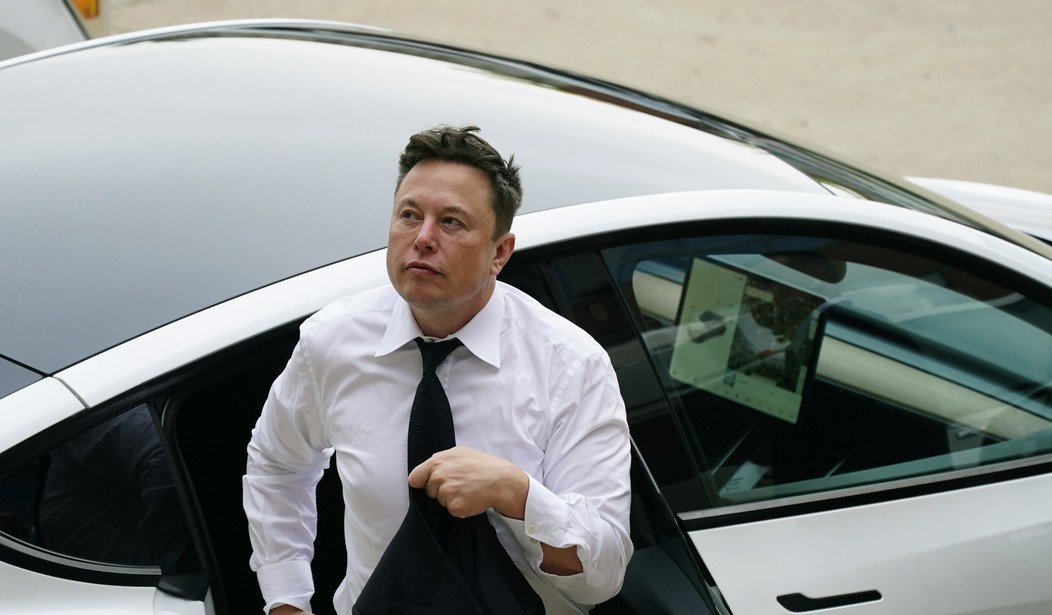
Then suddenly, Elon Musk appeared. Musk, as if lowered by crane to the stage of democracy itself, now promises to put Pandora’s censorship monsters back in their box.
But can it really be that easy? All Free Speechicus needed was $44 billion this whole time?
No, not even close.
As a former State Department diplomat in charge of the “Big Tech” portfolio, I have had a privileged glimpse into the myriad forces driving modern Internet censorship. Having seen what Musk is up against first-hand, I feel little elation at the arrival of the Deus Ex Muskina.
From 2006 to 2016, censorship was an act. In the five years that followed, censorship became an industry. Its powerful stakeholders now span every major media conglomerate, every major online payment provider, every major US and UK college and university, hundreds of think tanks, NGOs and pressure groups, international regulatory and watchdog commissions, and is now firmly interwoven with the policies and operations of the US State Department, the Pentagon, and the intelligence services.
Musk seems only now to be glimpsing what he’s up against. Last week, tech investor and Facebook board member Marc Andreesen tweeted that online censorship will become increasingly standardized, moving “up the stack” into cloud platforms, email clients, browsers, and operating systems.
It’s already happening. Just this week, Google embedded AI censorship into its Google Docs word processor to add friction for users engaged in wrongspeak. Microsoft already changed its Windows terms of service in 2019 to ban PC users engaged in undefined “hate speech.” Last week, Andreesen himself was listed in a “hate speech tracker” maintained by the ex-Twitter employee who used digital forensics to doxx the real-life identity of the anonymous “Libs of Tik Tok” Twitter account.
Elon Musk replied to Andreesen’s dark prediction not with godlike omniscience, but rather with the shock of a young Candide breaking from Panglossian innocence: “Extremely concerning. Who is pushing this censorship/deplatforming? Very shadowy.”
Shadowy indeed. Musk was certainly correct in his intuition to take Twitter private. No public company can presently survive the civil society encirclement of those who defy censorship orthodoxy. In 2020, mere double-digit billionaire Mark Zuckerberg — who just one year earlier bemoaned censorship going too far – quickly tapped out after Facebook lost $60 billion to an advertiser shakedown directed at the company for failing to censor hard enough. Such shakedowns are now a seasonal rite of passage for all social media companies.
Musk may be immunized against such civil society encirclement tactics. At $300 billion in net worth, a triple-digit billionaire may not break under the same commercial pressures put on mere millionaires or low-digit billionaires.
Inevitably, the censorship industry will promote rule-of-law pretexts to force Musk to crush a free speech Twitter. When this happens, it will not be a novel occurrence – history will have merely retweeted itself.
There’s a little-known secret history of how the first great wave of Internet censorship began in 2017. It didn’t start with the tech companies themselves. Veteran diplomats from the State Department, expecting promotions after Hillary Clinton won the 2016 Presidential election, were unceremoniously fired when Donald Trump won instead.
Trump’s victory was blamed on the free and open Internet. Capitalizing on EU partners’ fears that 2016’s Brexit vote would lead to Frexit in France, Grexit in Greece, and Italexit in Italy, these powerful diplomats took their influence across the Atlantic. There, they pressured European regulators to pass novel Internet censorship laws such as Germany’s 2017 NetzDG— knowing US tech companies would be forced to apply similar censorship measures at home to preserve continuity with their global markets.
A second EU-to-US censorship pipeline has already been established. Last week, both President Obama and former Secretary of State Hillary Clinton heralded the new EU Digital Services Act as a tool for cracking down on “disinformation” (read: different opinions online).
Can Elon Musk truly take on a transatlantic flank attack? Deus Ex Muskina will need a deus ex machine himself to aid in the conflict ahead.
Mike Benz is a former State Department diplomat, where he oversaw the Economic Bureau's Information Technology & International Communications division as Deputy Assistant Secretary. Mr. Benz also served as a speechwriter and policy aide to HUD Secretary Ben Carson as well as to President Donald Trump and worked as an attorney representing technology and financial firms.

Join the Conversation
VIP members get the ability to comment on articles.