





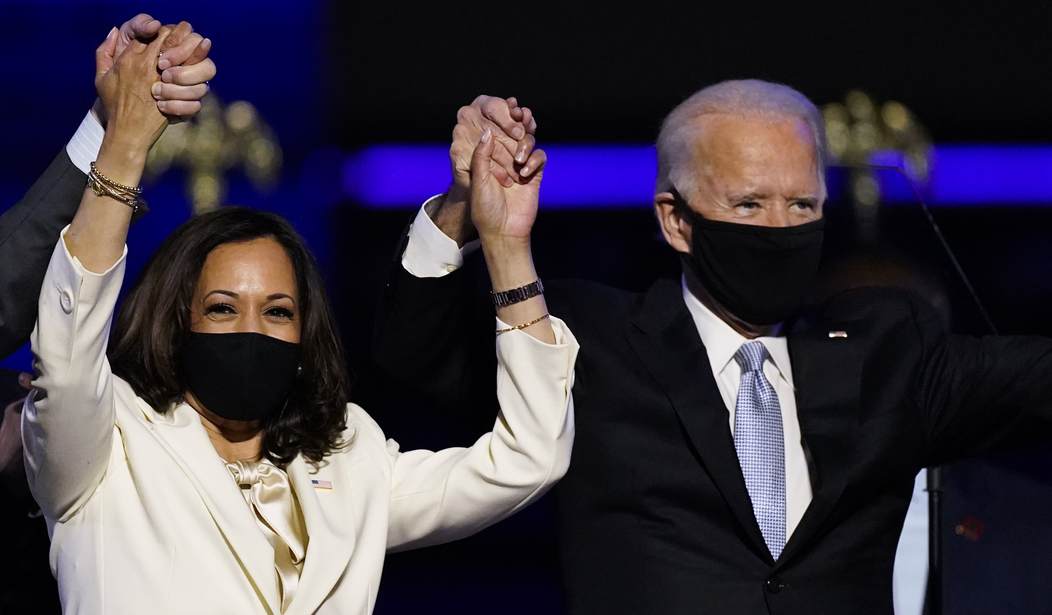
The campaigns of President Donald Trump and former Vice President Joe Biden aggressively pursued votes from those who never voted or who only did so infrequently. In October, The New York Times wrote: "Both parties are succeeding in one of their chief goals this year: to motivate large numbers of infrequent voters or nonvoters to come off the sidelines for what supporters of both nominees call the most crucial election of a lifetime."
How successful have the campaigns been in shaking loose these never or infrequent voters? According to TargetSmart, a Democratic voting analytical firm, very. Due to the coronavirus pandemic, some 7.3 million infrequent and first-time voters cast ballots as of Oct. 20, over twice the number cast at the same time during the 2016 election.
Who are these "never" or "infrequent" voters?
According to TargetSmart, a "first-time" voter "has no vote history reported in any general or primary election currently available" and an "infrequent" voter "is in the bottom two quintiles of voting frequency for general and primary elections."
FiveThirtyEight, the website set up by Nate Silver, the former New York Times writer/statistician, found: "Of the 8,000-plus people we polled, we were able to match nearly 6,000 to their voting history. We analyzed the views of the respondents in that slightly smaller group, and found that they fell into three broad groups: 1) people who almost always vote; 2) people who sometimes vote; and 3) people who rarely or never vote. People who sometimes vote were a plurality of the group (44 percent), while 31 percent nearly always cast a ballot and just 25 percent almost never vote."
Why don't they vote?
It turns out that their failure to vote is not because they don't know how to register or because they find registration is difficult or inconvenient. The Heritage Foundation noted in 2013: "Of the 146 million people who the Census Bureau reported were registered to vote in 2008, 15 million (10 percent) did not vote. Of those who did not vote, only 6 percent cited registration problems as the reason for not participating. Rather, the vast majority of these registered but nonvoters said they did not vote for reasons ranging from forgetting to vote to not liking the candidates or the campaign issues or simply not being interested. ...
"Only 4 percent of individuals reported not registering to vote because they did 'not know where or how to register.' ...
"Thus, according to the federal government's own surveys, the claim that 'the single greatest cause of voting problems in the United States' is the voter registration system is false. The greatest causes of individuals not registering and not voting are their lack of interest in politics and candidates and other reasons that have nothing whatsoever to do with registration or lack of registration."
So, which party benefits more from getting the never/infrequent voters?
According to TargetSmart's CEO, Tom Bonier, "If we want to look at it in terms of who has more intensity and where does the advantage lie, it's in these infrequent and first-time voters." He estimates that this advantage group is plus 16 percentage points for Democrats. The Associated Press said: "A rise in that number appears to be good news for Democrats. Forty-three percent of the infrequent and new voters are registered Democrats, compared to a quarter who are Republicans. The remaining third are registered as independents or with a minor party -- a group that tends to favor Democratic candidates."
Take Pennsylvania. Before the election, the AP wrote: "The obstacle for Trump is that Democrats -- they had a competitive presidential primary -- have more voters and generated a better return rate. There are 258,000 Democrats who were registered but did not vote in Philadelphia and its surrounding counties in 2016. But during this year's primary, more than 34,300 of them became voters and cast ballots. That's more than double the gains in Republicans from the 10 leading Trump counties."
This should not be surprising. Democrats want statehood for Washington, D.C., and Puerto Rico because this would produce four new Democratic senators. Do you think they want ex-cons to be able to register to vote because they're Goldwater Republicans? Free college tuition means more people exposed to "progressive" ideas -- in other words, Democrats.
President Barack Obama had no doubt that a surge of never or infrequent voters would benefit Democrats. In a 2015 town hall, Obama addressed a question about the effect of a policy of "mandatory voting." He said: "Other countries have mandatory voting. It would be transformative if everybody voted -- that would counteract money more than anything. ... The people who tend not to vote are young, they're lower income, they're skewed more heavily toward immigrant groups and minorities. ... There's a reason why some folks try to keep them away from the polls."
That sounds about right. The people who don't vote or rarely vote do so because they chose not to, because they're indifferent or because they don't believe their vote will make any difference. Sounds like Democrats to me.
Larry Elder is a bestselling author and nationally syndicated radio talk show host. His latest book, "The New Trump Standard," is available in paperback from Amazon.com and for Nook, Kindle, iBooks and GooglePlay. To find out more about Larry Elder, or become an "Elderado," visit www.LarryElder.com. Follow Larry on Twitter @LarryElder.
Join the Conversation
VIP members get the ability to comment on articles.