







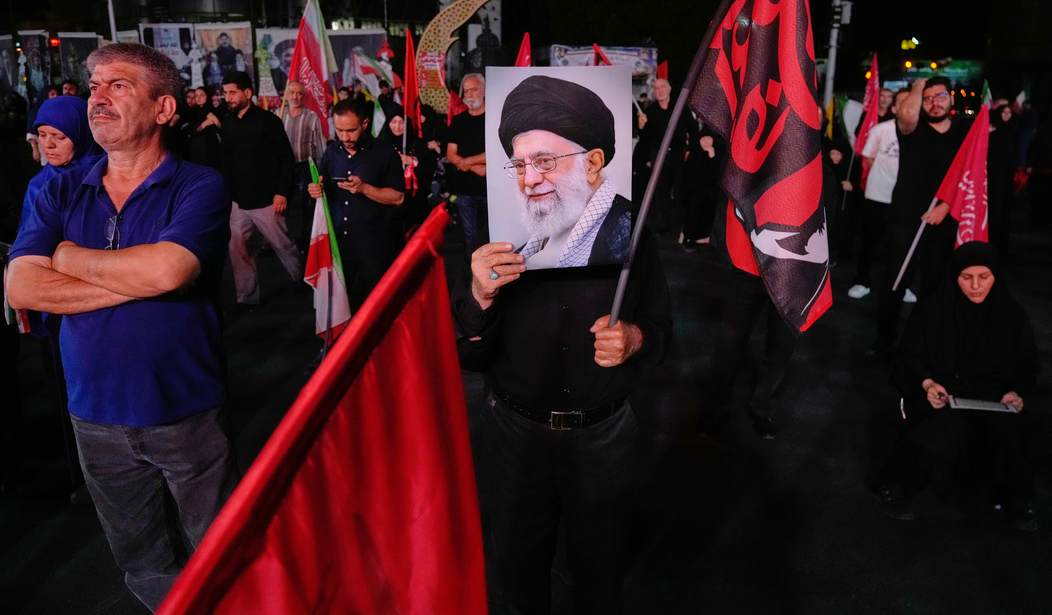
Iran is facing two very different leadership stories.
Inside the Islamic Republic, the question of who can lead the country, and whether the system can maintain cohesion around that leadership, has become increasingly difficult to answer. Supreme Leader Mojtaba Khamenei has not appeared publicly for roughly six months, leaving much of his political role to speculation. President Masoud Pezeshkian has meanwhile faced growing criticism from different factions as Iran confronts the consequences of war, economic collapse, and deepening social pressure.
On September 6, as Iran’s ruling system struggled to project unity at the top, the People’s Mojahedin Organization of Iran (PMOI/MEK) marked the start of its 62nd year of founding by choosing a new secretary-general.
The contrast is striking.
According to the organization, Mahnaz Maimanat was elected through a three-stage internal voting process involving members in seven countries. She received 56 percent of the vote in the first round, 85 percent in the second, and was elected by a near unanimous majority in the final round. Zahra Merrikhi, who had served as secretary-general, was subsequently introduced as the chair of the organization’s Central Council, pursuant to the organization’s rules of procedure.
Whatever one’s political assessment of the PMOI, the institutional question is difficult to ignore. The organization has demonstrated a mechanism for transferring a senior leadership responsibility while preserving its wider structure.
That matters because succession is becoming one of the Islamic Republic’s central vulnerabilities.
Mojtaba Khamenei’s prolonged absence has become more than a matter of public visibility. Reuters reported in late August that he had not appeared publicly for six months and that his absence had raised questions about the functioning of the new leadership. Pezeshkian has also acknowledged difficulties in dealing with the new Supreme Leader. Different factions have been arguing over the government’s handling of the war and the country’s worsening conditions.
The economic picture makes the political problem more dangerous.
Iran’s currency has fallen to extraordinary lows, inflation is approaching 70 percent, and food prices have risen dramatically. Oil exports, a crucial source of revenue, have been severely constrained by the war and intensified American economic pressure. Fuel shortages have produced long queues at gas stations, while officials face the politically explosive question of subsidies and fuel prices.
These are not merely economic indicators. They determine how much political room the government has to maneuver.
Cutting subsidies can provoke public anger. Maintaining them drains resources. Raising fuel prices recalls the unrest of 2019. Blaming the crisis on foreign enemies does not resolve the increasingly visible question of who is responsible for governing.
Iran’s ruling establishment is therefore confronting two related problems: pressure from below and uncertainty at the top.
The PMOI’s leadership transition offers a contrasting political image.
Maimanat is not a newcomer suddenly elevated to prominence. According to the organization, she joined its executive leadership in 1989, became a member of its Leadership Council in the early 1990s, joined its Central Council in 2014 and served as a senior deputy to the secretary-general since 2021.
That continuity is significant.
Political movements are often judged by their ability to mobilize people during moments of crisis. They are judged less frequently by what happens when leadership itself has to change. Yet succession can reveal more about an organization’s institutional capacity than a rally or declaration.
The broader Iranian opposition, including the National Council of Resistance of Iran (NCRI), has for decades argued that the Islamic Republic is vulnerable not simply because of economic hardship or public dissatisfaction, but because its political structure has become incapable of resolving the contradictions it has created.
Maryam Rajavi, the NCRI’s president-elect for the transition period, welcomed Maimanat’s selection, describing her as a woman of noble character.
For Western governments, however, the significance of today’s event should be seen in the context of what happens when Iran eventually enters a period of political transition.
For years, Western policy toward Iran has concentrated overwhelmingly on the regime’s behavior: its nuclear program, missiles, regional proxies, human-rights abuses, and now its conduct of war.
Another question increasingly deserves attention: what political forces in the Iranian opposition have the organization, leadership structures, and continuity necessary to operate if the existing order begins to fracture?
An organized opposition does not automatically become the government of a future Iran. Political transitions are unpredictable, and no opposition movement can simply declare its own future legitimacy.
But organization matters.
A regime can survive military strikes and economic pressure for a considerable period. It becomes much harder to survive when its institutions lose the capacity to manage succession, maintain cohesion, and respond to pressures from society.
The opposition’s democratic elections offer an unusual juxtaposition. In Tehran, Iran’s rulers are struggling with the political consequences of a leadership crisis, economic exhaustion, and internal disputes. In the opposition camp, an organization founded 62 years ago has carried out a leadership transition while maintaining its institutional structure.
The difference is not yet a verdict on Iran’s political future.
But there is a question Western policymakers can no longer afford to ignore: who possesses the organization, nationwide networks, leadership, and resilience to turn the Islamic Republic’s deepening crisis into a nationwide uprising capable of bringing down the regime?
Editor's Note: Do you enjoy Townhall's conservative reporting that takes on the radical Left and woke media? Support our work so that we can continue to bring you the truth.
Join Townhall VIP and use promo code FIGHT to receive 60% off your membership.


Join the Conversation
VIP members get the ability to comment on articles.