







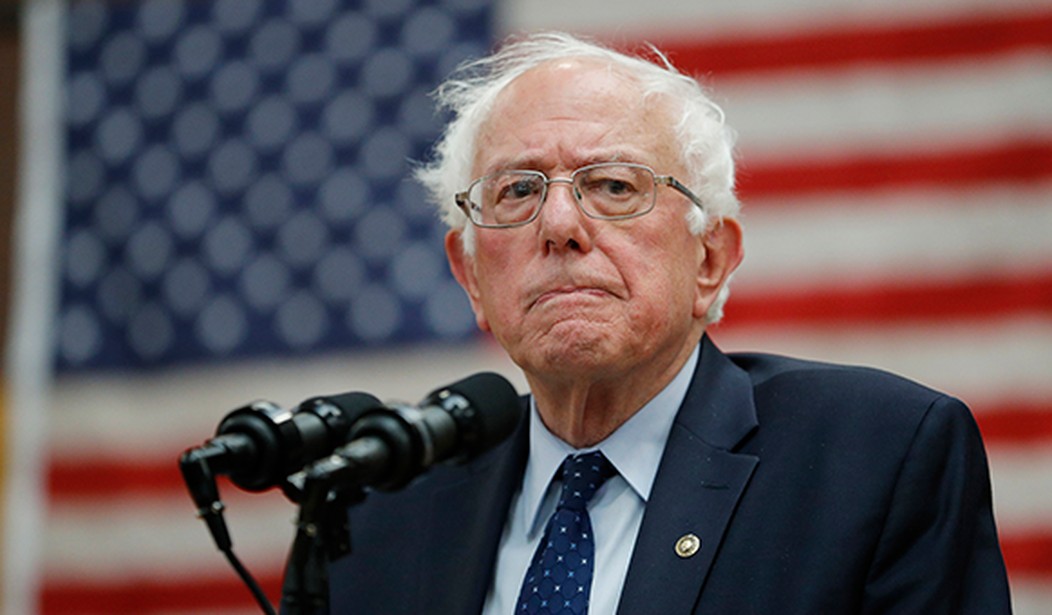
Bernie Sanders is terribly upset about a tax cut which kept taxes at zero for one-half of the population and decreased taxes for the wealthy.
Now Bernie wants to eliminate student loan debt for neurosurgeons earning $350,000 a year, along with eliminating student loan debt for all who borrowed to go to go to college.
Holy socialism, how does this make any sense?
Is his student debt plan about helping those who need help or about garnering votes and political contributions?
In 2016, no single person with adjusted gross income of over $80,000 or married person with adjusted gross income of over $160,000 could deduct a dime of interest paid on student loans. And the most interest that could be deducted was $2,500. Yet, in 2016, just under 4 million U.S. taxpayers making between $75,000 and $160,000 deducted about $4.3 billion of student loan interest. Those with higher levels of income did not receive a tax deduction, but many had very, very significant student loans.
40 percent of all student loan debt is from loans for advanced degrees.
It does not take a genius to conclude that hundreds of billions of dollars of student loans are owed by individuals who garnered the full economic benefits of a college education, both undergraduate and graduate, who can and should be required to make full payment on their student loans. Is there any justification to forgiving student loan debt for individuals who have or will have full economic benefit of their educations?
Who, in the name of socialism or anything else, could believe that all student loans should be forgiven?
Who, in the name of buying votes, believes that all student loans should be forgiven? Perhaps a better question: Who earning minimum wage who has or does not have student debt would see the equity in forgiving student loans of the professional class?
Much, if not most, of the amount of student loans was the result of conscious decision making. Community college for the first two years? Living at home? Earning funds between high school and college? These opportunities were available to many who spent four years in a private not-profit university.
An interesting question is whether large portions of the student loan program were in essence, predatory lending. Without identifying a particular major as that would subject this author to a gender, racial or other identity politics response, why would the government lend money to anyone to achieve a degree where there is absolutely no chance that this particular degree would lead to a position that would earn sufficient income to repay the loan? In the private sector, this is predatory lending and subject to severe economic consequences to the lender.
And what of the student who studied for four years for a degree that would likely result in a high-income job who elected after borrowing maximum funds only to decide to take a lower paying job opportunity? Should taxpayers subsidize a cum laude graduate in economics and political science because she decided to become a bartender? She certainly is entitled to be a bartender, a banker or whatever, but does that decision mean taxpayers should make a gift to her of $50,000 or $100,000 by eliminating her student loans?
Another interesting question is whether the underlying result of government lending was massive federal subsidization of virtually every college campus? Were college loans to students indirectly supplemented to college professor salaries? Is the ultimate result of student loans the employment of tens of thousands of college professors teaching subject matter that is insufficiently valued in the marketplace to produce sufficient salaries to repay the loans?
While there are many examples, taxpayers are already paying for many graduate degrees earned by public employees. It is a pretty straight forward arrangement for many public employees: if a public employee (school teacher) achieves an advanced degree, the public entity pays that employee a higher salary. Be that person a school teacher or in another role, it is their decision to garner a higher salary in exchange for their time and expense in obtaining the advanced degree.
If we pay higher salaries for a masters’ degree, are not we already paying for the additional degree? Shouldn’t we expect the increased salary be used to pay for the degree knowing that when the degree is paid for, the increased salary will remain in place? Is the public being asked to pay for that degree twice, first via the increased salary and now if we forgive the loan?
And of course, given the deduction for student loan interest, much of the undergraduate lending was at a net cost of less than 3 percent.
And where do we stand tomorrow? There appears to be no proposal to stop new government loans.
Anyone who does not borrow to the max today is foolish. If there is the remotest chance these loans will be forgiven, the very rhetoric of the Democratic candidates for president is increasing the amount of borrowing. It also undermines every incentive to save for one’s children’s education.
And of course, anyone who actually paid for their college education either initially, in part or by paying-off their college loans would essentially be punished for being fully ethical in their actions to pay for that which they received.
And how does paying off loans for everyone seem fair to those who did not go to college because of the cost?
And finally, there is the important question about the economic strength of many student loan borrowers. Without a blunderbuss approach, there are individuals that could be benefitted with student loan deferments, reductions etc. Forgiving or reducing debt for those who do not have the capacity of repayment is what banks do every day. It is part of the business of lending.
Forgiving all, or most student loans is both unfair and inappropriate for both the capitalist and the socialist. Mostly, it is no more than buying votes.

Join the Conversation
VIP members get the ability to comment on articles.