







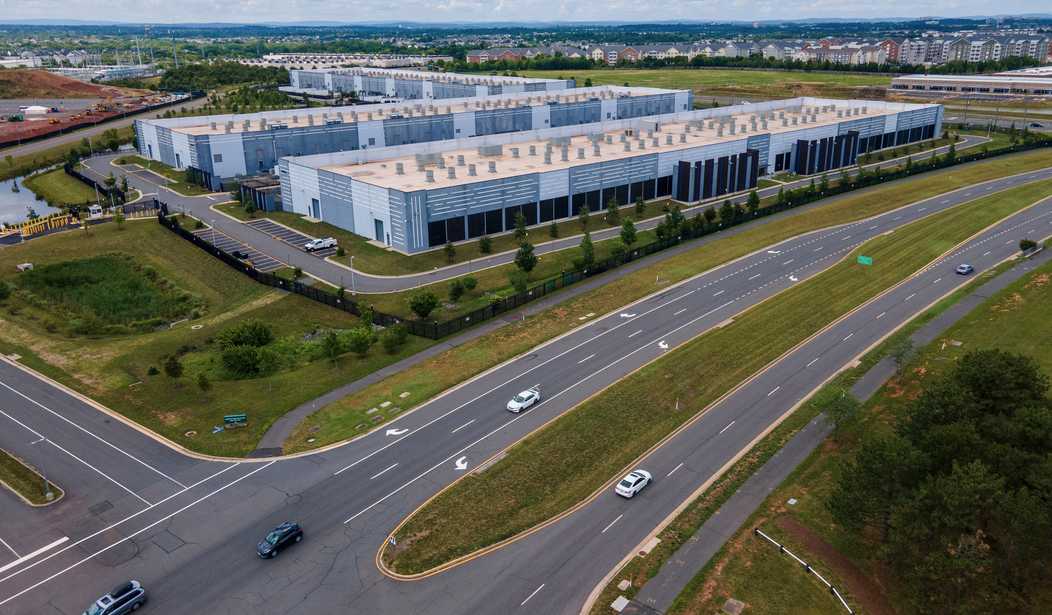
Artificial intelligence just handed America a warning about its electric grid. We should be grateful for it.
For 20 years, electricity demand stayed roughly flat. Policymakers pushed utilities toward wind and solar while sidelining coal, natural gas, and nuclear plants, the ones that deliver power on command.
Then AI arrived.
The North American Electric Reliability Corporation (NERC) now projects summer peak demand will grow by 224 gigawatts over the next decade, a 24 percent jump. Data centers account for most of it. NERC also finds that 13 of 23 North American regions face elevated or high risk of shortfalls over the next five years.
AI did not create this problem. It is stress-testing a grid built for the last two decades, not for what is coming, and it is finding the cracks.
A 1,000-megawatt gas or nuclear plant and a 1,000-megawatt wind or solar project look identical in a press release. They are not identical at 8 PM on a still, cloudy evening, when hospitals, factories, and homes still need power.
For years, politicians celebrated every megawatt of wind and solar added to the grid. But a megawatt is not always a megawatt. Nuclear produces 1,000 megawatts all the time, except for a week a year for maintenance; natural gas and coal can produce nearly 1,000 on demand and load match; wind produces just 320 when the wind blows; and solar just 200 when the sun shines. On-demand electricity is what we all desire.
No plant runs every hour of every year. Nuclear units refuel. Gas plants need maintenance. Equipment fails.
The difference is that operators can schedule downtime and dispatch other generators when demand spikes. They cannot dispatch the weather.
AI companies understand this better than most policymakers. Their data centers need enormous amounts of electricity around the clock. They cannot tell customers the servers went dark because the wind stopped blowing.
But simply plugging massive new loads onto an already strained grid is not the answer either.
If a data center adds 1,000 megawatts of demand, it should bring roughly 1,000 megawatts of dependable generation with it. Use what it needs; sell the rest back to the grid. The AI boom could strengthen the grid rather than strain it.
This is not a hypothetical. In June, FERC ordered PJM, MISO, the Southwest Power Pool, CAISO, ISO New England, and NYISO to justify or rewrite their rules for connecting data centers and other massive new electricity users.
The orders target real problems: preventing new transmission costs from shifting onto ordinary ratepayers, allowing behind-the-meter generation, and studying new power plants alongside the loads they are built to serve, which also dramatically lowers transmission costs.
FERC Commissioner David Rosner gave the idea a name that stuck: Bring Your Own New Generation, or BYONG. Today's orders, he said, make BYONG faster and more efficient.
Do not dictate which technology AI companies must build. Let natural gas, nuclear, geothermal, hydro, and even wind or solar backed by real storage compete. But the new supply must be capable of meeting the new demand it claims to serve.
And if a data center still leans on the grid for backup power or transmission, it should pay its share of those costs. Growth should pay for growth.
There is an international lesson here too. While America argued over which reliable plants to retire, China chased abundance. It builds enormous amounts of wind and solar without betting its economy on the weather. China commissioned 30 gigawatts of new coal capacity in the first half of 2026, up 43 percent from a year earlier, while retiring barely a tenth as much.
We need to emulate China’s determination to have enough electricity. And we have a better tool for it: private investment and competition.
If technology companies spend hundreds of billions of dollars building AI infrastructure, they can invest in the power plants required to run it.
The problem is not that AI uses a lot of electricity. The problem is expecting yesterday's grid, built on climate promises rather than physics, to power tomorrow's economy.
AI is stress-testing the system. We should be glad it is exposing the weak points now, while there is still time to fix them. America cannot win the AI race on a grid designed for intermittent weather rather than reliable power.
Editor’s Note: Do you enjoy Townhall’s conservative reporting that takes on the radical Left and woke media? Support our work so that we can continue to bring you the truth.
Join Townhall VIP and use promo code FIGHT to receive 60% off your membership.


Join the Conversation
VIP members get the ability to comment on articles.