





Editor’s Note: This column was coauthored by Jennifer Vermeulen.
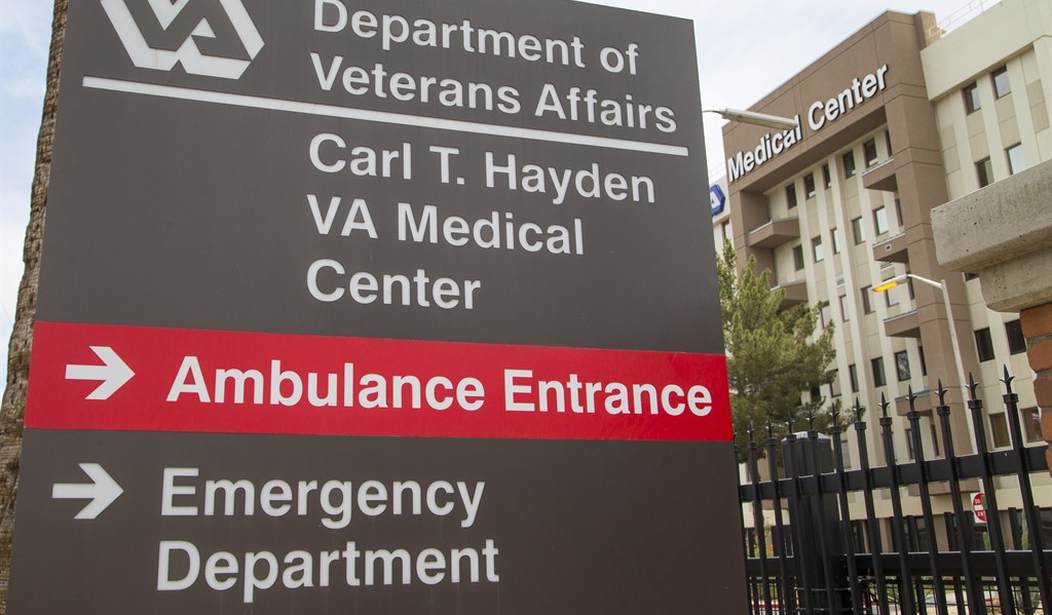
The never-ending parade of stories about reckless federal spending tends to dull the senses. Observers often feel despondent, too exhausted to contemplate the consequences or possible solutions. But anecdotes are smelling salts for a weary mind. A tale of two hospitals provides a bracing case. Parkland Hospital, Dallas County’s health care system for the indigent, completed a much needed, $1.27 billion overhaul through a public/private funding venture in August 2015, nearly on time and on budget. In Aurora, Colorado, a Veterans Administration hospital sits incomplete, two years overdue and $600 million over budget. In many ways, the results illustrate the difference between locally based cooperation and exclusive federal management.
Parkland was already one of the largest hospitals in the United States. The aging hospital averaged one million patients a year. Recognizing the need for expansion, local officials and hospital planners engineered a joint funding program to finance the creation of a new hospital in 2008. That year, Dallas County taxpayers approved a $747 million municipal bond for renovations. Private donations and hospital reserve funds covered the remaining costs. The new Parkland now boasts state-of-the-art facilities, equipped with 862 private rooms on an efficient 64-acre campus.
The project was not without faults. Planners found themselves almost $100 million over budget the first day of construction. But project managers immediately revised the construction forecasts to meet financial constraints. In one instance, the old facility had to absorb new administrative offices and outpatient clinics originally slated for the modern Parkland. Leadership also found severe problems with the central water utility system and Parkland is now suing the four contractors to recoup the costs of repair.
Accountability and economic incentive, rather than altruism, drove planners’ adherence to strict standards. Local taxpayers approved a bond. Donors gave money. Board members dipped into cash reserves. Elected officials extended promises to their constituents. Leadership even hired a building controls company to monitor spending, and published their findings real-time.
Project managers faced an inescapable level of accountability. They responded by establishing working groups with defined roles and specialties to maximize efficiency. They demanded coordination, required fiscal clarity, and prepared for unanticipated problems. Parkland’s locally based, private-public experiment (wittingly or unwittingly) harnessed the relationship between economic incentive and public accountability. The federal government’s project has not.
The Aurora VA hospital began as a broader government program initiated in the mid-1990s, aimed at updating veterans hospitals around the country. From the outset, poor attention to detail and lack of oversight ensured the government would miss its completion goal of 2014. Private consulting firms warned early on that expectations dramatically outpaced the proposed budget. Armed with this information, VA planners still refused cost-friendly alternatives to renovate facilities at the decommissioned Fitzsimons Army post and a proposal from the University of Colorado Hospital to create a jointly operated hospital on the same site. The former Army post is now the University of Colorado Anschutz Medical Campus, which boasts modern medical facilities and employs roughly 17,000 people. The Aurora VA hospital sits unfinished on an expensive 31-acre lot.
One might expect to find an incomplete hospital since officials haggled for a year before agreeing to a $604 million construction plan. The government then found itself in court facing breach of contract charges in 2013 for failing to provide the contractor with a buildable design. Afterwards, costs rose sharply with work stoppages and constant design changes. Some equipment was not sized to fit some of the rooms. Other areas had to be reconstructed to add unplanned furnishings. An underground spring then flooded the site. On and on it went.
In March 2015, VA managers admitted to Congress that construction on the Aurora project will now cost nearly $2 billion. This last estimate does not include the so-called activation costs, which cover medical equipment, patient amenities and initial staffing. This activation process can take up to six months and only begins once construction is complete. The 182-bed Aurora VA will cost more than the new Parkland Hospital, which has nearly 700 more beds and a campus twice the size. The Aurora VA might open by 2017.
Parkland experienced problems. Aurora did as well. The local, multi-funded project overcame the inevitable obstacles inherent in large scale productions. The other remains stuck in the all-too-common cycle of federal imprudence.



Join the Conversation
VIP members get the ability to comment on articles.