







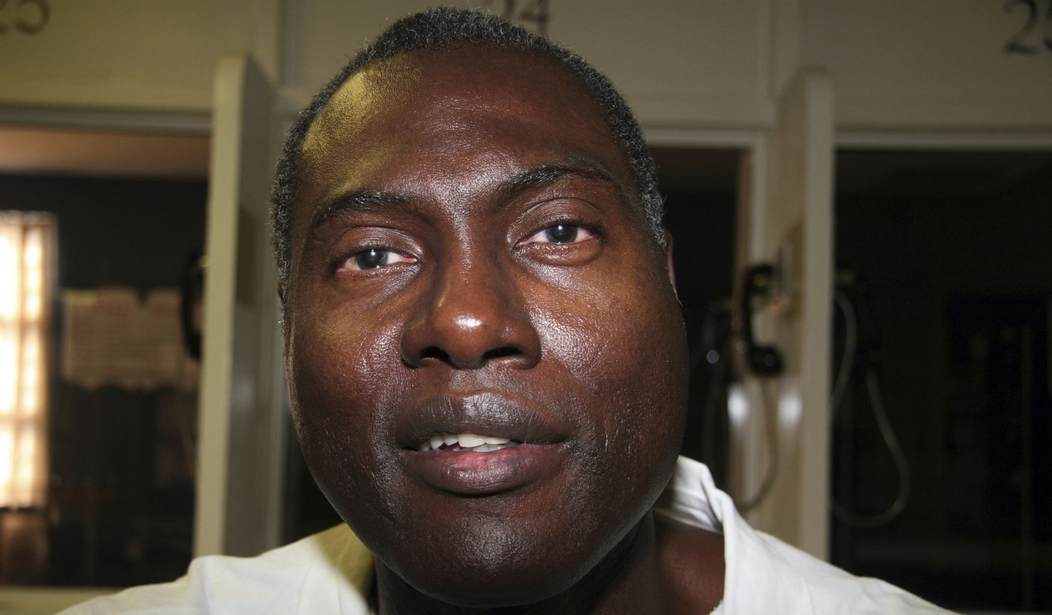
Prison reform has normally been an issue embraced by Democrats, not Republicans. But, perhaps, like so many other things in the Trump administration, this, too, is about to change.
Last Thursday, President Trump held a roundtable discussion at his Bedminster, New Jersey, property, five governors were in attendance.
According to the Federal Bureau of Prisons, 37.8 percent of prison inmates in the U.S. are black, 58.3 percent white, 2.3 percent Native American and 1.6 percent Asian. Yet, blacks are arrested more, charged more, sentenced more harshly and confined to prison longer, even for minor infractions.
In Georgia, according to Department of Corrections; U.S. Census Bureau data, 61.6 percent of prisoners were black, 33.7 percent were white, while the general population in the state in 2013 was 31.4 percent black, 54.8 white.
Gov. Nathan Deal of Georgia spoke of the progress made in his state in reducing the disproportionate number of blacks in prisons: "We have seen, since I became governor, a 10-percent decrease in violent crime in our state, a 20-percent overall decrease in crime. We have seen our African-American percentage in our prison system drop significantly ... black males has dropped almost 30 percent."
Black female inmates, he said, "dropped about 38.2 percent. Our African-American commitments to our prison is at the lowest level it has been since 1987."
Deal said re-entry into society is a vital part of lowering the recidivism rate. Common among those in prison was a lack of education. Seventy percent, he said, had not graduated from high school. Georgia stepped up its GED program and job training. "We found that if you give them a blue-collar skill, you reduce your recidivism rate by 24 percent. If you give them just the education of getting a high school diploma, it's reduced by 19 percent."
This issue has been kicked around for years with little done. Prisons are overcrowded and antiquated.
A disparity in sentencing, lack of competent legal representation for poor and minority defendants, overcrowding -- and the fact that prisons aren't known primarily for reforming too many inmates -- all contribute to a system that has placed 2.3 million criminals behind bars, "more than any other nation, according to data maintained by the International Center for Prison Studies at King's College London," reports The New York Times. These include a sizeable number of non-dangerous, nonviolent offenders who would be better off outside prisons and in programs designed to change their life direction, even paying back those from whom they have stolen or otherwise harmed. It's called restitution.
Politically, this is an issue that will resonate well in minority communities for obvious reasons, but more than politics should be involved. Reforming our criminal justice system, which is often more criminal than just, is the moral and right thing to do.
The Senate is expected to consider a modified version of a House bill that would reduce the current mandatory life sentence for some drug offenses to 25 years. The Senate bill would also prohibit the doubling of mandatory sentences for some drug and gun crimes and it would give more sentencing discretion to judges. It also would make retroactive the 2010 Fair Sentencing Act that narrowed the discrepancy in sentencing guidelines for crack versus powdered cocaine, another issue that has disproportionately affected the black community.
Secretary of Energy Rick Perry noted that while governor of Texas he was able to "shut down eight prisons, saving more than $3 billion dollars a year in prison costs, and conservatives look at that now and go, 'That was smart on crime.'"
Saving money while instituting programs that work, giving people hope and another chance at a better future are Republican themes. Democrats should join them. If they do, they can share the credit for things that succeed in transforming troubled lives.

Join the Conversation
VIP members get the ability to comment on articles.