





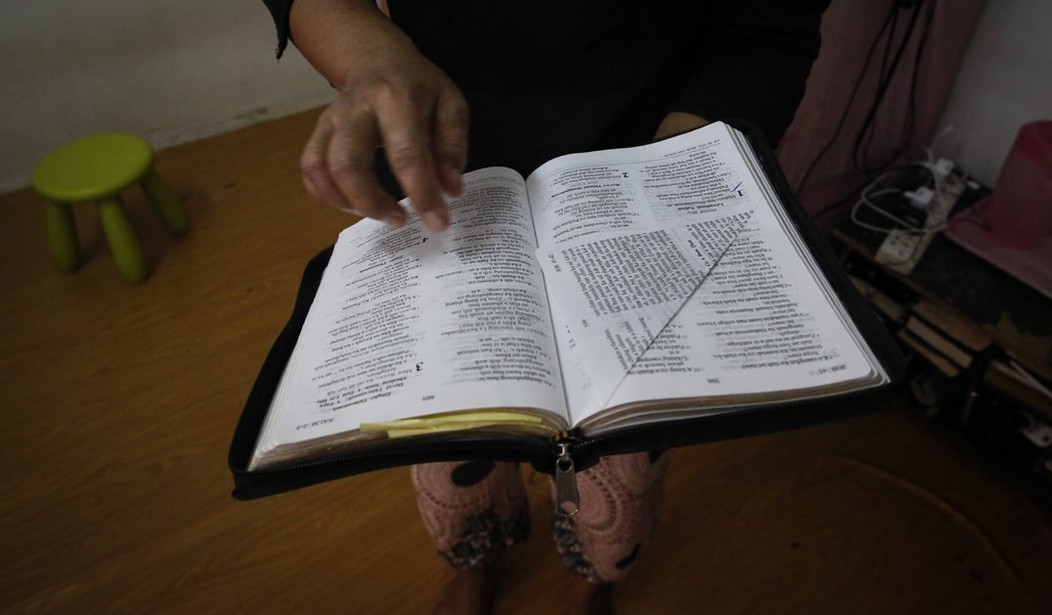
The religious left feels left out. According to an article in The New York Times, liberal clergy feel excluded from the political arena and blame the religious right for occupying what they once believed was their exclusive territory. They are, according to the story's headline, "seeking to break right's grip on nation's moral agenda."
I wasn't aware the nation had a moral agenda; an immoral one, perhaps.
The religious left's agenda is little different from that of secular progressives -- from gay rights, to sanctuary cities for undocumented immigrants, bigger government and tax increases, abortion. Some on the religious left give lip service to a pro-life position, but they still vote for "pro-choice" Democrats.
Liberal clergy are "fighting for their faith," says the Times. Which faith? Faith in government or faith in the God they are supposed to serve?
Having suffered rejection and ridicule following Prohibition and the Scopes trial, conservative Christians withdrew from the political arena into a modern version of the catacombs, leaving the religious left at the forefront of culture and theology discussions. That began to change with the formation of the Moral Majority and later the Christian Coalition and other conservative religious groups.
In reaction, the religious left called for a separation between church and state, believing that conservatives were somehow now violating the Constitution by speaking up on moral issues. The implication was that conservatives should go back to their churches and leave politics and biblical interpretation to them.
To their credit, religious conservatives spoke of a culture in decline, but they, like the left, mistakenly believed the solution could be found in politics. The social issues they addressed were not the cause of our decadence, but a reflection of it. If repairs were to be made they would not come from Washington, but from transformed human hearts. Changing hearts is supposed to be the calling of pastors.
The religious right quickly became an adjunct of the Republican Party, just one more interest group to be placated with promises that were rarely kept. In turn, the religious left aligned with Democrats.
A lesson for all is found in Scripture, but it's often ignored. Here's one: "Do not love this world nor the things it offers you, for when you love the world, you do not have the love of the Father in you. For the world offers only a craving for physical pleasure, a craving for everything we see, and pride in our achievements and possessions. These are not from the Father, but are from this world. And this world is fading away, along with everything that people crave." (1 John 2:15-17 NLT)
Every sermon dedicated to politics is time taken away from a pastor's main calling, which is to preach a message that will fit people for Heaven. Are there moral and cultural issues that clergy can and should address? Of course, but the sermonizer should be sure he, or she, is faithful to Scripture and not preach a message designed to conform to an earthly political agenda.
When they do, this happens:
According to a 2014 Pew Research Center Religious Landscape Study, just "14.7 percent of U.S. adults are affiliated with the mainline Protestant tradition -- a sharp decline from 18.1 percent when our last Religious Landscape Study was conducted in 2007. Mainline Protestants have declined at a faster rate than any other major Christian group, including Catholics and evangelical Protestants, and as a result also are shrinking as a share of all Protestants and Christians."
Here's another verse liberal clergy might consider before re-entering the political arena: "Don't copy the behavior and customs of this world, but let God transform you into a new person by changing the way you think. Then you will learn to know God's will for you, which is good and pleasing and perfect." (Romans 12:2 NLT)

Join the Conversation
VIP members get the ability to comment on articles.