





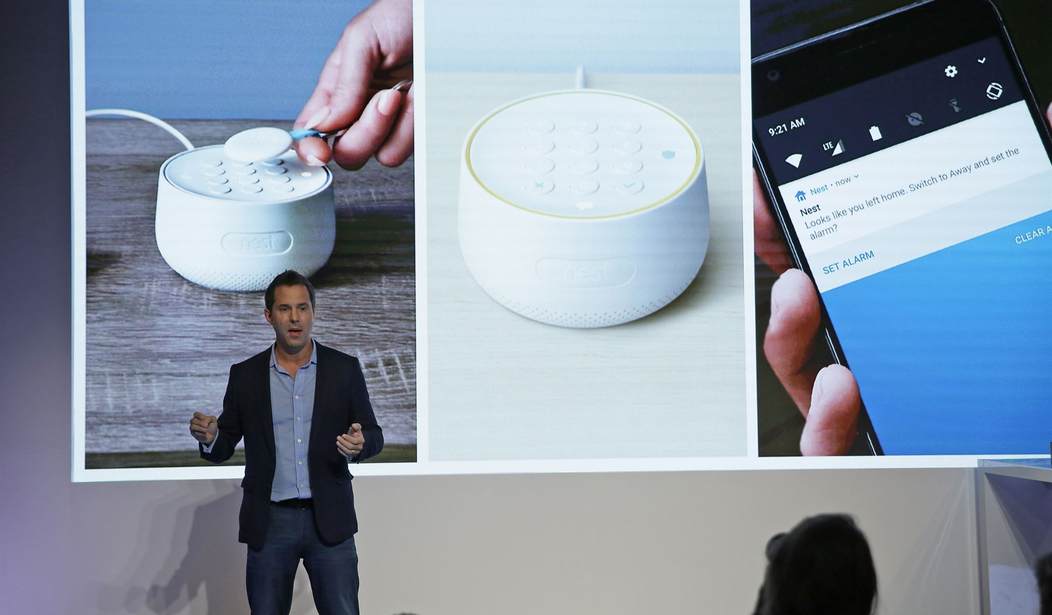
The ubiquitous term “smart device” often is employed without seriously considering the implications of devices that are, in the context of the Internet of Things, “a wired or wireless context-aware electronic device capable of performing autonomous computing and connecting to other devices for data exchange,” with the key phrases being “autonomous” and “connecting.”
Writing his dystopian novel, 1984 nearly 75 years ago, George Orwell could only dream of such technology. Today, however, governments and companies that make and use “smart” devices, fully understand the power of such technology and eagerly embrace its use by individuals in the real world.
First, there are companies that develop, manufacture, sell, and maintain “smart” devices – everything from “smart” phones to “smart” homes and numerous “linked” devices inside the dwellings. There is now a market for wearable, “smart” clothes.
There are the tech companies that develop the software that enables the “smart” devices to communicate with the owners and users, with other “smart” devices, and most importantly, with the really “smart” people associated with companies that monitor the myriad devices.
Then there are the government entities with wide-ranging interests in “smart” devices. This universe includes federal, state, and local law enforcement agencies, from the FBI and 50 state bureaus of investigation to thousands of county and municipal police and sheriffs offices across the country.
Beyond all those law enforcement agencies keenly interested in having access to such “smart” information to assist in preventing and solving crimes, there are agencies with interests in the devices for reasons other than law enforcement; interests that relate to such goals as reducing energy or water usage or changing consumer habits.
All these entities – from the FBI to the Atlanta Police Department (which maintains one of the largest and most pervasive camera surveillance systems in the country), and from Amazon to Bosch and other major companies involved in the “smart” manufacturing market – share one thing in common: the unquenchable thirst for data.
It is that drive for information harvested from “smart” devices that runs headlong against the privacy rights of Americans. Here is where the contradiction between privacy concerns and convenience manifests itself. While a significant majority of Americans – as high as 84% in a recent survey – express some level of “concern” about the privacy of their personal data, the market for information-hungry “smart” devices controlled by third parties keeps expanding.
Convenience and fear of crime drive much of the civilian market for “smart” devices, and there perhaps is no better example of this than the exploding market for “smart” doorbells, such the Amazon-owned Ring devices. It is that fear of crime and the yearning for a sense of security that appears clearly to be driving the sale of Ring doorbells; a policy that has for the past several years been reinforced by law enforcement agencies that encourage homeowners to install “smart” doorbells and allow police to have access to the information they gather.
It is that sense of fear that overrides individuals’ privacy concerns that might otherwise augur against installing such devices in one’s home.
Few Ring customers are likely to be familiar with the company’s poor record for protecting the security of users’ data, a history that precipitated the filing of a lawsuit against the company by the Federal Trade Commission last month. Even fewer customers would likely have any awareness that the doorbell camera company maintained an apparently unsecured manufacturing company in Ukraine, known as “Ring Ukraine.”
Despite problems of hacking, company misuse of customers’ supposedly private data, and sharing of private data with innumerable police agencies, sales of “smart” doorbells and other devices continues to climb.
Interestingly in this regard -- and as a perfect example of what Emory Professor Mark Bauerlein has described as “the dumbest generation” -- a recent poll shows that nearly 30% of Americans under the age of 30 would have no problem with the government directly surveilling the interior of their homes with “smart” devices.
All things considered, it truly should surprise no customer of such devices when a device and the company that monitors them, decides to punish a user by shutting down all their “smart” devices, even if the vindictive action is premised on a mistake. After all, every one of those “smart” devices is made, monitored, and ultimately controlled not by the “smart” customer, but by other , far “smarter” persons and entities whose interests may not coincide with the customer’s.
Bob Barr represented Georgia’s Seventh District in the U.S. House of Representatives from 1995 to 2003. He served as the United States Attorney in Atlanta from 1986 to 1990 and was an official with the CIA in the 1970s. He now practices law in Atlanta, Georgia and serves as head of Liberty Guard.



Join the Conversation
VIP members get the ability to comment on articles.