






The Waw-uh -- as some in my neck of the woods probably still call the Late Unpleasantness of 1861 to 1865 -- may be over officially, but we can depend on the federal government prolong it for as long as possible.
The U. S. Supreme Court's decision Monday to kick a college affirmative action case back to the lower courts for more intensive review reminds us of the interminableness of the race-based admissions issue. Neither Abigail Fisher, the white student who filed the suit originally, nor the University of Texas, which rejected her application, finds repose in the court's 7 to 1 judgment that the same tired legal ground needs more treading.
Can a university not just accept but actually prefer students of a particular race? That's the question at hand. What's the right racial ratio for a student body? How do we get there?
We have to get the racial ratio right, whatever "right" means, or draw the unwanted attention of the federal courts and a federal bureaucracy charged with wiping out the legacy of slavery, whatever wiping out a legacy means.
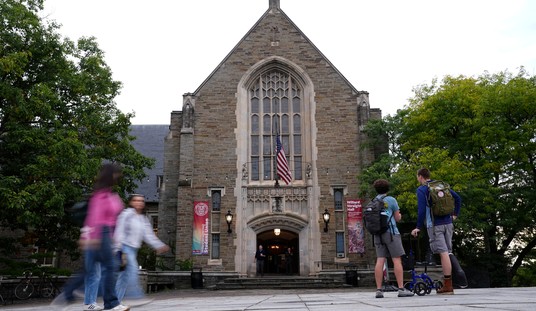
The University of Texas, which denied Abigail Fisher admission while opting to accept less qualified candidates, is a non-federal enterprise to be sure. But the whole world, it sometimes seems, operates to some degree under federal jurisdiction; in the present instance, it's judicial interpretations of the 14th Amendment and civil rights laws that give local people -- the sort who operate state universities -- the obligation to achieve racial "balance." This kind of balance contrasts real opportunity or guarantees of impartiality.
Even flag-waving ex-Confederates have to acknowledge in 2013 the virtue of cutting away old legal barriers to individual achievement irrespective of race. The greatest irony is the federal government's failure to acknowledge that this effort's ultimate success rests with individual Americans.
The federal government is so hung up when it comes to racial policy that it can't believe that anyone would do the right thing without compulsion.
As go racial ratios, so go voting policy. The other big civil rights case on the Supreme Court's docket this year concerns Congress' insistence on overseeing elections in the Southern states, on the theory that you can't trust these reformed Confederates any more than you can trust South Chicago, but that's, um, another story.
Nearly half a century after passage of the first Voting Rights Act, the federal government continues to make and enforce highly specific rules regarding polling places and ballot make-up -- pretty trivial stuff against Jim Crow tactics like literacy tests and the all-white primary. Southern voting officials, marking this astounding progress, would appreciate the freedom and the trust to carry on unmolested from the present point.
The government, on the other hand, wants to keep the Waw-uh going just for the sake, it would seem, of keeping it going. Dig down a bit, of course, and you strike the real reason. Declaring the war finally over, and leaving the management of local affairs largely to local people, would mean renouncing a central purpose of modern federal policy -- to wit, signaling to blacks and whites and everyone else that the local yokels can't ever earn their government's trust or indulgence, never mind how they behave.
The bigness of big government isn't accidental. It stems from big government's unwillingness ever -- ever -- to lay aside a power or policy, once taken up. This is singularly bad news to impart. Worse, it's not even news any more.

Join the Conversation
VIP members get the ability to comment on articles.