





How will historians in 2060 frame the 2019 Hong Kong crisis?
"The first battle of the Second Cold War" is one possibility, though Russia's 2014 Crimean invasion deserves that cruel award.
Perhaps the first Cold War isn't over. The USSR's communist dictatorship collapsed in 1991. China's party tyranny didn't. In 1989, the Kremlin didn't order its puppet regimes to murder protesting citizens en masse. On Nov. 9,1989, the Berlin Wall cracked without a shot.
Not so in China. On June 4, 1989, the People's Liberation Army attacked peaceful pro-freedom protestors in Beijing's Tiananmen Square and murdered over 2,000 Chinese citizens.
Hong Kong's first major 2019 demonstration commemorated the Tiananmen Square massacre's 30th anniversary. That demonstration was pro-freedom, not anti-government.
The Hong Kong-Tiananmen Square connection suggests Hong Kong is a continuation of the 20th century's great battle between imperial tyrannies --monarchies, Reichskanzlers, Politburos -- and political systems that protect essential individual freedoms such as free expression and assembly.
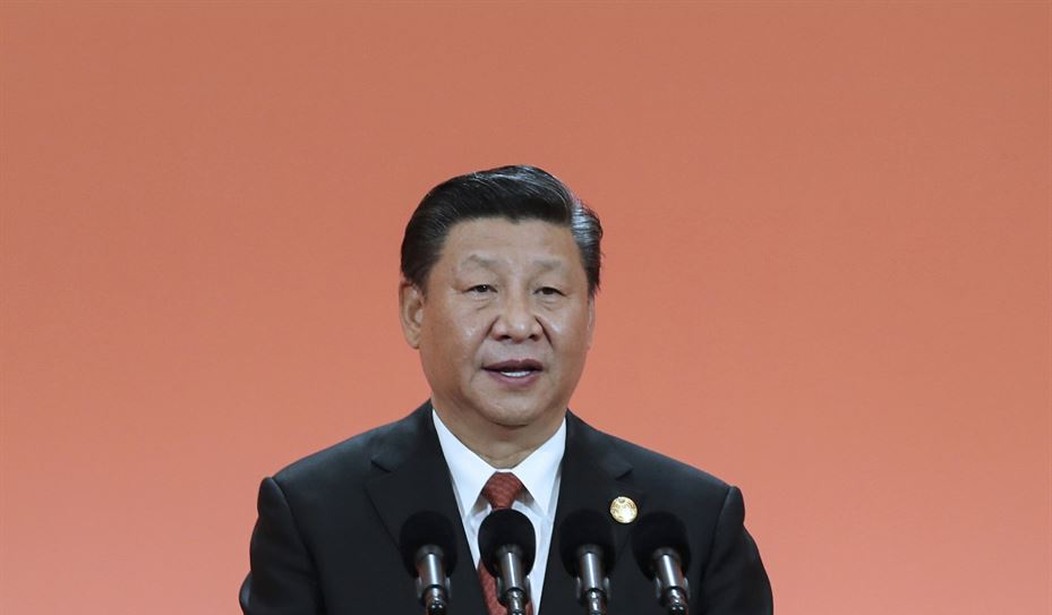
Chinese President Xi Jinping is a tyrant. Xi and his Communist Party brutes run a police state that uses Karl Marx's bogus 19th-century theory of history as propaganda cover. Marxist-Socialist Workers Paradises -- plural -- whether in Russia, Cuba, Venezuela or China, have always employed terror and committed mass murder. Marxist tyrannies corrupt their own societies.
Hong Kong residents know that fellow Chinese living outside the Hong Kong special administrative region face totalitarian restrictions.
Mainland China today -- China under Beijing's boot -- is an authoritarian national socialist state. National socialist -- Nazi -- that's a German acronym. China's "state capitalist" system -- a corrupt nexus of government, industry and spies stealing technology -- gamed the international economic order until President Donald Trump's administration said no more.
There's more to it than tariffs. The Politburo knows China must reform its domestic economy, but that involves breaking the money-skimming "rice bowls" of connected party members and PLA senior officers, and permitting more freedom.
Xi and his propagandists have spent the last six years portraying China's dictatorship as a successful ideological competitor to what they label the U.S.-led "liberal international order," or LIO. The LIO, however, is a straw man that Xi's "fake news" brigadistas attack with propaganda tropes employed by 19th-century European nobles and 20th-century Nazis and communists. Authoritarians of every stripe fear the creativity of individual freedom.
Hong Kong's demands for liberal freedoms and its distrust of Beijing shame Xi and his propagandists.
Which is why Hong Kong is under attack by the Chinese Communist Party.
Consider the past 10 days. On Nov. 8, security forces killed a student protestor. Another was wounded Nov. 11. On Nov. 12, Beijing sycophants claimed mobs had brought the city to "the brink of total collapse."
Beijing blames the U.S. and Britain for the violence. But accusing adversaries of doing what communist sympathizers and agents are actually doing was a standard Cold War Soviet and Red Chinese tactic.
Stuart Heaver (reporting from Hong Kong for The Independent) thinks Beijing is already invading. "There may be no tanks," Heaver wrote, but many locals believe "PLA troops are already here, disguised as Hong Kong riot police ..." They intend "to impose Tiananmen by stealth and create a climate of fear."
The suspect police "are often heard speaking in Putonghua dialect," Heaver writes. Putonghua is Mandarin (Beijing) Chinese. Most Hong Kongers speak the Cantonese dialect. Eighty-five to 95 million Chinese living along the south China coast speak Cantonese or Hakka, a related "southern" dialect.
Which leads to a linguistic connection that disturbs Beijing's mandarins (pun intended): Seventy percent of Taiwan's 24 million people speak Hakka.
In the past four years, Beijing has repeatedly threatened to invade Taiwan. Would that ignite World War III?
Beijing should be forewarned. Tiananmen Square did not end the desire for freedom. Crushing Hong Kong won't either.
Join the Conversation
VIP members get the ability to comment on articles.