
A Nigerian national pleaded guilty in federal court to charges stemming from his involvement with a cross-country unemployment insurance fraud scheme.
Akinpelumi Olawale Oyewusi, 60, of Hyattsville, Maryland, was charged with wire fraud conspiracy and aggravated identity theft in connection with the white-collar crime.
This prosecution is part of the Trump Administration’s Task Force to Eliminate Fraud.
According to his guilty plea, beginning in September 2020 and continuing through at least March 2021, Oyewusi and others conspired to defraud state workforce authorities, including the Maryland Department of Labor, to obtain fraudulent UI funds.
Through the conspiracy, Oyewusi and his co-conspirators used the identities of real people to obtain fraudulent UI from the state of Maryland and other states. After obtaining access to these UI funds, Oyewusi subsequently transferred and withdrew the stolen funds through electronic transfers and ATM withdrawals.
Kelly O. Hayes, U.S. Attorney for the District of Maryland, announced the guilty plea with Inspector General Joseph V. Cuffari, Ph.D, Department of Homeland Security – Office of Inspector General (DHS-OIG), and Inspector General Anthony P. D’Esposito, U.S. Department of Labor — Office of Inspector General (DOL-OIG).
Winning for America.
— Inspector General Anthony D'Esposito (@USLaborIG) August 21, 2026
UI fraud scheme. Guilty plea. Accountability.
Under @POTUS and @VP’s @WHFraudTF, @DOJFraudDiv, @DOLOIG, @USAO_MD and @DHSOIG are hunting fraudsters and protecting taxpayers.https://t.co/aGBVdgO42n
Oyewusi and his co-conspirators victimized individuals through identity theft, the state workforce authorities through stealing UI funds, and a financial institution by misdirecting UI fund transfers and fraudulent transactions. He was directly connected to at least $415,874.63 of actual losses and personally obtained at least $25,000 through his participation in the scheme.
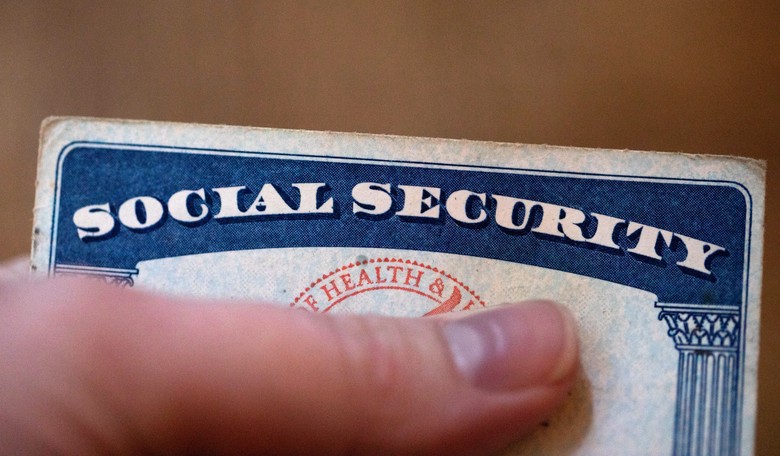
The co-conspirators used victims’ personally identifiable information (PII) to submit false UI claims to various state workforce authorities — including the MD-DOL and the California Employment Development Department. The claims contained victims’ real Social Security numbers and names but falsified their unemployment status and prior work history to obtain UI funds.
Co-conspirators elected to receive the UI funds through bank-issued debit cards linked to a bank account. Oyewusi and his co-conspirators ensured that the bank mailed the debit cards to one of several addresses in Maryland and elsewhere. He then accessed the UI funds from the fraudulently opened UI claims and transferred the funds downstream to other members of the conspiracy after obtaining his portion of the fraudulent proceeds.
Additionally, throughout the scheme, Oyewusi received incoming mail alerts from the U.S. Postal Service, allowing him to track the fraudulent UI debit cards.
Oyewusi also personally withdrew thousands of dollars from the UI debit cards in the names of the victims. Typically, Oyewusi withdrew the maximum amount allowed from each card. Oyewusi would then use the same cards to make additional withdrawals at later dates. Between December 2020 and March 2021, at least 18 ATM photos captured Oyewusi withdrawing $18,000 from UI debit cards issued to six different fraudulent claims. Bank records indicate that Oyewusi withdrew approximately $69,000 from the same UI debit cards throughout the scheme.
Sentencing is set for Thursday, December 3, at 2 p.m.
Actual sentences for federal crimes are typically less than the maximum penalties. A federal district judge determines sentencing after considering the U.S. Sentencing Guidelines and other statutory factors.
On April 7, the Department of Justice announced the creation of the National Fraud Enforcement Division (“Fraud Division”). The Fraud Division is investigating and prosecuting those who commit fraud against the American people. The Department’s work to combat fraud supports President Trump’s Task Force to Eliminate Fraud, a whole-of-government effort chaired by Vice President J.D. Vance to eliminate fraud, waste, and abuse within Federal benefit programs.
U.S. Attorney Hayes commended DHS-OIG and DOL-OIG for their work in the investigation. Hayes also thanked Assistant U.S. Attorney Joseph Wenner, who is prosecuting this federal case.