
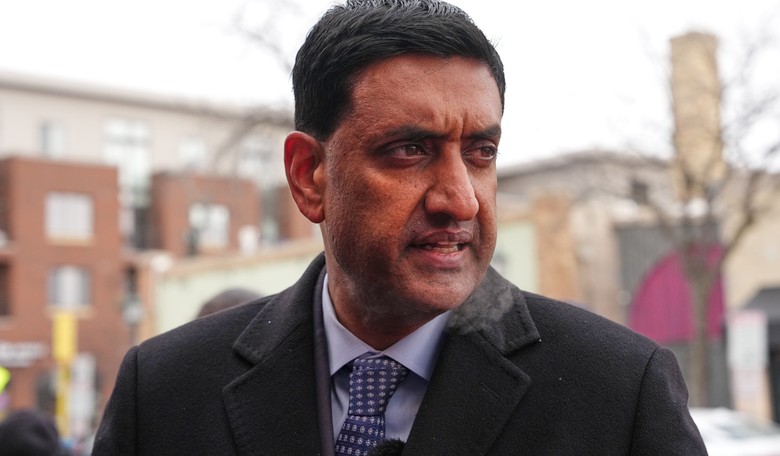
California Rep. Ro Khanna declared over the weekend that the Democrat Party establishment, which has now lost two elections to Donald Trump, has forfeited its right to dictate the party’s future or dismiss the increasingly rising progressive movement within its ranks as too radical.
At the Democrat National Committee’s Summer 2026 meeting in Austin on Saturday, Khanna laid out what he believes should replace the party’s failed establishment approach: a DSA-aligned economic agenda built around Medicare for All, free child care, and a “National Industrial Development Bank” to direct federal investment into neglected American towns.
Those who lost two elections to Trump have no standing to tell the next generation of Democrats that their ideas are too radical.
— Ro Khanna (@RoKhanna) August 16, 2026
✅Working class over Epstein class.
✅Medicare for All and free childcare.
✅National economic project to create good jobs.
America's next New Deal. pic.twitter.com/o6wSJbMVwr
"But no offense, we understand that those who have lost two elections to Trump are no experts on electability and have no standing to tell a new generation of Democrats that their ideas for justice are too radical," Khanna said.
We are for the working class over the Epstein class. Our vision for this party is to deliver America's next new deal. What does that mean? It means Medicare for all, no more excuses, no more half measures, free universal health care for every American now. It means free child care for America. For 80 billion that we spent in Iran, we could do that today. A decent life requires good jobs in communities that people actually live in.
The California Democrat went on to praise China as a model for American economic policy.
"That is why we need a National Industrial Development Bank that rebuilds places hollowed out, whether it's in North Country New Hampshire, Johnstown, Milwaukee, Bessemer, towns across this country," he added. "If China can invest 1.5 trillion dollars in a National Industrial Bank, why can't we?"
Khanna’s remarks come as the Democratic Socialists of America continues to gain influence nationwide. While some cast Francesca Hong’s loss in last week’s Wisconsin gubernatorial race as the end of the DSA’s ascent, the movement’s growing foothold inside the Democrat Party suggests otherwise.
Many of the Democrat Party’s traditional establishment figures have continued to cede ground to candidates further to their left, implicitly acknowledging both the electoral appeal of those candidates and the resonance of their policy prescriptions. Progressives have also attached themselves to an issue at the center of Americans’ growing anxieties: affordability. But their proposed cure is bound to prove worse than the disease itself.