


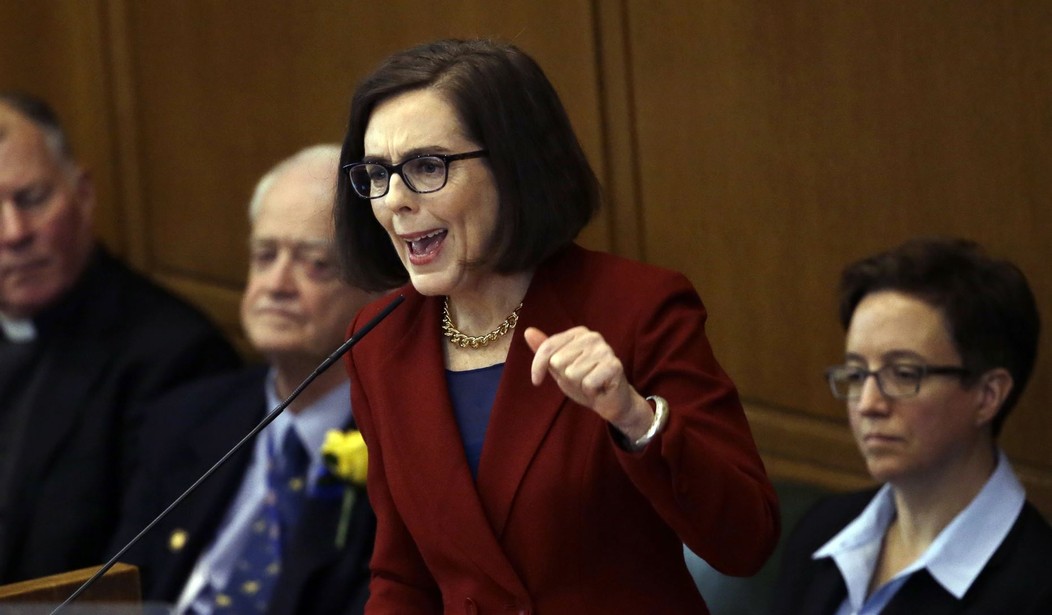
The Oregon Supreme Court on Thursday decided to ban ten Republicans from running for re-election after staging a record-long walkout last year to stall bills on abortion, transgender health care, gun rights, and other measures.
Siding with Democrat's ballot ban requests, the decision upholds the secretary of state's choice to disqualify GOP senators from the ballot under a voter-approved measure aimed at stopping such boycotts. Passed by voters in 2022, Measure 113 gives authority to the state constitution to bar lawmakers from re-election if they have more than ten unexcused absences.
Last year's walkout lasted roughly six weeks, halting the legislative session and stalling hundreds of bills.
The Oregon Senate Republican Caucus criticized the state's higher court decision, saying that the "Democrat-stacked supreme court sides with Democrats and union cronies on Measure 113 despite the plain language of Constitution." The caucus claimed that the Supreme Court is " effectively ending the service of ten Republican senators, who represent one-third of the Oregon Senate."
Five lawmakers, among the ten who are banned from re-election, filed a lawsuit over the secretary of state's decision. Republican Senators Tim Knopp, Daniel Bonham, Suzanne Weber, Dennis Linthicum, and Lynn Findley are named on the document.
"We obviously disagree with the Supreme Court'sCourt's ruling," Knopp, the chamber's minority leader, said. "But more importantly, we are deeply disturbed by the chilling impact this decision will have to crush dissent."
Weber said she was disappointed but not surprised the state's Democrat leaders— Gov. Kate Brown and Gov. Tina Kotek— sided in favor of the "political rhetoric rather than their own precedent."
"Every legal mind I've heard from, regardless of political leanings, has affirmed that when there is only one interpretation for the plain language of the law, that is final," Bonham said. "The language incorporated into the Oregon Constitution was clear, yet the Supreme Court ruled that voter intent, which cannot be determined by any metric, supersedes the Constitution. There is no justice in a political court."
Recommended

In December, during oral arguments before the Oregon Supreme Court, attorneys for the senators and the state argued over the grammar and syntax of the language added to the state constitution following Measure 113's113's approval. According to the amendment, lawmakers are not allowed to run " for the term following the election after the member's current term is completed."
The ten senators claimed the measure says they can seek another term since a senator's term ends in January while elections are held the previous November. They pointed out that the penalty doesn't take effect immediately but rather after they've served another term.
However, the court disagreed. They said that while the language of the amendment was vague, the information provided to voters in the ballot title and statement made it clear lawmakers who have more than ten absences would be barred from holding office in the next term.











Join the conversation as a VIP Member