


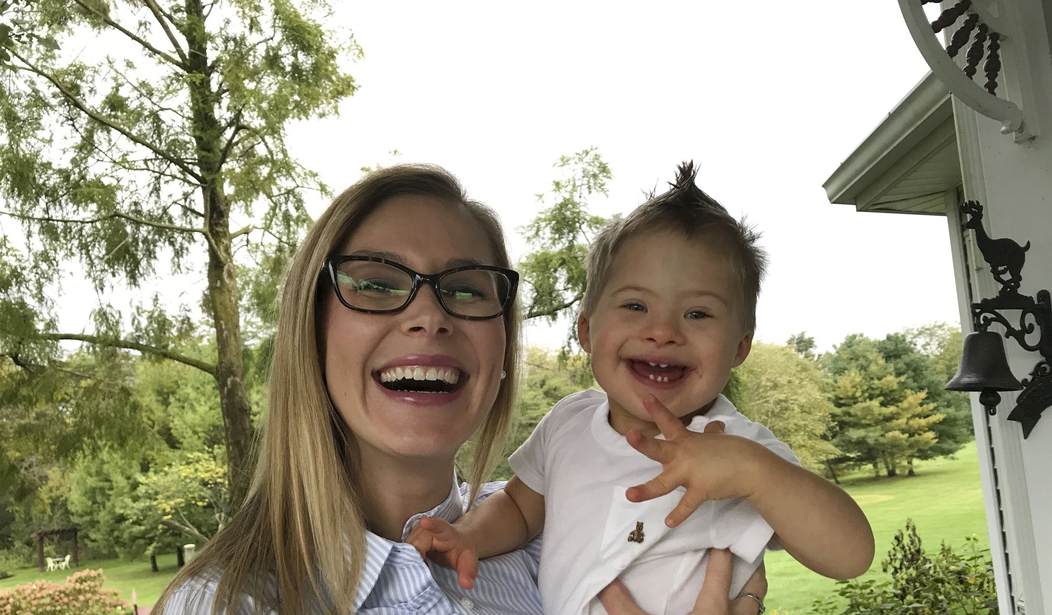
U.S. District Judge Tanya Walton Pratt issued a permanent injunction Friday, sought by Planned Parenthood of Indiana and Kentucky (PPINK) and the American Civil Liberties Union (ACLU), against a law that would have banned abortions that were solely based on a diagnosis of Down Syndrome or other genetic abnormalities.
The Indiana law, signed by then-Gov. Mike Pence in March 2016, said that “Indiana does not allow a fetus to be aborted solely because of the fetus's race, color, national origin, ancestry, sex, or diagnosis or potential diagnosis of the fetus having Down syndrome or any other disability.”
Pratt’s ruling solidifies her injunction against the law from June 2016. In Friday’s decision, Pratt concluded that the law was unconstitutional, arguing, “the very notion that, pre-viability, a State can examine the basis for a woman’s choice to make this private, personal and difficult decision, if she at some point earlier decided she wants a child as a general matter, is inconsistent with the notion of a right rooted in privacy concerns and a liberty right to make independent decisions.”
“It is a woman’s right to choose an abortion that is protected, which, of course, leaves no room for the State to examine, let alone prohibit, the basis or bases upon which a woman makes her choice,” she adds.
Pratt does acknowledge that “the parties are essentially in agreement that a significant number of women have sought, and will continue to seek, an abortion solely because of the diagnosis of a disability or the risk thereof” and that “the parties agree that the number of women who will seek an abortion at least in part out of these concerns will likely increase as testing is more widely available than ever before.”

She even cites the heightened abortion rates for unborn babies with Down syndrome and an attestation from the CEO of PPINK that it has and will continue to provide abortions to women who seek an abortion “solely because of a diagnosis of fetal Down syndrome or other genetic disabilities or the possibility of such a diagnosis.”
However, in Pratt’s reasoning, “although the State’s interest in protecting and even promoting potential life is a legitimate one, the Supreme Court has already weighed this interest against a woman’s liberty interest in choosing to terminate a pregnancy and concluded that, prior to viability, the woman’s right trumps the State's interest.”
According to CBS, the United States has an estimated abortion rate of 67 percent (1995-2011) for unborn babies diagnosed with Down syndrome.
Indiana has 30 days to appeal the decision. Planned Parenthood and the ACLU celebrated their legal win Monday.
Ken Falk, the ACLU's legal director, said in a press conference that "the United States Supreme Court has been quite clear that, especially in the first trimester, the woman's privacy right here means that she and she alone - in consultation with her doctor - can decide whether or not to obtain an abortion."
"Women do have the right to seek an abortion. Any type of legislation or efforts to go against that will be ruled unconstitutional," Christie Gillespie, president of Planned Parenthood of Indiana and Kentucky told reporters.










Join the conversation as a VIP Member