


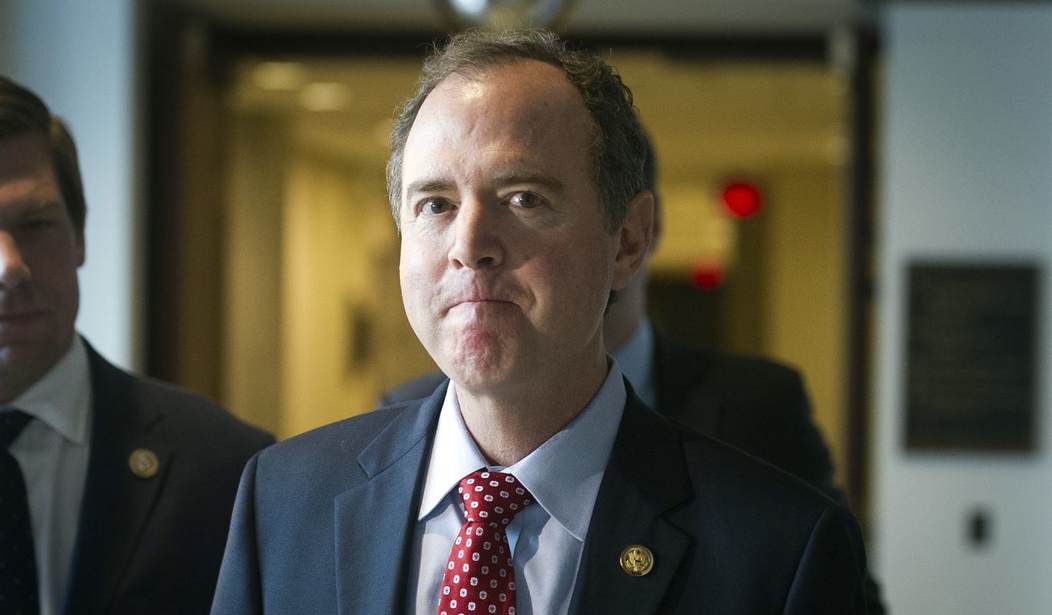
House Intelligence Committee Chairman Adam Schiff is slamming the Trump administration for its position on Iran, but just a few years ago, he took a different position on the world's largest state sponsor of terrorism.
During an interview on CBS' Face the Nation Sunday, Schiff accused President Trump of escalating tensions with Iran, despite the Islamic regime's continued funding of terror and recent movement of missiles to target American assets in the Middle East.
Trump has taken a series of steps to deliberately escalate tensions with Iran.
— Adam Schiff (@RepAdamSchiff) May 19, 2019
The result is all too predictable - it has. That’s not an intelligence problem, it’s a policy problem.
Trump must stop this dangerous game, and rein in advisors who seem hell bent on starting a war. pic.twitter.com/5W9kSDgXHL
The state run Tehran Times is quite pleased with Schiff blaming of the United States for Iran's continued aggression.
U.S. congressman: Our allies are isolating us and not Iran
In an interview with CBS news’ “Face the Nation” aired on Sunday, he chastised National Security Advisor John Bolton and Secretary of State Mike Pompeo for their “belligerent rhetoric” against Iran.
Schiff criticized the steps taken by the Trump administration “to renege on the Iran agreement, to try to force Europe to renege on the Iran agreement, to try to force Iran to withdraw from the agreement to go back to the path of enrichment, the designation of the IRGC as a terrorist group, the belligerent rhetoric from the administration from Pompeo, from Bolton.”
Recommended
Back in 2015, Schiff argued the Obama administration should be tougher on Iran and said force should be used if they failed to comply with the nuclear agreement.
"Instead of rejecting the deal, therefore, Congress should focus on making it stronger," Schiff posted on his official office website (bolding is mine). "First, we should make it clear that if Iran cheats, the repercussions will be severe. Second, we should continue to strengthen our intelligence capabilities to detect any form of Iranian noncompliance. Third, we should establish the expectation that while Iran will be permitted to have an enrichment capability for civilian use, it will never be permitted to produce highly enriched uranium, and if it attempts to do so, it will be stopped with force."
Before 9/11 Iran's largest proxy group, Hezbollah, murdered more Americans than any other terrorist organization in the world. Iran is also responsible for killing at least 600 U.S. troops during the Iraq war.
President Trump and Secretary of State Mike Pompeo have repeatedly stated on the record that the United States is not interested in an war with Iran. Iran, however, has been at war with the U.S for decades and continues its aggression toward Americans and their allies. The regime has quadrupled its uranium production and U.S. intelligence shows Iranian proxy groups planning tactical surprise attacks in the Persian Gulf.
Meanwhile, the pressure campaign imposed by the Trump administration is working. From the Washington Post:
The powerful Lebanese Hezbollah militia has thrived for decades on generous cash handouts from Iran, spending lavishly on benefits for its fighters, funding social services for its constituents and accumulating a formidable arsenal that has helped make the group a significant regional force, with troops in Syria and Iraq.
But since President Trump introduced sweeping new restrictions on trade with Iran last year, raising tensions with Tehran that reached a crescendo in recent days, Iran’s ability to finance allies like Hezbollah has been curtailed. Hezbollah, the best funded and most senior of Tehran’s proxies, has seen a sharp fall in its revenue and is being forced to make draconian cuts to its spending, according to Hezbollah officials, members and supporters.
Fighters are being furloughed or assigned to the reserves, where they receive lower salaries or no pay at all, said a Hezbollah employee with one of the group’s administrative units. Many of them are being withdrawn from Syria, where the militia has played an instrumental role in fighting on behalf of President Bashar al-Assad and ensuring his survival.
Programs on Hezbollah’s television station Al-Manar have been canceled and their staff laid off, according to another Hezbollah insider. The once ample spending programs that underpinned the group’s support among Lebanon’s historically impoverished Shiite community have been slashed, including the supply of free medicines and even groceries to fighters, employees and their families.
The sanctions imposed late last year by Trump after he withdrew from the landmark nuclear deal aimed at curbing Iran’s nuclear ambitions are far more draconian than those that helped bring Iran to the negotiating table under the Obama administration, and they are having a profound effect on the Iranian economy, analysts say.



Join the conversation as a VIP Member