


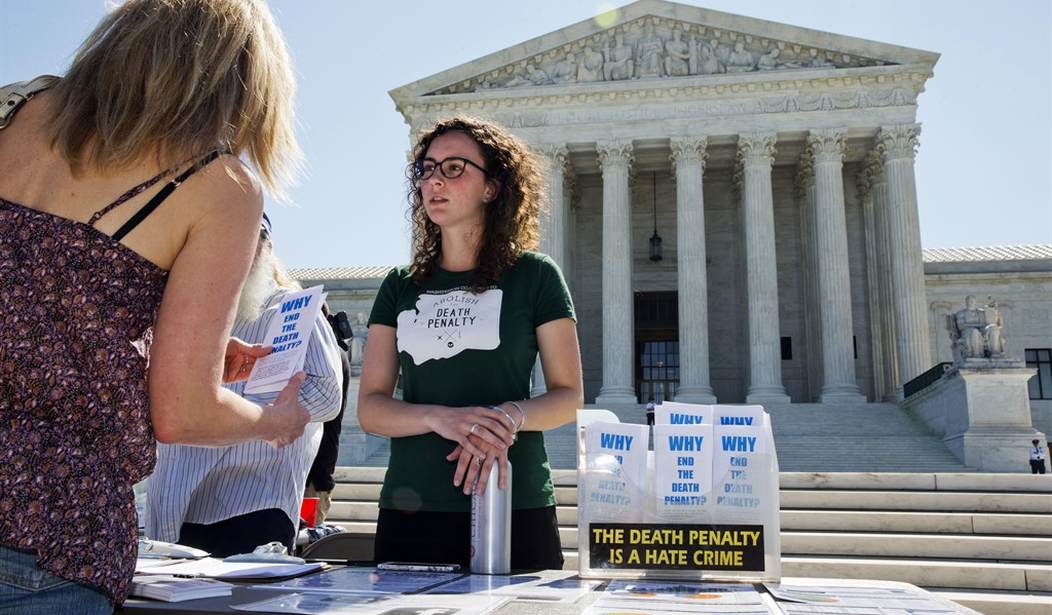
The Supreme Court decided today in a 5-4 decision that drugs used by the State of Oklahoma in lethal injections are not a violation of the Eighth Amendment and are not an example of cruel and unusual punishment. Scalia, Kennedy, Roberts, Thomas, and Alito (who authored the decision) voted in affirmation while Ginsburg, Sotomayor, Kagan, and Bryer dissented.
From Reuters:
The court, in a 5-4 decision with its conservative justices in the majority, handed a loss to three inmates who objected to the use of a sedative called midazolam, saying it cannot achieve the level of unconsciousness required for surgery, making it unsuitable for executions.
Justice Samuel Alito wrote on behalf of the court that the inmates had, among other things, failed to show that there was an alternative method of execution available that would be less painful.
In a dissenting opinion, liberal Justice Stephen Breyer said the court should consider whether the death penalty itself is constitutional. He was joined by one of his colleagues, Justice Ruth Bader Ginsburg.
Oklahoma's lethal injection procedures came in to question following the botched execution of Clayton Lockett. Lockett's execution took more than an hour before he eventually succumbed to a heart attack.
Due to the shortage of drugs used to carry out executions, states have had to develop new protocols for lethal injection. Utah, alternatively, recently re-approved the firing squad as an option for condemned inmates to pick for their execution method.










Join the conversation as a VIP Member