


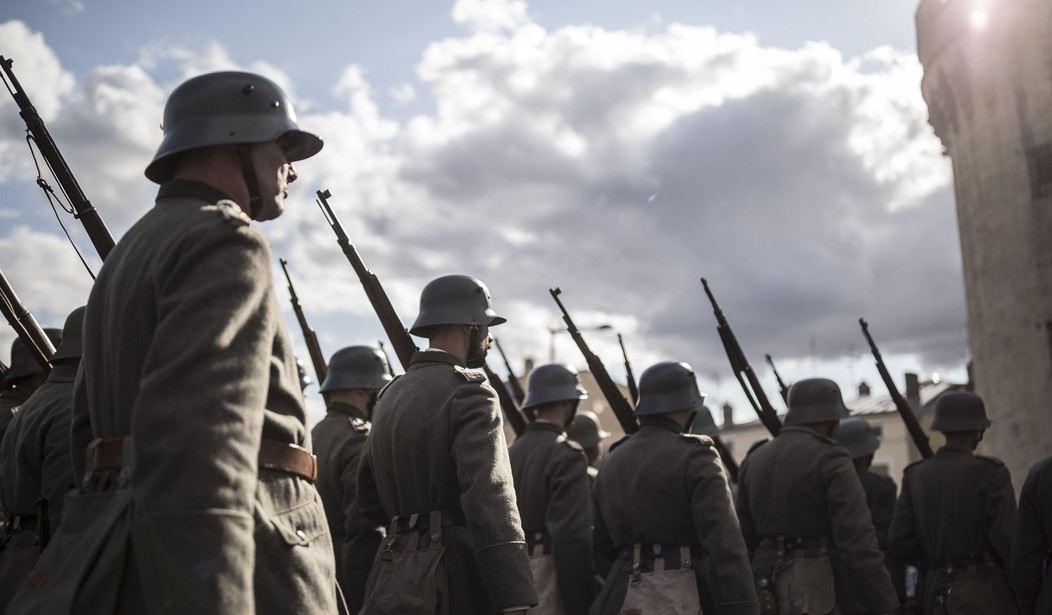
The Treaty of Versailles was signed in Versailles, France, on June 28, 1919. Neither the winners nor the losers of World War I were happy with the formal conclusion to the bloodbath.
The traditional criticism of the treaty is that the victorious French and British democracies did not listen to the pleas of leniency from progressive American President Woodrow Wilson. Instead, they added insult to the German injury by blaming Germany for starting the war. The final treaty demanded German reparations for war losses. It also forced Germany to cede territory to its victorious neighbors.
The harsh terms of the treaty purportedly embittered and impoverished the Germans. The indignation over Versailles supposedly explained why Germany eventually voted into power the firebrand Nazi Adolf Hitler, sowing the seeds of World War II.
But a century later, how true is the traditional explanation of the Versailles Treaty?
In comparison to other treaties of the times, the Versailles accord was actually mild — especially by past German standards.
After the 1870-1871 Franco-Prussian war, a newly unified and victorious Germany occupied France, forced the French to pay reparations and annexed the rich Alsace-Lorraine borderlands.
Berlin's harsh 1914 plans for Western Europe at the onset of World War I -- the so-called Septemberprogramm — called for the annexation of the northern French coast. The Germans planned to absorb all of Belgium and demand payment of billions of marks to pay off the entire German war debt.
In 1918, just months before the end of the war, Germany imposed on a defeated Russia a draconian settlement. The Germans seized 50 times more Russian territory and 10 times greater the population than it would later lose at Versailles.
Recommended
So, under the terms of the Versailles Treaty, the winning democracies were far more lenient with Germany than Germany itself had been with most of its defeated enemies.
No one denied that Germany had started the war by invading Belgium and France. Germany never met the Versailles requirements of paying fully for its damage in France and Belgium. It either defaulted or inflated its currency to pay reparations in increasingly worthless currency.
Versailles certainly failed to keep the peace. Yet the problem was not because the treaty was too harsh, but because it was flawed from the start and never adequately enforced.
The Versailles Treaty was signed months after the armistice of November 1918, rather than after an utter collapse of the German Imperial Army. The exhausted Allies made the mistake of not demanding the unconditional surrender of the defeated German aggressor.
That error created the later German myth that its spent army was never really vanquished, but had merely given up the offensive in enemy territory. Exhausted German soldiers abroad were supposedly "stabbed in the back" by Jews, communists, and traitors to the rear.
The Allied victors combined the worst of both worlds. They had humiliated a defeated enemy with mostly empty condemnations while failing to enforce measures that would have prevented the rise of another aggressive Germany.
England, France, and the United States had not been willing to occupy Germany and Austria to enforce the demands of Versailles. Worse, by the time the victors and the defeated met in Versailles, thousands of Allied troops were already demobilized and returned home.
The result was that Versailles did not ensure the end of "the war to end all wars."
As the embittered Marshal Ferdinand Foch of France, supreme commander of the Allied forces, presciently concluded of the Versailles settlement: "This is not peace. It is an armistice for 20 years."
Foch was right.
Twenty years after the 1919 settlement, the German army invaded Poland to start World War II, which would cost the world roughly four times as many lives as World War I.
After the Treaty of Versailles, the victorious Allies of 1945 did not repeat the mistakes of 1919. They demanded an unconditional surrender from the defeated Nazi regime.
The Western Allies then occupied, divided and imposed democracy upon Germany. Troops stayed, helped to rebuild the country, and then made it an ally.
In terms of harshness, the Yalta and Potsdam accords of 1945 were far tougher (on the Germans) than Versailles — and far more successful in keeping the peace.
The failure of Versailles remains a tragic lesson about the eternal rules of war and human nature itself — 100 years ago this summer.






Join the conversation as a VIP Member