


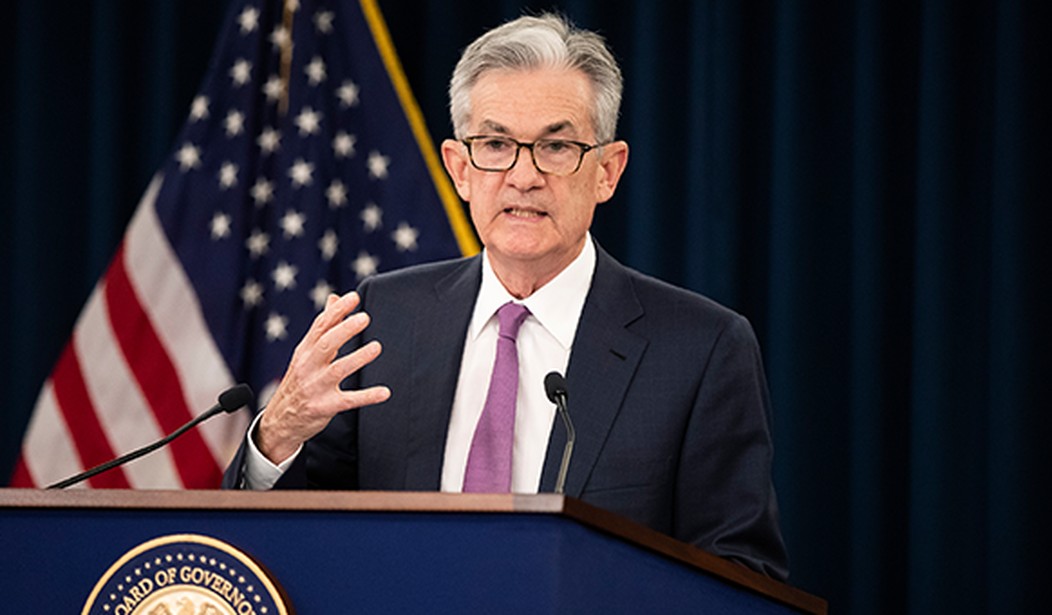
After presiding over the biggest Federal Reserve failure in 40 years and with inflation rating as the top concern among Americans, Jerome Powell's nomination to a second term as chairman was approved this past week by the Senate, 80 to 19.
I know the usual arguments for ignoring the Fed's spectacular errors, even at a time when inflation is such an issue. Most common are that other candidates would be even worse or that we need continuity. Maybe. The truth, though, is that a good person facing bad incentives in that job will make poor choices. Add in a lack of accountability and you repeatedly get bad policies. That type of continuity is not that appealing to me.
Inflation is rising globally, but it's much worse in the United States, largely because of the excessive spending legislated in early 2021 via the American Rescue Plan (ARP). Powell was a giddy cheerleader for the $2 trillion, which many warned would cause inflation -- especially as the Fed announced it would continue its overly accommodating monetary policy with no end in sight.
When inflation started to pick up, Powell argued that it was "transitory" because it was the product of supply-chain constraints. Apparently, no one at the Fed checked how many goods were getting through the ports. If they had, they would have known that by the end of 2020, more goods were getting through than before the pandemic. Also, in 2021, most countries barely suffered any inflation, which is incompatible with the theory that inflation is caused by global supply-chain disruptions.
And so, right under the chairman's nose, inflation accelerated.
Powell didn't just ignore the Fed's mandate to pursue price stability; he flouted this mandate with "innovative" inflation targeting. This was supposed to allow the economy -- and inflation -- to run hot in the name not only of reducing unemployment (another Fed mandate), but also the pursuit of shiny goals such as encouraging "inclusive" growth.
Recommended
When the chairman at the end of 2021 acknowledged that we had inflation, he still did very little about it. He didn't stop the Fed's purchase of treasuries until March 2022. Very small rate hikes were announced well into 2022, which likely will not be enough to tame inflation. Stunningly, many people still believed that those who failed to see inflation coming could engineer something that has never been done successfully in the past: a soft landing.
The reasons for this failure are many. A big one is that most people at the Fed, and in various agencies and outside of government, worship at the altar of Keynesian thinking. They believe that government spending solves all economic problems. Another source of failure is poor incentives. Politicians and bureaucrats (including the chairman) don't have the benefit of profit-and-loss signals sent by the market.
Most bureaucrats in executive agencies are also unelected and unappointed by the Senate, and, thus, are largely unaccountable to the public. Who will, for instance, lose their job at the Centers for Disease Control and Prevention for their many mistaken COVID-19 recommendations and diktats, including those on school closures and masking? The consequences will be paid by children for years to come but not by those responsible.
The need to secure Senate confirmation is no guarantee that higher-level bureaucrats will be held accountable, as evidenced by Powell's own nomination. But that too could be because senators aren't terribly accountable themselves.
Indeed, research shows that ordinary citizens don't often vote their representatives out of office for their big failures. In part, it's because many voters are rationally ignorant, as most can't or don't keep track of all the votes of everyone in Congress, or even of their own representatives on issues they truly care about.
Voters, for instance, often let politicians get away with failing to deliver on campaign promises. Republicans rarely suffer for claiming to support small government on the campaign trail but spending through the nose while in office. Meanwhile, Democratic legislators pretend to be the big defenders of lower-income voters and small business while supporting every crony program favoring large companies, hindering competition and raising prices at the expense of consumers.
Finally, the now-common practice of voting against a candidate, rather than for one, isn't conducive to accountability, either.
I therefore should not be shocked that Powell's renomination as Fed chairman sailed through the Senate. Under these circumstances, don't be surprised by the continued pursuit of bad policies.




Join the conversation as a VIP Member