


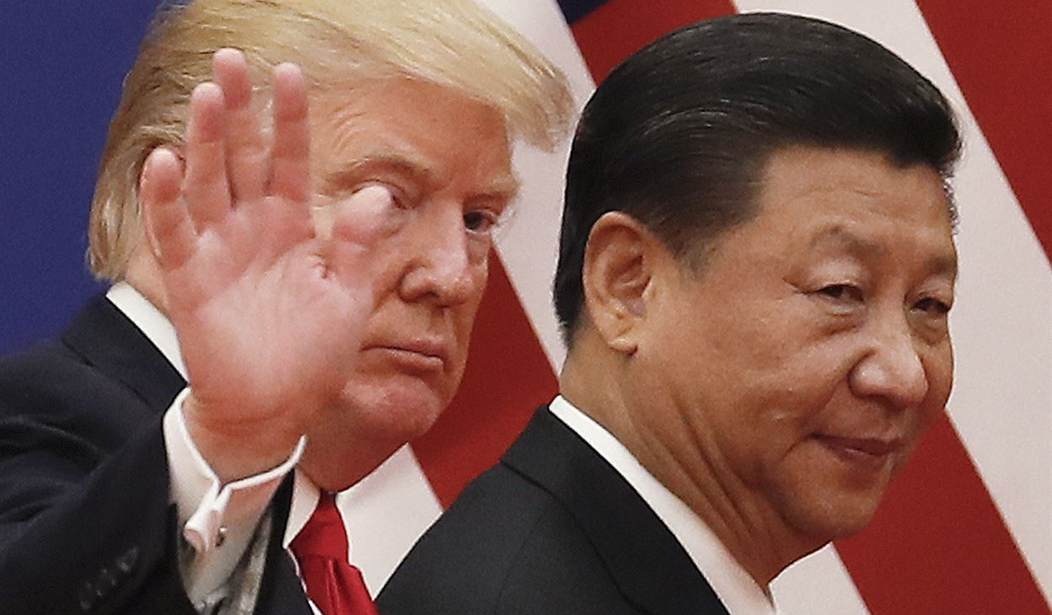
PARIS -- U.S. President Donald Trump boosted tariffs on Chinese goods this month, with the increases affecting nearly 6,000 products. "Trade war" talk abounds (along with the death-and-destruction language that goes with it), all because the cost of things like "Beach, Please" T-shirts at your local Walmart might go up a few cents.
We thought globalization had made nations such as China and the U.S. so interdependent that there was no realistic way back to a sense of self-preservation. Previous administrations had facilitated the outsourcing of jobs to China in exchange for cheap stuff being manufactured there and sold back to us. We simply shrugged off the economic ill effects because we were grateful for easy access to things like inexpensive smartphones that provide us with eye-riveting entertainment in times of boredom (like while navigating busy sidewalks, apparently).
It wasn't always so. It's easy to recall a time when our parents would smack something out of our little hands in a store and say, "That's made-in-China junk!" Such items were relatively rare at the time and didn't flood our store shelves.
Fast-forward a few decades, and the notion of "made-in-China junk" seems completely antiquated, as Chinese quality has increased while domestic quality has decreased in some cases in order for American manufacturers to remain competitive.
Not that a choice between American-made products and Chinese-made products was ever explicitly presented to us. No politician has campaigned on the notion of importing less expensive, lower-quality items to the detriment of domestic production. No one running for office ever said, "I'm going to fire up China's economy by sending them our manufacturing base so you can indulge in rampant consumerism and keep up with the Joneses for even less!" Instead, we were peddled the lofty idea of free trade with countries whose labor and human rights standards bore little resemblance to ours and who would benefit from such a partnership.
Recommended
Outsourcing a big chunk of our economic engine did indeed help China's economy grow. Now, we've reached the point where China has a large middle class to sell to and is on the verge of overtaking the U.S. as the world's top economy. It's not unreasonable to start dialing things back.
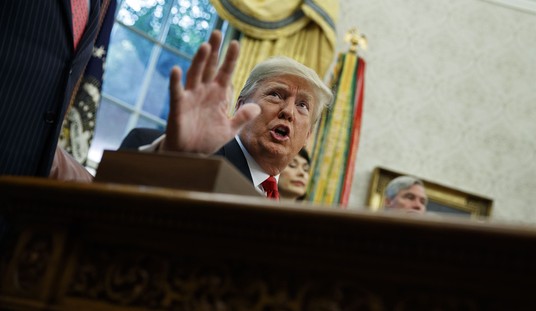
One way to level the playing field is to mark up the price of Chinese products to make them less attractive, as Trump has done. American importers will now be forced to pay 25 percent on $200 billion worth of Chinese goods. It's up to the importers whether to absorb that cost or to pass it along to consumers. In many cases, a markup would mean that an imported Chinese product would no longer be able to compete with a similarly priced or lower-priced American equivalent.
Some Western companies have found even China to be too expensive and have relocated their manufacturing bases to other Asian countries or Africa, seeking even lower standards and costs. It's a big world out there, and it's doubtful that Trump will be able to close every loophole for U.S. companies intent on bargain-basement dealing.
The blowback from China has come largely in the form of tariffs on U.S. agricultural imports. Trump has promised to use tariff revenues to offset farmers' losses. That's not a viable long-term solution, but it's going to take some time to untie this giant knot created by rampant, poorly planned globalization.
The tariff tiff with China presents another opportunity to forge "Fortress North America" with Canada and Mexico. It's likely no coincidence that Trump dropped steel and aluminum tariffs on Canadian and Mexican imports this month. An increased reliance on neighbors for trade will also negate the need to engage in foreign wars, which are almost always fought for economic reasons.
It's on economic matters that Trump's instincts really shine. Just a few years ago, de-globalization wasn't merely considered difficult; it was thought to be impossible. Trump's attempt to reverse the globalization trend deserves our full support. Someday, you might even be able to buy a "made in America" T-shirt at Walmart that says: "Veteran of the Trump-China Trade War."





Join the conversation as a VIP Member