








The government thinks you're stupid, or at least ignorant.
This isn't just an indictment of the current government or an indictment of government itself. It's simply a statement of fact. At its core, the government exists to do certain things that people aren't equipped to do on their own. The list of those things has gotten longer and longer over the years. In 1776, the federal government's portfolio could have easily fit in a file folder: maintain an army and navy, a few federal courts, the post office, the patent office and maybe a dozen or two other pretty obvious things.
Now, the file folder of things the federal government does is much bigger. To paraphrase Dr. Egon Spengler from "Ghostbusters," let's imagine that the federal government in 1776 was the size of this Twinkie (take my word for it, I'm holding a normal-sized Twinkie). Today that Twinkie would be 35 feet long, weighing approximately 600 pounds. Or, if that illustration doesn't work for you, consider this: The number of civilians (i.e., not counting the military) who work for the executive branch alone is today nearly equal to the entire population of the United States in 1776. The Federal Register, the federal government's fun-filled journal of new rules, regulations and the like, was about 2,600 pages in 1936 (a year after it was created). Today it's over 80,000 pages.
And that's just at the federal level. Each state government is a pretty giant-sized Twinkie, too. In Massachusetts, all kids in daycare are required by law to brush their teeth after lunch. In Texas -- Texas! -- if you don't have an interior design license, you can't call yourself an interior designer, lest some unsuspecting consumer trust your opinion on throw pillow placement without the backing of the state. Almost everywhere, Americans need a license to open a business -- sometimes even a lemonade stand -- but in Milwaukee, you even need a license to go out of business.
The justifications for all of these laws and all of these workers -- the good, the bad and the ugly -- have one thing in common: the assumption that the rest of us couldn't get by without them, whether we like it or not.
This week the feds took the first steps to ban trans fats. Why? Because trans fats are bad for you and you can't be trusted to avoid them on your own. I bring this up not because it is such an outrageous illustration of my point, but to demonstrate how typical it is. This is what the government does, day in, day out.
That's what makes the reaction to Obamacare so interesting. Several times now, the president has endeavored to explain that it's not that big a deal millions of Americans are losing their health insurance plans against their will. The people who had plans they liked didn't understand that the plans they liked were no good -- they were the actuarial equivalent of trans fats, don't you know? The fact that the people who held them liked them, thought they were good and wanted to keep them doesn't count for much, because the government knows best.
The president can't say it as plainly as he would like, because to do so would be to admit not only that he lied to the American people, but that he thinks the complainers are ignorant about their own needs and interests.
The president's more intellectually honest defenders have said exactly that. "Vast swathes of policy are based on the correct presumption that people don't know what's best for them. Nothing new," tweeted Josh Barro, politics editor for Business Insider.
Barro's fairly liberal, but I'd be dishonest if I said that he was wrong from a conservative perspective. The difference, however, is that conservatives tend to see government as a necessary evil, and therefore see policymaking with some humility. Liberals tend to see government as a necessary good, and see ordering people to do things "for their own good" as a source of pride, even hubris.
From a conservative perspective, telling people how to run their lives when not absolutely necessary is an abuse of power. For liberals, telling people how to run their lives is one of the really fun perks of working for the government.
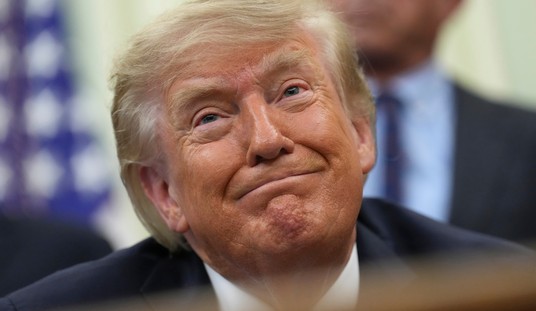
You can see the frustration on the president's face. It's almost like the ingrates who refuse to understand that his were necessary lies for their own good are spoiling all his fun.


Join the Conversation
VIP members get the ability to comment on articles.