


Last week a federal judge in Texas overturned that state's voter ID law, while a federal appeals court declined to reconsider its decision upholding part of a Texas abortion law enacted last year. Whether or not these statutes are ultimately deemed constitutional, they illustrate how politicians use trumped-up threats to conceal ulterior motives, a habit that makes honest debate impossible.
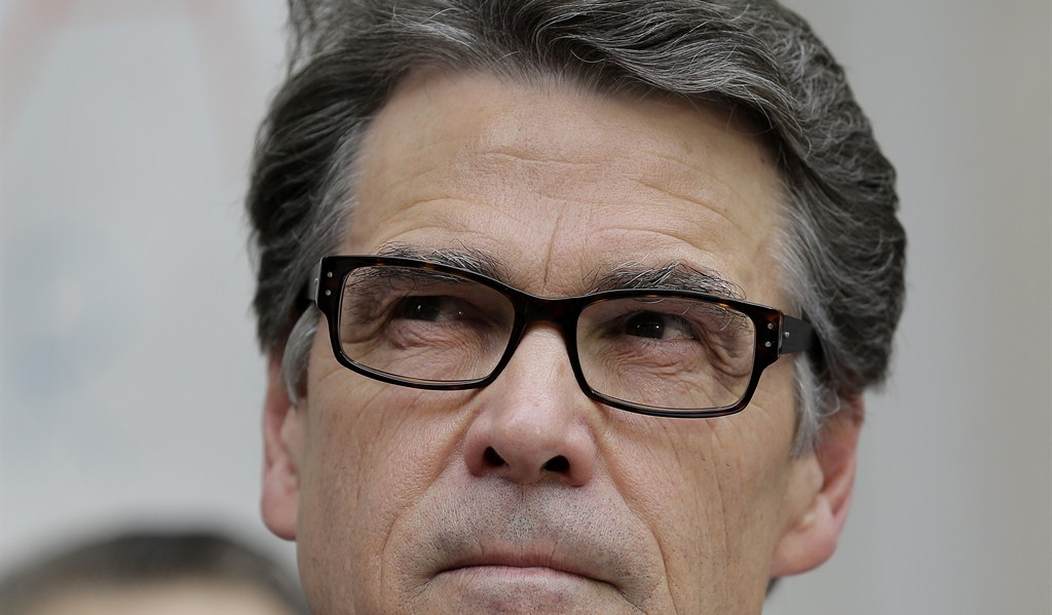
Republicans rushed the voter ID law through the Texas House and Senate in 2011 under extraordinary rules after Gov. Rick Perry declared a legislative "emergency." As with a similar declaration that New York Gov. Andrew Cuomo used to grease the skids for gun control legislation last year, the nature of this emergency was never clear.
In-person voter fraud, the only kind that the new ID requirements might help prevent, is a risky crime with little payoff. Not surprisingly, it seems to happen very rarely.
U.S. District Judge Nelva Gonzales Ramos notes in an opinion issued last week, just two people were convicted of trying to impersonate someone else at the polls in Texas during the decade before the voter ID law was passed. Nationwide, according to a study by Lorraine Minnite, a professor of public policy at Rutgers University, there were 10 such cases between 2000 and 2010. There is no credible evidence that the problem is on the rise, let alone that it constitutes an emergency in Texas or anywhere else.
Still, what's the downside of requiring voters to produce a state-approved photo ID? As Ramos emphasizes in concluding that the Texas law violates the 14th Amendment, the financial and logistical burdens it imposes, which effectively disenfranchise more than half a million voters, fall disproportionately on blacks and Hispanics, largely because they are especially likely to be poor.
For Republicans, that is a feature, not a bug, because blacks and Hispanics overwhelmingly vote for Democrats. Hence the otherwise puzzling pattern in which Republicans across the country seem to be so worried about voter fraud, while Democrats apparently do not care about it at all.
Another puzzle: Why are conservative Republicans who oppose abortion trying so hard to make the procedure as safe as possible? Perry provided a clue last March, after the U.S. Court of Appeals for the 5th Circuit upheld a rule requiring every physician who works at an abortion clinic to have admitting privileges at a hospital within 30 miles of the clinic.
"The people of Texas have spoken through their elected leaders and in support of protecting the culture of life in our state," Perry said. "Today's court decision is good news for Texas women and the unborn, and we will continue to fight for the protection of life and women's health in Texas."
Whoops. Perry apparently forgot that he is supposed to pretend the new abortion regulations -- which also include a prohibitively expensive mandate that abortion clinics meet the same requirements as ambulatory surgery centers -- are all about protecting women's health, as opposed to discouraging abortions by making them harder to obtain.
Perry's mistake is understandable because the official rationale for the law is highly implausible. "Before the act's passage," U.S. District Judge Lee Yeakel noted in an August 29 decision, "abortion in Texas was extremely safe, with particularly low rates of serious complications and virtually no deaths occurring on account of the procedure."
Furthermore, Yeakel concluded based on expert testimony, there is little reason to believe the new regulations will make abortions any safer. By contrast, they seem to be quite effective at making abortions harder to get: Since the rules began taking effect last August, the number of clinics in Texas has plummeted from more than 40 to eight.
You can see why Perry views the regulations as a boon for "the unborn" and "the culture of life." Meanwhile, to make sure the law passes constitutional muster, the state officially denies any such motive. That trick may very well work, but this sort of dishonesty is politically poisonous.







Join the conversation as a VIP Member