


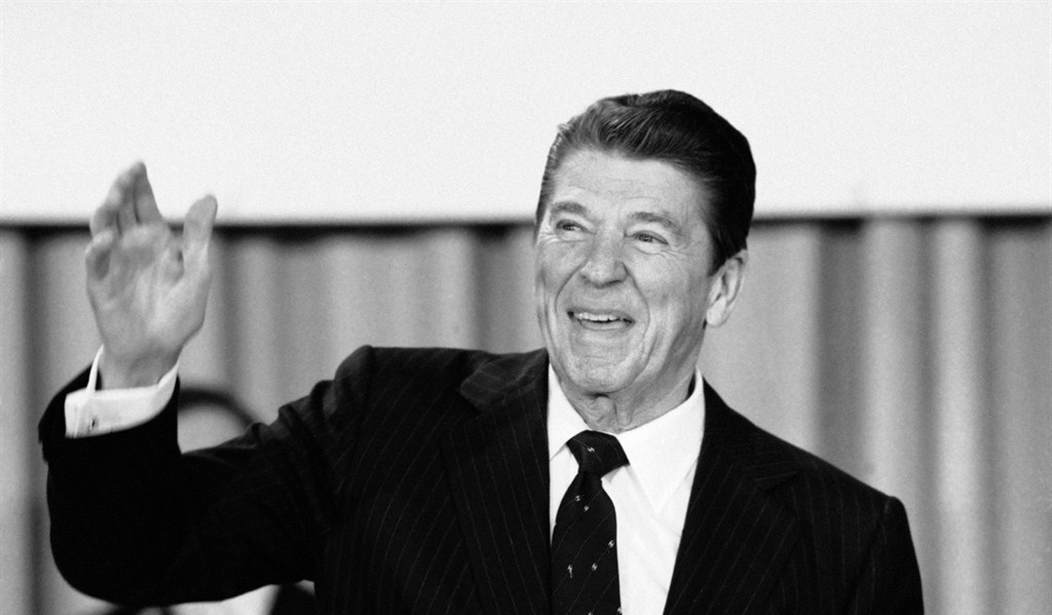
Today marks the 33rd anniversary of the signing of the Economic Recovery Tax Act by President Reagan at his beloved Rancho del Cielo.
The Economic Recovery Tax Act of 1981 was one of the signature pieces of legislation during Reagan’s tenure as President. The bill cut taxes by 25 percent for every American, the largest tax cut in American history.
President Reagan made it a point to sign this historic piece of legislation at his humble ranch home nestled away in the mountains outside of Santa Barbara. He recognized that the power rested with the people and not the bureaucrats in Washington. By signing the document at Rancho del Cielo, he sent the message to the country that he was a President who had the people’s best interests at heart.
Once these tax cuts were implemented, youth unemployment plummeted. Youth unemployment began at 18.8 percent under Reagan and fell to 10.7 percent by the end of his Presidency. Reagan believed in economic freedom and the idea that every individual should have the opportunity to prosper if they worked hard.
Compare that to today. Youth unemployment sits at a high of 18.1 percent with no hope of improvement. Millennials are now realizing their post-graduation employment opportunities are slim. Currently six million young people are idle, which means they are neither attending school nor working. Others are living at home, working part-time jobs, barely able to afford their monthly student loan payments. How will this generation be able to prepare for retirement or save to buy a house or achieve their “American Dream?”
Today’s young people deserve better than the current President offers with his detrimental economic policies. Young people were some of Obama’s most enthusiastic supporters, but now the reality of their support is burdensome. The promises of free healthcare and employment after college never came to fruition. The reality is that Reagan’s signature piece of legislation helped young people and led to a long period of economic growth, whereas Obama’s signature legislation, Obamacare, is killing jobs and creating economic hardship for many Americans-- especially millennials.
Reagan recognized that Washington’s power needed to be limited and controlled which is vastly different than the viewpoint of the current President, who constantly puts more power in the hands of federal bureaucrats. Ronald Reagan is quoted as famously saying, “The government isn’t the solution to our problems. Government is the problem.” Obama’s policies have created little to no opportunity for America’s youth. His policies are the problem.
President Reagan was a champion of young people and truly believed in enacting initiatives that created a bright future for them. On this anniversary of the largest tax cut in American history, let us renew our commitment to Reagan’s lasting accomplishments by advancing the principles of economic freedom, individual liberty, and opportunity.







Join the conversation as a VIP Member