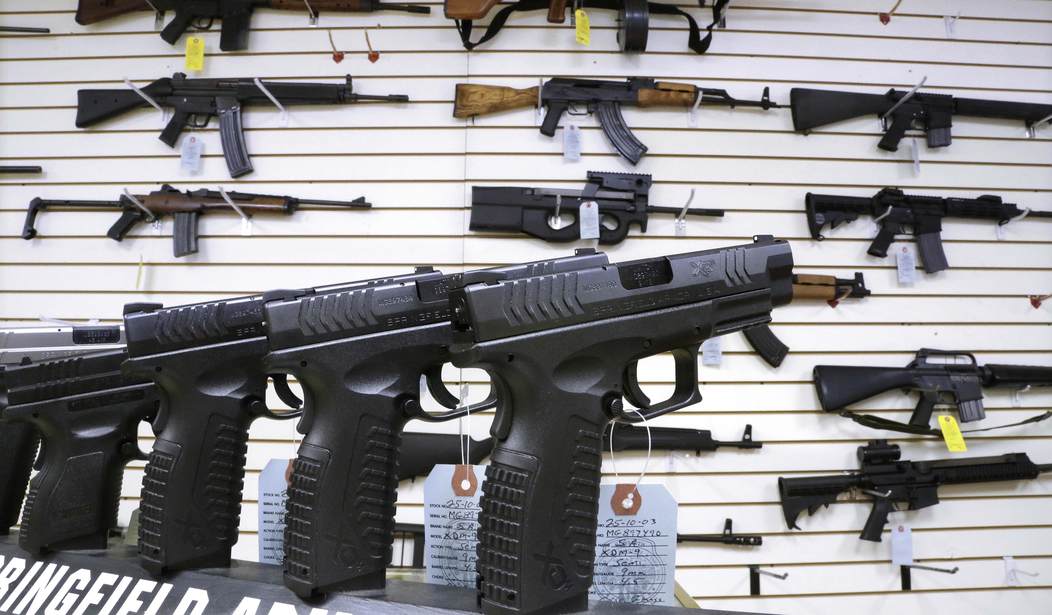

The idea behind a 72-hour waiting period is that it allows people to "cool off," supposedly. This has been reportedly linked to a drop in suicides, according to researchers. Those researchers have never looked at how many people tried to get a gun due to safety concerns, only to be killed before they could get the gun, weirdly enough.
Vermont has such a waiting period, though, and it's being challenged.
It's blatantly unconstitutional since there's no way anyone would tolerate other rights being trampled on in a similar manner, but it's still a law, and it's not a particularly uncommon one. Back in the day, there was a serious push for such a waiting period at the federal level.
Now, the Second Amendment Foundation and its partners just filed an amicus brief in their challenge against this particular measure.
From the press release:
The Second Amendment Foundation (SAF) and its partners have filed an amicus brief with the U.S. Court of Appeals for the Second Circuit supporting plaintiffs-appellants in Vt. Fed. of Sportsmen’s Clubs, Inc. v. Birmingham, a case challenging Vermont’s 72-hour waiting period for firearm purchases.
SAF is joined in the amicus by the California Rifle & Pistol Association, Second Amendment Law Center, Minnesota Gun Owners Caucus and National Rifle Association.
“The district court’s ruling defies Bruen and Rahimi by misapplying the Second Amendment’s historical test and creating a false ‘fork’ in the analysis for so-called ‘ancillary’ rights, and by relying on unserious analogues like laws disarming intoxicated persons,” said SAF Director of Legal Research and Education Kostas Moros. “History shows no tradition of waiting periods, even as mass production made guns widely available in the 19th century. We urge the Second Circuit to reverse and restore the proper Bruen framework.”
The Tenth Circuit recently struck down a similar waiting period in Ortega v. Grisham, and several other cases challenging waiting periods are pending nationwide. The brief also relies on primary sources in the form of historical newspaper advertisements offering firearms for sale as far back as 1745.
“The right to keep and bear arms doesn’t have a timestamp and should be afforded to anyone wishing to legally purchase a firearm,” said SAF founder and Executive Vice President Alan M. Gottlieb. “SAF is also challenging similar restrictions in other cases, as we believe waiting periods to exercise a constitutional right are impermissible and are a direct infringement on the Second Amendment rights of peaceable citizens.”
The Bruen decision made it so there had to be a historic analog for any gun control law to be considered constitutional. Rahimi "clarified" the ruling by saying the analog didn't have to be one-to-one. It just had to be similar.
However, as Moros notes, the laws disarming drunk individuals are a far cry from preventing someone from buying a gun for a period of time simply because you think it would be best if everyone had to wait.
That's not how the precedent was intended, and the district court likely knew it.
What probably happened is that the judge already knew they wanted to uphold the law, and just twisted historical analogs as much as possible to rationalize the decision. Of course, that only works if everyone else down the judicial line agrees, and that's far from guaranteed.
While I don't expect the initial case in the Second Circuit to fix this mess, it's just another step in the road.
Eventually, the Supreme Court will have to rule on this, and I don't see it being as stupid as the district court was.