


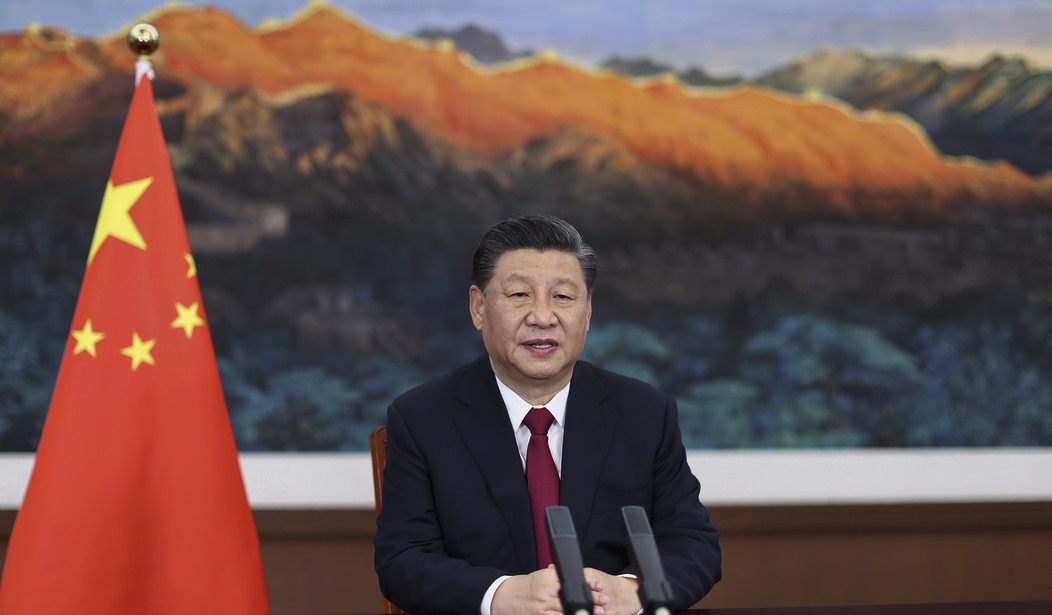
A new piece of bipartisan legislation recently introduced in Congress aims to tackle the alarming practice of America's "foreign adversary entities" such as China buying up swaths of land across the United States — including properties near sensitive military installations.
Led by House Select Committee on the Strategic Competition Between the United States and the Chinese Communist Party Chairman Mike Gallagher (R-WI) and Rep. Mike Thompson (D-CA), the bill would grant CFIUS — the Committee on Foreign Investment in the United States — jurisdiction over most land purchases by such adversarial entities.
The only purchases exempted from CFIUS would be urban real estate and single housing units and, if successful, the bill would be the first update to CFIUS' jurisdiction in five years.
Specifically, the legislation would give CFIUS authorization to consider American food security as a relevant factor in its reviews of transactions and give the Secretary of Agriculture a vote in reviews of farmland or agriculture technology transactions.
In addition, it would "[e]stablish a negative presumption ('presumption of non-resolvability') for CFIUS reviews that raises the approval threshold for CFIUS transactions by a foreign adversary entity purchasing land near sensitive sites (e.g. major military sites, acknowledged intelligence facilities, etc.)" and "expand the list of sensitive national security sites designated for CFIUS jurisdiction."
"The United States cannot allow foreign adversaries like the Chinese Communist Party and its proxies to acquire real estate near sensitive sites like military bases or telecom infrastructure, potentially exploiting our critical technology and endangering our servicemembers," remarked Chairman Gallagher in a statement. "This bill gives CFIUS jurisdiction over foreign adversary real estate transactions to guard against the threat of the CCP and other adversaries purchasing land for malign purposes, and it also encourages CFIUS to consider food security issues as it evaluates the national security risk of a given transaction."
Recommended
Rep. Thompson emphasized that “[p]rotecting national security and food security go hand in hand in our region – which is why it is vital to know who owns land around national security sites. The bipartisan legislation I am introducing with Chairman Gallagher will help identify foreign actors who are seeking to purchase land near military installations while maintaining food security throughout our country," added Thompson.
Rep. Ashley Hinson (R-IA), who helped introduce the bipartisan legislation, reminded that the "CCP isn’t buying up U.S. farmland at random – it is a deliberate effort to exert control over our food supply and have easier access to military sites."












Join the conversation as a VIP Member