







New numbers from the Department of Homeland Security show that just 9 percent of asylum claims made by individuals from Central America turn out to be legitimate.
"The low statutory requirements and legal loopholes in our laws encourage aliens to claim credible fear at our Southern border knowing they will be promptly released into the interior with work permits pending the determination of their full claim. In recent years, data shows that more than 65 percent of asylum seekers at our border are from Central America – of those 89 percent pass their initial credible-fear interview," DHS spokesperson Katie Waldman released Thursday afternoon. "Yet, the harsh reality is that 31 percent of aliens who pass that initial interview do not even show up for their hearing, while a staggering 40 percent of aliens who pass their initial interview do not even file an application."
"Ultimately, only 9 percent of Northern Triangle petitioners are found eligible for asylum by a judge – leaving 91 percent ineligible for asylum," she continued. "The fact that only 9 percent of those who initially claim asylum are found eligible, indicates that we are expending most of our limited resources – detention space, court space and the time of our asylum officers and immigration judges – denying frivolous or illegitimate claims of asylum from the 9 out of 10 who are found ineligible."
Current U.S. immigration law requires illegal aliens traveling from Central America as a family unit, specifically with children, to be released into the interior of the United States after 20 days of federal detention.
"Where are those 91 percent today? While some are properly removed from the U.S. by Immigration and Customs Enforcement (ICE), many of those who are released on a promise to appear in court disappear into the country’s interior to live and work illegally. In FY17, only 1 percent of the 226,119 removals conducted by ICE were on Alternatives to Detention," Waldman said.
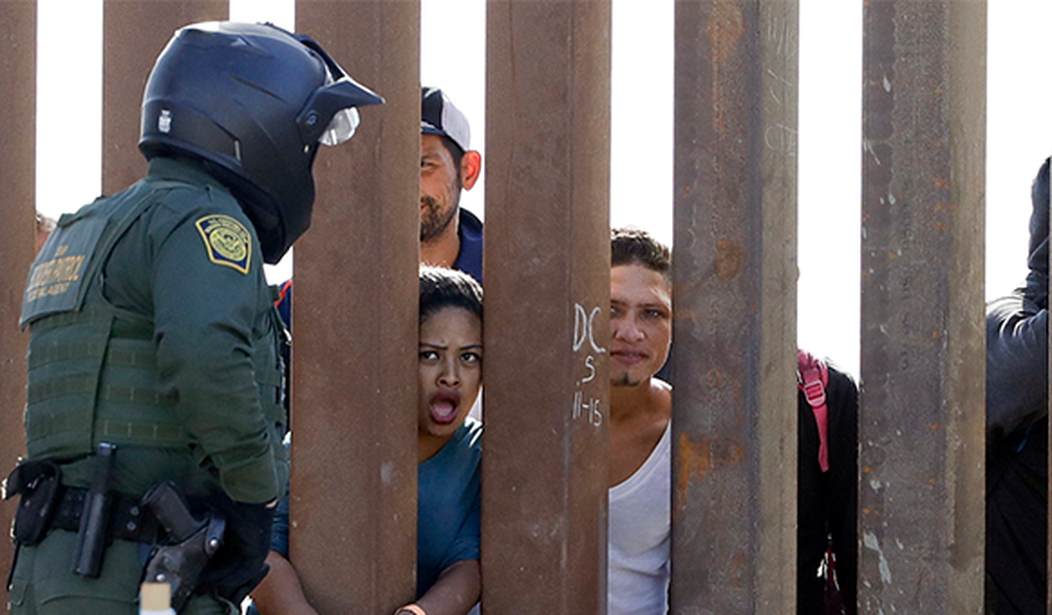
Meanwhile, thousands of caravan members are still camped out in Tijuana with thousands more along the way. Reporters on the ground, in addition to Border Patrol agents, have repeatedly pointed out the majority of individuals in the caravan are young men who are not legitimately seeking asylum.
"What I saw on the border yesterday was not people walking up to Border Patrol agents and asking to claim asylum," San Diego Sector Border Patrol Chief Rodney Scott said during a recent interview with CNN. "One of the groups that I watched and several of them were arrested, they passed 10 or 15 marked Border Patrol units walking west to east. Numerous uniformed personnel as they were chanting, waving a Honduran flag and throwing rocks at the agents. If they were truly asylum seekers, they would have walked up with their hands up and surrendered. That is not what took place."


Join the Conversation
VIP members get the ability to comment on articles.