







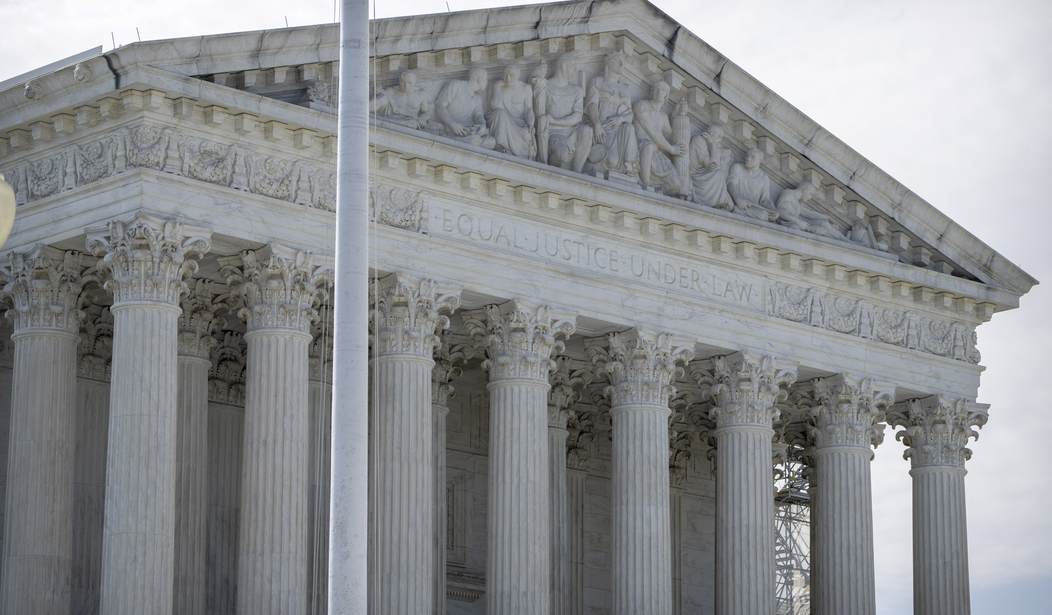
The Supreme Court has agreed to hear the case of Curtrina Martin, a Georgia resident whose home was wrongly raided by the FBI.
The eventual ruling will determine whether federal agencies can be held civilly liable when their actions adversely affect American citizens.
Martin lived with her fiancé and seven-year-old son back in 2017 when the raid happened. The authorities were trying to apprehend a gang member who lived near the couple.
On an early morning in 2017, Martin and her then-fiance, Hilliard Toi Cliatt, were awoken by the FBI detonating a flash grenade in their home and ripping their door from its hinges. The agents then made their way to their bedroom and found the couple hiding in the closet, where they had retreated in fear; an officer dragged Cliatt out and handcuffed him, while another pointed his gun and screamed at Martin, who says she fell on a rack in the rapidly unfolding mayhem. Her 7-year-old son was in his room, and she says her mind went to a dark place.
"I don't know if there is a proper word that I can use" to capture the fear she felt, Martin told me this summer.
The FBI would not find who they came for, because the suspect didn't live there, nor did he have any relation to Martin or Cliatt. When Martin sued, the 11th Circuit not only gave immunity to Lawrence Guerra, the leader of the SWAT raid, but the judges also said her claims could not proceed under the Federal Tort Claims Act (FTCA), the legislation that allows people to bring various state torts against the federal government.
However, there is an exception to the FTCA. Private individuals are allowed to sue the federal government if its agents engage in behavior that a civilian could be held liable for in the state in which the incident occurred, according to SCOTUSBlog.
This is Curtrina Martin & her son.
— Billy Binion (@billybinion) January 28, 2025
A few years ago, the FBI set off a grenade in their home & smashed the door in. But their suspect wasn't there. Because the FBI had the wrong house.
The family was barred from suing—and the Supreme Court just agreed to hear the case. A thread. pic.twitter.com/7dLXH37b5b
Martin’s case has drawn the attention of several lawmakers, including Sens. Ron Wyden (D-OR), Rand Paul (R-KY), and Rep. Thomas Massie (R-KY). They, along with other lawmakers, have called on the Supreme Court to take up the case.
This could be a landmark case that results in less immunity for federal law enforcement agencies. When these agencies take actions that unduly harm citizens, even if by mistake, there should be recourse. The FBI and other agencies should never be shielded from accountability when they engage in wrongdoing, and the Supreme Court’s ruling will be critical.

Join the Conversation
VIP members get the ability to comment on articles.