
Of all the classes in American life, none is less understood, and more relentlessly hated, than the wealthy.
They are the subject of ire from the political left, and increasingly, from parts of the political right as well, accused of buying undue influence over government, of hollowing out the industries and communities their innovations disrupted, and, above all, resented simply for the size of what they've built.
While the specifics of the complaint change depending on who's making it, the underlying suspicion remains the same: There is something faintly illegitimate about having a certain level of wealth, in a world where so many have so little. That suspicion rarely stops at the wealth itself. It metastasizes, without exception, into something larger, a referendum on the profit motive, on greed, on the very idea of self-interest that powers not just American capitalism, but the economic engine of the entire globe. To question a billionaire's fortune, in other words, is very often to question the entire system that made the fortune possible in the first place.
It is time to reframe what that self-interest actually is. Not the cold instinct we've been taught to picture, but something closer to the opposite. When a person becomes wealthy in a free market, the value they created for society does not leave them owing some further debt to be repaid. The debt is already settled, paid in full, baked directly into the fortune itself, whether anyone bothers to notice or not.
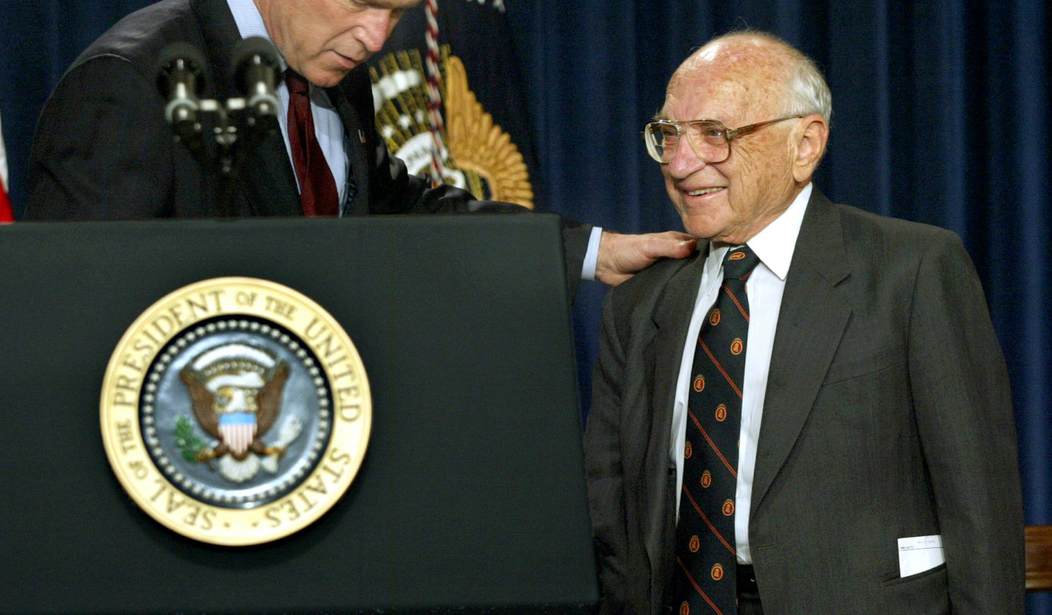
Milton Friedman:
— Milton Friedman Quotes (@MiltonFriedmanW) July 16, 2026
“Self-interest is not myopic selfishness. It is whatever it is that interests the participants, whatever they value, whatever goals they pursue.
The scientist seeking to advance the frontiers of his discipline, the missionary seeking to convert infidels to the… pic.twitter.com/xa4CdJNRRO
“Self-interest is not myopic selfishness. It is whatever it is that interests the participants, whatever they value, whatever goals they pursue," world-renowned free-market economist Milton Friedman said in an episode of his "Free to Choose" television series. "The scientist seeking to advance the frontiers of his discipline, the missionary seeking to convert infidels to the true faith, the philanthropist seeking to bring comfort to the needy—all are pursuing their interests, as they see them, as they judge them by their own values.”
This does more than provide society with a level of economic freedom, allowing each person to decide how they wish to pursue their own living. It means that by virtue of working and following your own interests, you are, by requirement, giving service to the rest of society at the same time. It's a truth many refuse to believe, and one many others simply choose to ignore.
That mechanism isn't a matter of good intentions or charitable impulse. It doesn't require a conscious choice to help others, and it doesn't rely on the goodness of people to drive virtue. It's simple mechanics. In a free market, nobody can force you to hand over your money. The only way to get it is to offer something the person values more than the money itself. Multiply that exchange across a lifetime, across millions of customers, and a fortune is no longer evidence of exploitation or greed. It is a running vote, cast voluntarily by everyone who has ever paid, that the product or service was useful and beneficial to them.
This is how conservatives ought to be talking about wealth, and largely have forgotten how to. Wealth is not the product of greed or moral bankruptcy; it is the clearest record we have of a person's contribution to the society around them.
The alternative, the belief that wealth is theft, that the state must step in to correct what the market supposedly lets people steal, is not some new insight into fairness. It is the same old road to serfdom, where self-interest is unfairly recast as sin. A society that forgets this distinction loses the very thing that made it prosperous in the first place: the freedom to pursue one's own interest, and in doing so, to serve everyone else's.