





A large part of Oklahoma was just canceled. The Supreme Court ruled on Thursday that millions of acres in eastern Oklahoma -- including Tulsa, the state's second-largest city -- are still part of an American Indian reservation.
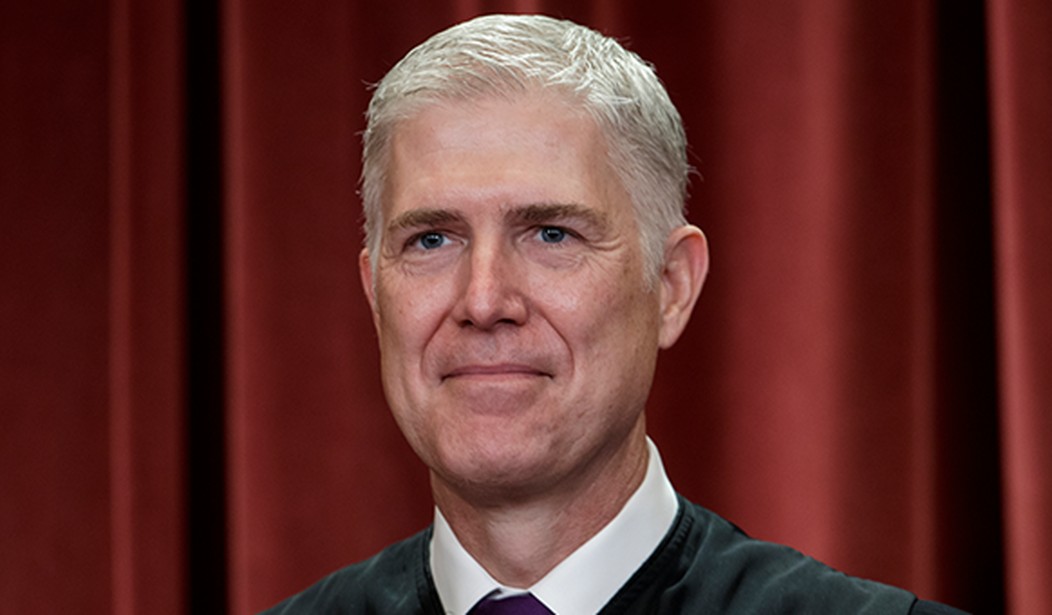
In a 5-4 decision, the Supreme Court agreed with a convicted rapist who argued that his 1997 rape conviction should be overturned because the state of Oklahoma lacked jurisdiction. Neil Gorsuch sided with the liberal wing, ruling that Congress failed to disestablish the 1866 boundaries of the reservation. The decision is a can of worms, raising far more questions than it answers regarding the status of other criminal convictions, the state's ability to enforce regulations, and millions of U.S. citizens who now find themselves on tribal lands and possibly subject to the jurisdiction thereof.
"Today we are asked whether the land these treaties promised remains an Indian reservation for purposes of federal criminal law. Because Congress has not said otherwise, we hold the government to its word," Gorsuch wrote in a decision.
But in a dissenting opinion, Chief Justice John Roberts argued that Congress was clear about its efforts to disestablish the boundaries of the reservation.
"The court suggests that Congress sought to 'tiptoe to the edge of disestablishment,'” Roberts wrote. "Quite the opposite. Through an open and concerted effort, Congress did what it set out to do: transform a reservation into a state."
"In 1997, the State of Oklahoma convicted petitioner Jimcy McGirt of molesting, raping, and forcibly sodomizing a four-year-old girl, his wife’s granddaughter," Roberts wrote in the opinion joined by Justices Alito, Kavanaugh and Thomas. "McGirt was sentenced to 1,000 years plus life in prison. Today, the Court holds that Oklahoma lacked jurisdiction to prosecute McGirt—on the improbable ground that, unbeknownst to anyone for the past century, a huge swathe of Oklahoma is actually a Creek Indian reservation, on which the State may not prosecute serious crimes committed by Indians like McGirt. Not only does the Court discover a Creek reservation that spans three million acres and includes most of the city of Tulsa, but the Court’s reasoning portends that there are four more such reservations in Oklahoma. The rediscovered reservations encompass the entire eastern half of the State—19 million acres that are home to 1.8 million people, only 10%–15% of whom are Indians."
USA Today reports that the state's solicitor general, Mithun Mansinghani, warned back in May that such a ruling might require the release of over 1,700 inmates.
"Across this vast area, the State’s ability to prosecute serious crimes will be hobbled and decades of past convictions could well be thrown out," Chief Justice Roberts warns. "On top of that, the Court has profoundly destabilized the governance of eastern Oklahoma."
The dissenting justices go on to write that the decision destabilizes "the governance of Oklahoma," creating "significant uncertainty for the State's continuing authority over any area that touches Indian affairs." These areas include things like zoning, taxation, environmental and family law.
Outlandish Supreme Court decision, by Justice Gorsuch, "discovers" after 100 years, that half of Oklahoma (including much of Tulsa) is actually an Indian reservation! https://t.co/6WyaPIFTCS
— Tom Fitton (@TomFitton) July 9, 2020
Moderates: "Calm down, America isn't falling apart..."
— Michael Knowles (@michaeljknowles) July 9, 2020
SCOTUS: *deletes Oklahoma*
The decision that will have a far-reaching impact for millions of Oklahomans was overshadowed by another Supreme Court ruling on Thursday that grants New York prosecutors access to eight years of President Trump's tax returns.


Join the Conversation
VIP members get the ability to comment on articles.