





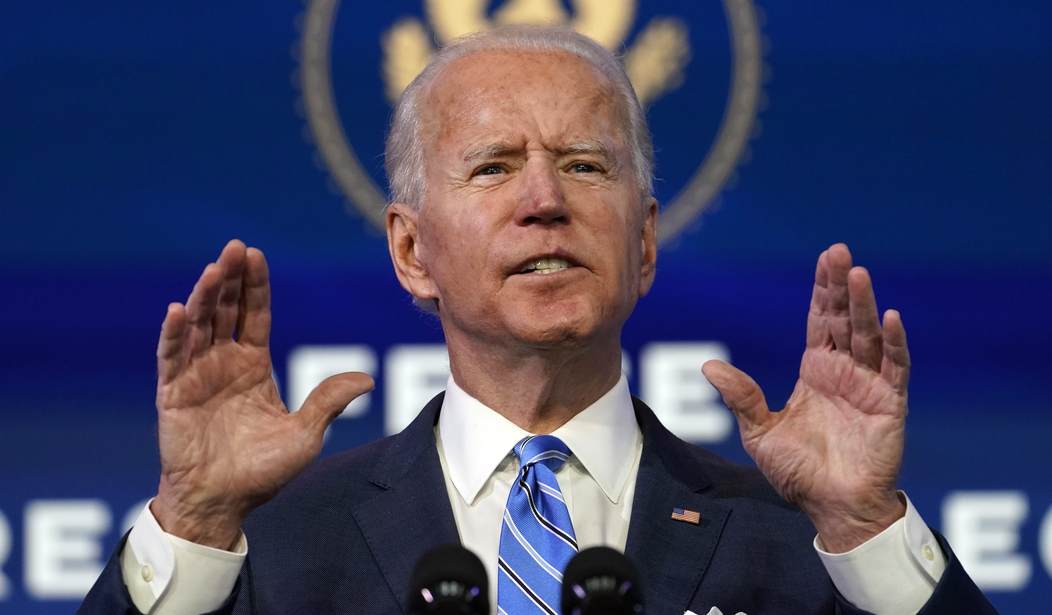
When President Joe Biden announced former South Bend, Indiana Mayor Pete Buttigieg as his pick for Transportation Secretary, many scratched their heads. Why would he tap someone who oversaw a small budget, in a small town, in the midwest for such a role? That puzzle is finally coming together.
It turns out that Biden favors Buttigieg's transportation views, specifically the idea that America should move away from the gas tax and instead opt into a tax based on the number of miles a person travels. It would be a new way to provide cash for the Highway Trust Fund, which currently funding from the federal gas tax. As it currently stands, the federal gas tax is 18.4 cents per gallon and 24.4 cents per gallon for diesel.
Liberal states, like California, Oregon, Washington State, and Colorado are already contemplating this so-called "alternative."
Biden's administration would have to figure out how to pay for his $1 trillion infrastructure plan, which includes $160 billion for the transportation department.
During his confirmation hearing with the Senate Commerce, Science, and Transportation Committee on Thursday, Buttigieg explained his take on the gas tax.
"I think all options need to be on the table. As you know, the gas tax has not been increased since 1993, and it has never been pegged to inflation, and it's one of the reasons why the current state of Highway Trust Fund is that there's more going out than coming in," Buttigieg said about a potential tax increase. "In the long term, we need to bear in mind also that as vehicles become more efficient and as we pursue electrification, sooner or later, there will be questions about whether the gas tax can be effective at all."

Instead, the transportation nominee wants to consider taxing Americans on the number of miles they drive.
"A lot has been suggested recently about the idea of vehicle-miles-traveled-based, so if we're committed to the idea of user-pays, then part of how you might do that would be based on vehicle miles traveled," he said. "But that raises, of course, concerns about privacy and there remains some technological questions too. These are examples of some of the things that could be part of the solution, but I know that's going to have to be a conversation, not only in the administration, but with Congress too."
Should the Biden administration move forward with taxing Americans based on the number of miles they drive on any given day, rural America would be the ones disproportionately impacted. They live further outside of metro areas. Many travel 20 to 30 miles one way to work or to do any kind of major grocery shopping. Farmers, especially those who live even further out – a few hours from a metropolitan area – would be punished because they don't live in the inner cities.
This is a prime example of why rural folks feel forgotten about. It's always about what's best for those who live in the cities, not about those who grow and transport your food, or do the dirty work no one else is willing to do. It's about those who work in fancy offices in New York City, not the loggers and miners who work in dangerous conditions to provide heating options for the very people who despise them.






Join the conversation as a VIP Member