
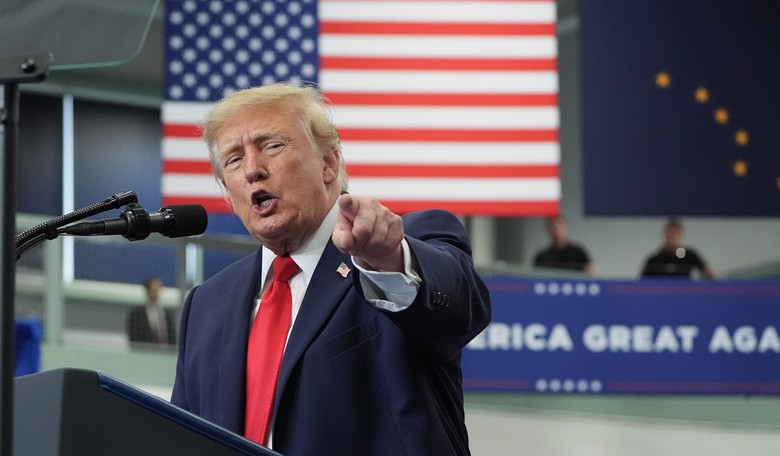
President Trump signaled over the weekend that he supports a Democrat-led initiative to cap credit card interest rates at 10 percent, a move that would likely cut a significant number of Americans off from credit. Trump has defended the idea, accusing card companies of making too much money on fees and interest, but a number of conservatives are pushing back, most notably E.J. Antoni, the chief economist at The Heritage Foundation.
Oh, yes - it’d be “seismic” alright, with three-fourths of credit card holders losing their accounts or facing drastic limit reductions as a result, while all customers see higher fees and fewer rewards programs; how is that a win?
— E.J. Antoni, Ph.D. (@RealEJAntoni) November 23, 2026
"Oh, yes - it’d be 'seismic' alright," Antoni wrote on X, "with three-fourths of credit card holders losing their accounts or facing drastic limit reductions as a result, while all customers see higher fees and fewer rewards programs; how is that a win?"
Credit card interest rates do more than pad bank profits. They are how lenders make sure they get their money back. Cap them, and banks would simply stop lending to risky borrowers.
But that would hit a lot of people. Between 41 and 57 percent of Americans rely on credit to make ends meet, and about half carry credit card debt at a median interest rate of roughly 22.2 percent. As more people are cut off because it is simply too risky to lend at 10 percent, the pressure would grow on the government to force banks to keep lending to the very borrowers they had just abandoned. That setup is a recipe for another Great Depression.
A 10% interest rate cap sounds great until banks respond by cutting credit limits, closing accounts, and denying higher-risk borrowers access to credit. Lower rates mean nothing to Americans who can no longer get a credit card.
— Taxpayers Protection Alliance (@Protectaxpayers) November 23, 2026
"I would do it," the president said. "These credit card companies have made a lot, and the credit card fees that they charge—I'm all into it. I know that some people say it's not free enterprise, but what's free enterprise when you're sitting home and you get a bill that some guy set up in an office on Park Avenue, and they said, 'Let's charge a fee that's too high'? No, the credit card companies, they're getting too much. The fees are too high, and the interest is too."
To make matters more complicated, the policy is overwhelmingly popular, and is likely to have public support. According to a Wall Street Journal poll, 79 percent of Americans support it, not because they have weighed its effects, but because they expect it to make their own lives easier. People naturally vote on intentions and immediate, visible effects, but in economics, intentions are more often than not, entirely divorced from its outcomes.
In Congress, the initiative is backed by a sort of odd bipartisan coalition: Sens. Bernie Sanders, Elizabeth Warren, and Republican Josh Hawley, along with Rep. Alexandria Ocasio-Cortez and Republican Rep. Anna Paulina Luna in the House. It is unclear whether such a measure could pass a Republican Congress, but with Democrats set to take over in 2027, passage looks likely.
This is just another price control, and Republicans, of all people, should know price controls never work. If a Republican administration signs this one, who's to say it stops at credit card interest rates? And what would stop Democrats from using it to justify more of their own?
With socialism on the rise, handing the Left a win on its own terms is the last thing we need after a devastating blow in the midterm elections, especially when the case for markets over a centrally controlled economy is already at stake.