
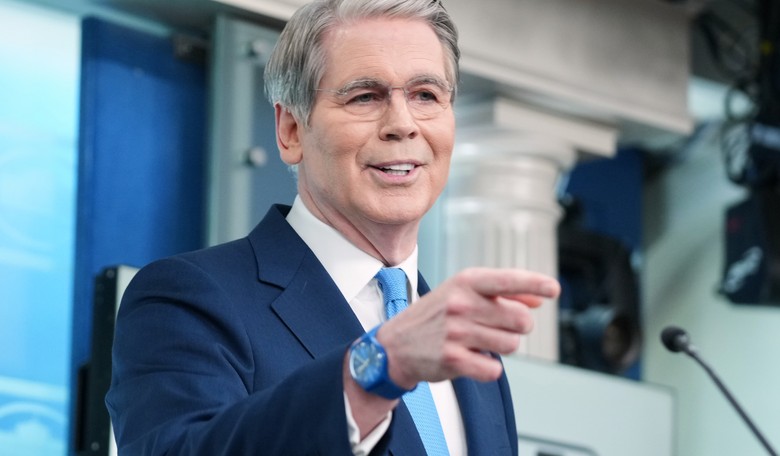
Vice President JD Vance’s Fraud Task Force announced progress in the crackdown during a press conference in St. Cloud, Minnesota, on Friday.
FBI Director Kash Patel noted that there were 17 searches done on Thursday related to a multi-million dollar fraud case, which led to four arrests.
The fraudsters thought they could steal from American taxpayers and get away with it. Not anymore. Yesterday, FBI Minneapolis conducted an operation and arrested 4 alleged Medicaid fraudsters tied to over $41 MILLION in intended fraud and $21.65 MILLION in actual losses. And we’re just getting started. Under @POTUS and @VP, this FBI has delivered in just 21 months: 🇺🇸 2,811+ arrests 🇺🇸 2,749 indictments 🇺🇸 $2.3 BILLION+ seized — UP 71% Our Feeding Our Future investigation has resulted in 81 charged, 70 convicted, and over $533 MILLION in combined restitution. And our first-ever Most Wanted Fraudsters List has helped bring 6 fugitives responsible for approximately $2 BILLION in combined losses back to face justice. Thanks to @VP, @SecScottBessent, @TheJusticeDept our agents, forensic accountants, and law enforcement partners. DKP🇺🇸
— FBI Director Kash Patel (@FBIDirectorKash) October 30, 2026
More broadly, Treasury Secretary Scott Bessent said that the administration has “stopped almost $190 million and returned over $100 million in funds to U.S. victims of overseas fraud” on a nationwide level, but Bessent noted that the “task force in very interested in what’s going on” in Minnesota.
According to a Friday press release, there was also a notice sent out by the Treasury Department’s Financial Crimes Enforcement Network to let banks know to get an eye on “certain cross-border payments involving U.S.-based money services businesses.”
“Illicit actors may exploit these cross-border arrangements—particularly settlement arrangements subject to inadequate due diligence and transaction monitoring—to move funds through the U.S. financial system and obscure the ultimate beneficiaries and the underlying purpose of transactions,” the alert stated.
FinCen also put out another notice to “assist financial institutions in identifying and reporting suspicious activity involving the exploitation of domestic and international charities and non-profit organizations (collectively, NPOs) for illicit activity.”
“Through schemes abusing NPOs, bad actors can funnel funds to terrorists, divert funds from government programs, and steal money intended for charitable causes,” the notice states.
As for Minnesota specifically, the state's social programs fraud woes have become the subject of multiple federal cases, ranging from autism treatment fraud to the infamous Feeding Our Future case. Concerns surrounding it arguably led to Gov. Tim Walz's decision not to seek reelection this cycle, as it has become a hot topic in the ongoing gubernatorial and senatorial races in the state ahead of the November midterms.
Dr. Mehmet Oz, Administrator of the U.S. Centers for Medicare and Medicaid Services, said Friday that the federal government had “asked Minnesota to revalidate all of the high-risk providers” in the state.
“Fourteen categories, 30 percent, almost one in three of all the people providing services in Minnesota could not be revalidated,” he said.
“That degree of fraud, again, you have to purposely be averting your glance to allow that to happen,” Oz continued.
.@AAGMcDonald in Minnesota: "Today, we are announcing just a sliver of the immense work underway to restore the rule of law, safeguard taxpayer dollars, protect the vulnerable, and punish wrongdoers in Minnesota. Just this week alone, five defendants have been charged with health care fraud offenses in Medicaid fraud schemes involving more than $48 million in intended loss, including $29 million in schemes uncovered for the first time."
— National Fraud Enforcement Division (@DOJFraudDiv) October 30, 2026