
Khalifa Haftar’s military command signed a $2 million contract to make its case in Washington. Now the Libyan strongman’s political camp has backed a deal with Turkey that the State Department says has increased regional tensions. The contrast puts a harder question behind an otherwise routine lobbying disclosure: What kind of partner is Haftar asking America to embrace?
According to a Foreign Agents Registration Act (FARA) filing, a U.S. lobbying firm, Ballard Partners, is going to make America answer that question. It has been hired by the General Command of the Libyan Armed Forces, which is led by Khalifa Haftar, a faction of the Libyan National Army (LNA), to engage in political activity including government relations, strategic advice, and advocacy.
On October 20, Saddam Haftar, Khalifa's son, announced that Libya's maritime agreement with Turkey "offers opportunities to strengthen bilateral cooperation, investment, and a 'long-term' partnership," according to the outlet Anadolu. Saddam Haftar also said that the agreement "could help protect Libya’s rights and economic interests in the Mediterranean" and "his position is rooted in principles that included prioritizing Libya’s interests." This marks a major shift in relations; Reuters reported that Turkey had previously helped repel an assault by Haftar's forces on Tripoli in 2019-2020. The move to ratify this deal is a "complete reversal" of prior relations; eastern Libya had also previously rejected this very agreement.
The U.S. State Department issued a sharp response to the agreement, calling the ratification announcement "provocative." According to Tovima:
The new statement, follows the State Department’s remarks on Wednesday, October 21, in which it encouraged negotiations to resolve maritime disputes and highlighted the economic benefits of a settlement. In its second intervention, the State Department explicitly criticizes the ratification announcement, while repeating its call for bilateral dialogue between Greece and Turkey.
Both Egypt and Israel have rejected the agreement, according to Reuters. Egypt's Foreign Ministry said on October 21 that the boundaries deal will have "no legal impact on Cairo." Israel "strongly" condemned the parliament's approval. "Regretfully, once again we see Turkey working to destabilize the east Mediterranean region," the Israeli Foreign Ministry said in a statement. Greece also condemned the ratification, and is currently in talks with Egypt about extending their Exclusive Economic Zone eastwards towards Cyprus following the agreement between Turkey and Libya. Like Egypt, Greece and Cyprus have long opposed the Turkey-Libya maritime accord, arguing it infringes on their own maritime claims in the eastern Mediterranean.
The European Union also issued a statement condemning the ratification, writing it "infringes upon the sovereign rights of third States and does not comply with the Law of the Sea. It is null and void and cannot produce any legal consequences for third States."
The story is more troubling when you realize what happened in Libya prior to the vote. According to the Greek newspaper Proto Thema, Saddam Haftar drove the removal of longtime speaker Aguila Saleh. Saleh reportedly resisted bringing the maritime deal forward and Proto Thema, also reported that Turkey pressured the Haftar camp by threatening to withdraw investment and increase military support for its rivals. Those are allegations that deserve answers.
So what's at stake for America?
Secretary of State Marco Rubio said on October 8 that the United States is committed to an undersea power cable in the eastern Mediterranean that would link the European mainland to Cyprus and, eventually, Israel. Greece's power grid operator, IPTO, is developing that €1.9 billion plan. The disputed maritime claims can complicate surveys and investments related to that project, but Tovima reported today that preparations for further surveys are being made and there is optimism they can proceed.
The Ballard Partners contract, as disclosed in FARA, included provisions for a $2 million upfront fee. That’s not an outlier in high-level lobbying. But it is indicative of the scale and seriousness of the effort by the Haftar-led General Command of the Libyan Armed Forces. FARA ensures efforts like this are disclosed and transparent, but it neither establishes wrongdoing nor constitutes government approval. The Justice Department expressly recognizes that foreign principals can include unrecognized factions
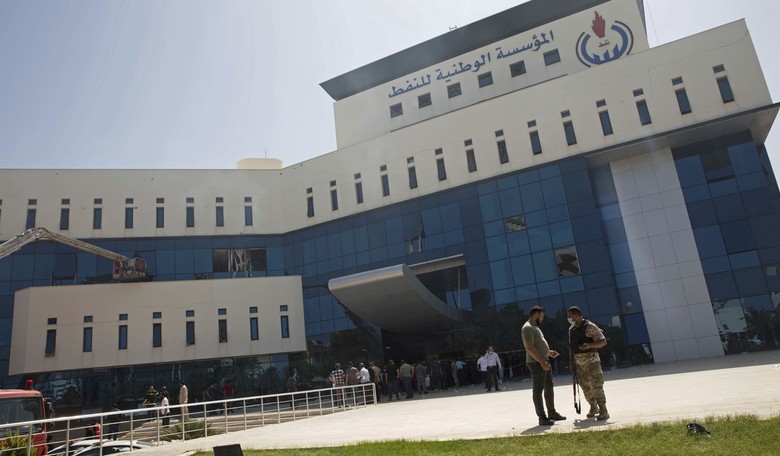
Libya has been a nation mired in chaos since a 2011 NATO-backed uprising that ousted leader Muammar Gaddafi. The nation is not simply divided geographically; it is governed by two rival power centers competing for legitimacy, control of resources, and international recognition. That divide, exacerbated by the 2014 civil war, has split the nation into eastern and western factions. The U.N.-recognized government, the Government of National Unity (GNU), in Tripoli, controls the west. Meanwhile, the Haftar-controlled LNA holds power in the east and south, including Benghazi, and controls major parts of the nation’s oil infrastructure.
With all this in mind, there are several questions that must be answered: What policies has Haftar's command asked Washington to support? Which officials have its representatives contacted? And has the backing for Turkey's maritime agreement changed the administration's assessment of the relationship?