


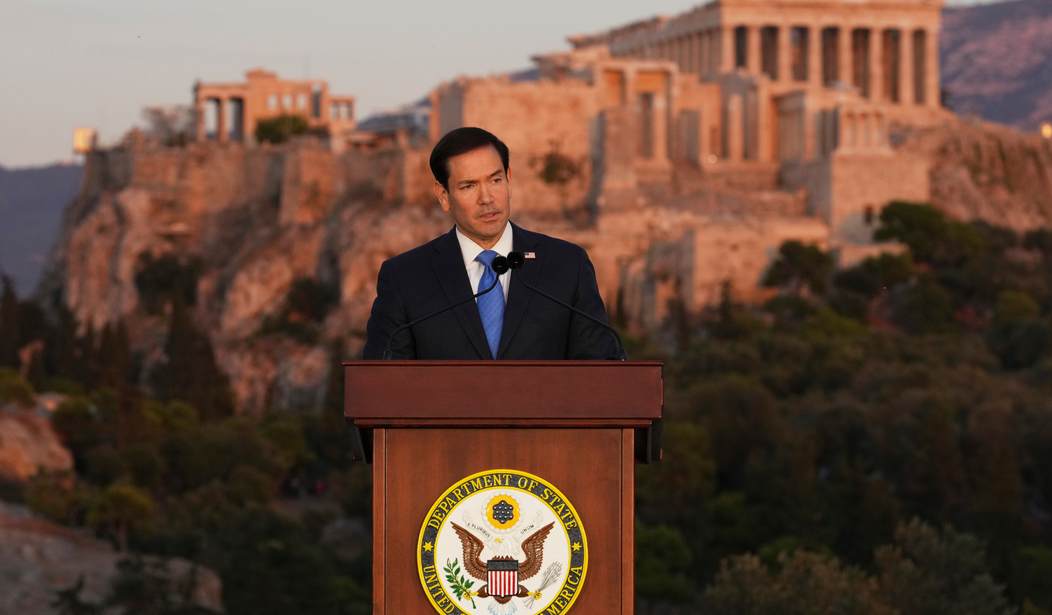
Marco Rubio went to Greece to strengthen an American partnership. Less than two weeks later, the political allies of a Libyan strongman handed Turkey a victory at Greece’s expense.
Washington should pay attention. The strongman’s family is also cultivating a relationship with the United States.
Khalifa Haftar controls much of eastern Libya, where his family has built a powerful military and political operation. His son Saddam has become an increasingly influential figure. American officials have met with both men as part of efforts to bring stability to a country divided by years of conflict.
Engagement can make sense. But Washington needs to judge the relationship by what the Haftars deliver.
On October 20, Libya’s eastern parliament approved a maritime deal with Turkey that it had opposed for years. The agreement backs Turkish claims to waters where Greece says its islands have rights. The European Union has rejected the deal’s treatment of those rights.
The practical stakes reach well beyond lines on a map.
Rubio has publicly supported a planned undersea electricity cable connecting Europe to Cyprus and eventually Israel. The project would give American partners another way to connect their economies and strengthen their energy security.
Turkey has invoked the Libya agreement to insist that work to survey the cable’s route requires coordination with Ankara. Greece rejects that demand. By reversing its position, the Haftar-aligned parliament gave Turkey fresh political support in that dispute.
Rubio had just said America would work to overcome obstacles to the project. Haftar’s camp then strengthened the position of the country putting obstacles in its way.
That is a problem Washington should take seriously.
A vote in Libya does not hand Turkey legal control of the Mediterranean. The danger is more practical: disputed claims can delay construction, frighten investors and make useful projects harder to finish. A government can cause plenty of trouble while lawyers are still arguing over whether it has the right to do so.
The story becomes more troubling when you look at what happened inside Libya’s parliament.
Two weeks before the vote, lawmakers removed longtime speaker Aguila Saleh. His replacement had chaired the parliament’s friendship committee with Turkey.
Greek newspaper Proto Thema reports that Saddam Haftar drove Saleh’s removal after the speaker resisted bringing the maritime deal forward. It also reports that Turkey pressured the Haftar camp by threatening to withdraw investment and increase military support for its rivals.
Those allegations deserve answers. The speaker’s removal and his successor’s ties to Turkey are established facts. The reported role of Saddam and Ankara raises a question Washington cannot afford to ignore: Did a family America is courting help clear the political path for a deal that undermines American partners?
This is the risk of treating access to a strongman as a diplomatic achievement. The meetings can look productive while the person across the table is making a different bargain somewhere else.
There are real reasons American officials have engaged the Haftars. Reuters reported in August that their authorities helped secure the release of an American hostage. Bringing an American home matters, and Washington should acknowledge useful cooperation.
It should also assess each new decision on its merits. Helping America on one occasion should never buy permanent immunity from scrutiny.
The same principle applies to Israel. The proposed electricity link offers a future connection to Europe through Cyprus and Greece. Any political bargain that makes that connection harder deserves attention in Jerusalem as well as Washington.
For the Trump administration, the response should be straightforward.
Stand behind the commitment Rubio made. Support the right of American partners to pursue lawful energy projects. Make clear that a political deal in Libya cannot simply dispose of Greece’s rights.
Then make the Haftars explain what Washington should expect from further cooperation.
American diplomatic attention has value. So does the prospect of a closer security relationship. Before offering more, the administration should demand a clear account of the parliamentary maneuver and judge the family’s conduct against the interests America is trying to advance.
Libya needs a stable future. Americans have an interest in helping it get there. That effort should build dependable institutions and relationships that survive the next private bargain.
One Libyan lawmaker defended the Turkey agreement by telling Reuters, “Some countries may be upset by this agreement, but what matters to us is our national interest.”
Fair enough. Washington should apply the same standard.
Rubio made America’s commitment clear in Greece. Haftar’s camp has now helped make that commitment harder to fulfill. The next conversation with the family should begin there.

Join the Conversation
VIP members get the ability to comment on articles.