
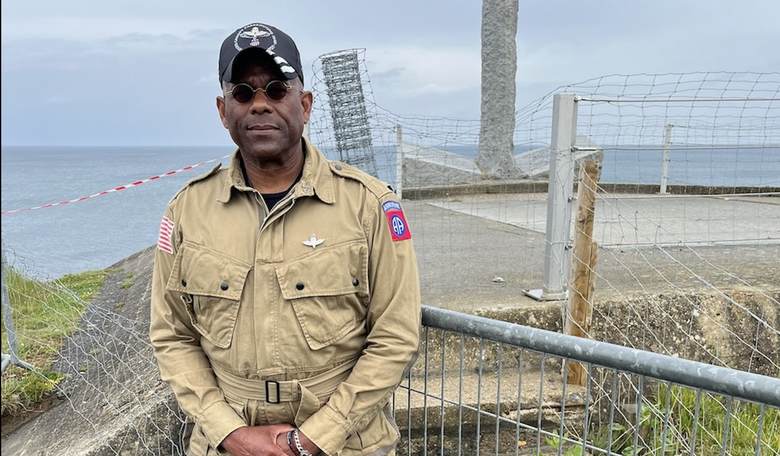
Left-wing extremism and censorship are major problems on college campuses, with everyone from students to professors to administrators holding to one ideology and doing everything in their power to make conservatives — and conservative ideals — unwelcome on campus. At Florida's Embry-Riddle Aeronautical University (ERAU) in Daytona Beach, Florida, this extremism led to school officials blocking former Florida Congressman and retired Army Lt. Col. Allen West from speaking on campus.
Students with Young America's Foundation (YAF) sought to host Lt. Col. West for an event promoting conservative values, and despite trying to follow the university's procedures, members of YAF say administrators restricted the event without providing a clear explanation.
In emails shared with Townhall, Negar Afshar, the Director of Student Organizations and Engagement, communicated with Matthew Finkel, the Chairman of the Embry-Riddle chapter of YAF. The first message, from Afshar dated Tuesday, October 6, was a "friendly reminder" that YAF had agreed to meet with Afshar regularly, "as well as discussing any event or speaker ideas in advance so we can approve and renew them together." Afshar then informed Finkle that he received a Speaker Request form.
"We need to discuss that before anything can move forward," Afshar wrote. "Please select a time on my calendar as soon as possible so we can reconnect and review your plans."
Finkle responded on October 8, explaining he reviewed ERAU YAF chapter bylaws and cited multiple events YAF held — like the 9/11 Never Forget Project — that were approved through "proper SchedulER requests and approvals."
"It was clear to me that by the rules you set in place, the speaker form, created by you last semester, was our way of advising you of our intent to host a speaker on campus in any future instances, and that by filling it out with all the requested information, we would be providing you with the information you need to approve the event or come back to us with any changes that we would need to make to host the speaker on campus," Finkle wrote. "When attending RSO officer training, it was clearly relayed multiple times that all event requests/approvals should start with filling out the respective forms on campus groups, which again led us to believe that we should start the process with the Speaker Form."
Afshar responded the same day by instructing Finkle to schedule a meeting and that he would "send a full response to your email shortly." On October 9, Finkle asked Afshar to continue the conversation over emails to "prevent any delays with approvals."
That day, Afshar confirmed that the "speaker request is currently moving through the appropriate review process." Afshar continued, "My request to meet with you and any available members of your executive board, as well as my response to your previous email, are separate from that process and are not delaying the review of the speaker request."
Remember, in the October 6 email, Afshar told Finkle, "I also see that a Speaker Request form was submitted, and we need to discuss that before anything can move forward."
It wasn't until six days later that Afshar finally replied to Finkle in a lengthy email where he disregarded the YAF chapter bylaws, calling them "the internal rules and procedures that a student organization sets for itself" and saying that those bylaws "would not shed any light on the long-standing expectations between YAF and the Office of Student Engagement." Afshar admitted that the 9/11 Never Forget Project and an accompanying Spirit Rock component were "routed through the appropriate reviewers, and I was looped in by the staff overseeing those processes." He also said the Speaker Request Form was created "in response to a new requirement from university leadership that all speaker requests be reviewed through their respective areas."
Finkle never asked about or questioned the Speaker Request Form; he had said it was his understanding that "all event requests/approvals should start with filling out the respective forms on campus groups, which again led us to believe that we should start the process with the Speaker Form."
Afshar then said that while YAF had no incidents, "civil discourse, respectful engagement," and "positive recognition from YAF National," there was a "shift in tone and approach" under new YAF leadership.
"Emails have become increasingly accusatory and adversarial, with assumptions made without consultation and broad claims presented without verification. This is not how YAF has historically operated on our campus, and it is not a sustainable approach moving forward," Afshar wrote. He then added, "You and your leadership team have a decision to make: If you would like to return to the collaborative, respectful, and transparent relationship that YAF has maintained with this office for nearly a decade, I am more than willing to continue that partnership. If not, then we will need to move forward differently."
That email was sent on October 15 at 9:47 AM. Exactly one minute later, another email from Afshar was sent notifying YAF that they were "unable to approve the invitation for former Congressman Allen West at this time."
"This is not intended to prevent students from engaging with differing viewpoints; rather, our responsibility is to consider the broader impact of any event on the campus community. Our goal is to support speakers and programs that challenge students intellectually while maintaining an environment grounded in respect, safety, and constructive dialogue," the email read. "We remain committed to opportunities that expose students to differing perspectives and encourage thoughtful and meaningful engagement. If your organization would like assistance identifying alternative speakers who align with your goals and our institutional values, we are happy to support that process."
Neither Negar Afshar nor any other official with Embry-Riddle administration gave a reason why they rejected the request to have former Congressman and retired Lt. Col. Allen West speak on campus.
This incident raises serious concerns and questions about the treatment of conservative organizations on college campuses. As Townhall reported last week, Virginia State University (VSU) is facing a lawsuit for a new policy that requires only Christian student groups to be supervised by the Campus Minister. Muslim and non-Christian groups are exempt from that VSU policy. We have to wonder if conservative students at Embry-Riddle and other colleges are being afforded equal opportunities to express their views and host speakers of their choosing.
Young America's Foundation President and former Wisconsin Governor Scott Walker said in a statement, "Embry-Riddle University is targeting conservative students and denying them the same free-speech rights afforded to everyone else by blocking their effort to host Army Veteran and former Florida Congressman, Allen West. Students should not need administrators’ approval to express conservative beliefs or hear from a speaker who represents their views. Silencing conservative students is not inclusion. It is yet another example of discrimination conservative students face on campus."
"I am absolutely appalled at the actions taken by the Embry-Riddle Administration in restricting Lt. Col. West's speaking event on our campus," said YAF Chapter Chairman Matthew Finkle. "It is a shame to see freedom of speech and respectful exchanges of ideas restricted in such a biased and blatant way here in the United States. It is disappointing that our chapter has made clear effort to follow the due process and still be restricted in our activities with no direct reason or explanation given."