






Perhaps the Corporate Social Responsibility (CSR) movement of the late 1990’s and early 2000’s was simply a fad – an expendable corporate distraction that companies entertain during fat times. Now things are different. Economic growth is faltering, consumer expenditures are plunging, and corporate profits are in a free fall. In this bad economic environment, companies cannot treat their scarce profits so nonchalantly and the CSR fad will simply fade away like so many past management trends.
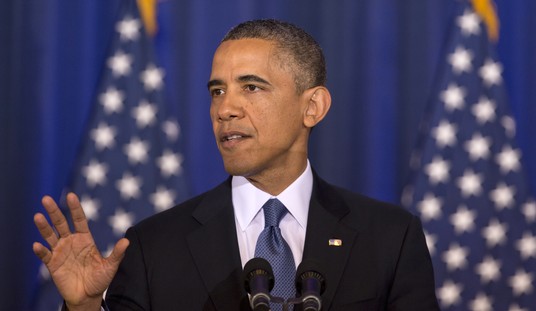
Then again, don’t bet on it. The incoming Obama Administration will provide regulatory support to CSR’s ideals. The historical influence of CSR has also shown that it ebbs and flows with the rise and fall of corporate profitability. When something is plentiful, the value people place on it diminishes. The same appears to be true with corporate profits. Consistently high corporate profitability diminishes the value many people place on corporate profits. The diminished value placed on profits creates a receptive environment for Corporate Social Responsibility.
Back in the 1960’s after-tax corporate profits (accounting for depreciation and inventories) rose from around 5.5 percent of GDP to a high around 8.0 percent of GDP in the mid 1960’s. Within this fertile profit environment, CSR principles were able to flourish. Similar to the CSR arguments today, the earlier Social Responsibility movement argued that businesses have a responsibility to do more: they must evaluate their total impact on society and take actions that improve the social good. The “social good”, of course, is defined by the CSR advocates themselves.
It was against CSR’s initial rise that Milton Friedman famously wrote: “That is why, in my book Capitalism and Freedom, I have called it [CSR] a "fundamentally subversive doctrine" in a free society, and have said that in such a society, "there is one and only one social responsibility of business–to use it resources and engage in activities designed to increase its profits so long as it stays within the rules of the game, which is to say, engages in open and free competition without deception or fraud." (New York Times Magazine September 13, 1970)
Strong corporate profitability did not last. Beginning in the early 1970’s, average corporate profitability fell to around 5.0% of GDP. Corporate profits became so weak in the mid 1970’s that corporate profits as a share of GDP fell below the 4 percent threshold – a milestone for the post World War II economy. Overall, after-tax corporate profits (accounting for depreciation and inventories) fluctuated around 5 percent of GDP between 1970 and 1995 – slightly below the pre-1960’s level, and far from the 1960’s highs. With corporate profits scarce, the value placed on profits rose and the CSR movement lost its prominent role in management circles. It never disappeared, however.
CSR rose to prominence once again during the late 1990’s and became tightly integrated into the fabric of Corporate America during the 2000’s. Once again, it was the rise of corporate profitability that enabled the CSR movement to reassert itself. During the late 1990’s, profitability surged north of 7.5 percent. Following the 2001 recession which lowered overall profitability, profits once again surged during the first part of 2000’s topping out at over 9 percent of GDP at the end of 2006 beginning of 2007.
With the onset of the current recession profitability has started dropping like a stone. While corporate profits are still over 7.5 percent of GDP, their extreme fall, and the unknown depths they will reach, is increasing the value people are placing on profits. Not surprisingly, CSR programs are now becoming sidelined.
Still, the CSR infrastructure is well embedded into the current fabric of Corporate America. Many of the country’s largest corporations have entire departments dedicated toward implementing CSR-type programs. And, the Obama Administration is signaling that they may worsen this situation.
The incoming Administration intends to force companies to implement many CSR ideals through excessive regulations and expenditure programs. Topping the list, the Obama Administration has discovered that our economic, geo-political, and environmental problems can all be solved by building alternative fuel cars. The economic gurus in Washington D.C. will, consequently, wave their magic wands and create a viable alternative fuel car that consumers want despite the international car industry’s inability to do so after billions of dollars invested.
CSR’s dangers are still mounting. Milton Friedman’s insight that the only social responsibility of a business is to earn a profit has not been learned, and the incoming Administration will further legitimize the opposite view. Consequently, any current de-emphasis on CSR is likely to be only temporary. Once profitability growth returns, CSR ideals will continue expanding and threaten to undermine the viability and dynamism of our economy.
The current premium on corporate profits should be used as an opportunity to illustrate CSR’s dangers. As the recently declared recession aptly demonstrates, it is a herculean task for businesses to simply fulfill their primary purpose – create the goods, services, jobs, income, and wealth we all rely upon for the betterment of our lives. Complicating this task with distractions and dragging businesses into society’s most controversial issues only diminishes the ability of businesses to fulfill their primary task and injures us all.


Join the Conversation
VIP members get the ability to comment on articles.