





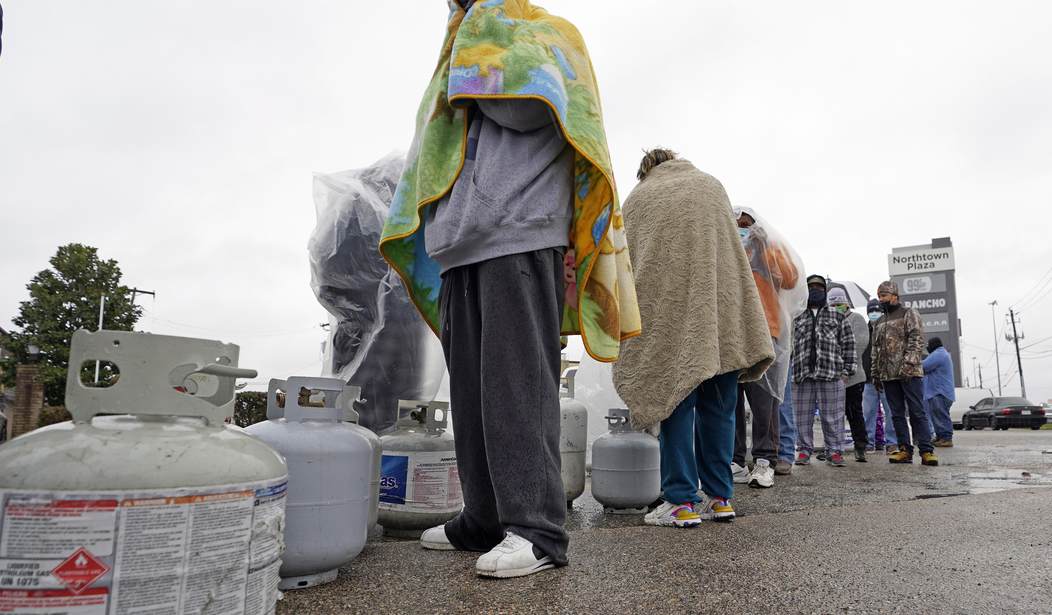
PARIS -- It was almost surreal seeing the images from Texas that were being beamed around the world. Burst water pipes. People trading firewood for water like something out of a Charles Dickens novel set in Victorian times. There were tales of citizens freezing to death in the state that is the epicenter of the energy industry in the top oil-producing country on Earth.
Some people resorted to burning household items or retreating to vehicles with functional climate control in order to keep warm. Since this happened in Texas, at least the vehicle was likely to be a Ford F-150 -- the size of which would make some studio apartment dwellers here in Paris envious. If a similar crisis happened here in France, we'd all be crammed into Smart cars, with the sole advantage being that their energy efficiency would allow for a lengthy stretch of heated car-coffin living.
That's where the mind goes when North Americans living abroad hear about the crisis in Texas. We ask whether it could happen here, too. The answer is that you can never say never, because until now it would have been unfathomable that this could have occurred in Texas.
European energy experts have told me that the root cause of the crisis is that gas is the primary source of power for electricity in Texas, and the freezing weather impeded everything from the water required to produce that gas via hydraulic fracking to its transport. They said that a lack of backup sourcing from elsewhere exacerbated the problem, and that here in France the options for rerouting electricity from other parts of Europe would be the saving grace.
Diversity of sourcing is clearly the key to avoiding a catastrophe. But it's ultimately Texas oil companies that could pose a threat to Europeans' energy supply.
As the very seat of the global energy industry, Texas sets policy for the rest of the planet. While the rules are technically made in Washington, everyone knows that Texas-based energy companies (with their aggressive lobbyists) underpin political decisions. Those decisions are oriented in a single direction: in favor of U.S. oil and gas revenues, and to the detriment of competitors. Fair enough. Those companies can't be blamed for trying to stack the deck. It's up to their competitors to call out any attempted manipulation.
Sanctions imposed by governments are one such tool of manipulation. Even at the height of the Texas electricity crisis, some lawmakers were pushing the Biden administration to impose additional sanctions on companies involved in finishing a nearly completed European gas pipeline, Nord Stream 2 -- a co-production between Europe and Russia that would help Europe diversify its energy supply and become less reliant on Texas oil companies. If the fiasco in Texas proves anything, it's that even Texans can't depend on those oil companies. Why should Europeans be forced to?
One of the most vocal opponents of the Nord Stream 2 project has been Texas Sen. Ted Cruz, who fled with his family to Cancun, Mexico, to escape the electricity outage before quickly returning amidst widespread criticism. He was just trying to "be a dad" to his daughters, Cruz said -- just like every head of household caught crossing the U.S.-Mexico border (except usually in the other direction).
Cruz had barely set foot back on U.S. soil when he issued a statement in favor of blocking Europe's attempts to diversify its energy supply. Cruz said completion of Nord Stream 2 would have "catastrophic implications for American national security and for the energy security of our European allies." Sen. Cruz referred to the project as "Putin's pipeline."
If Putin had showed up on the frozen Texas hellscape last week offering electricity to shivering citizens, it's doubtful they would have rejected his offer of warmth. It's easy to be preachy from the comfort of the Washington echo chamber or while sitting poolside in Cancun. Europeans understand that such unpragmatic, ideologically loaded positions increase the likelihood of exactly the sort of disaster that Texans just endured. It's something we'd very much like to avoid, thank you. European energy policy shouldn't be made in Washington in consultation with Texas oil lobbyists.
What transpired in Texas should have Europeans terrified -- and even more determined not to put all of their eggs in the same basket. There's good reason to be wary of a Washington establishment purporting to want to save Europe while actually weakening it.


Join the Conversation
VIP members get the ability to comment on articles.