

The United States Supreme Court is the most powerful and respected tribunal in world history. It commands the power of judicial review to invalidate acts of the president or Congress. Its relative impartiality, compared with the legislative and executive branches, finds expression in consistently higher public confidence ratings. The number of justices has remained at nine since 1869, making it a quasi-constitutional norm. The sole serious political attack on the independence of the Supreme Court by then-President Franklin D. Roosevelt in 1937 proved DOA despite his landslide victory over Republican nominee Alf Landon in 1936.
In other words, the Supreme Court needs no fixing, notwithstanding Democratic Party support for 18-year term limits or altering the number of justices.
The media customarily and mistakenly portrays the court as ideologically or politically polarized like the Republican and Democratic parties or Congress. The most common ideological or philosophical split is 6-3: Chief Justice John Roberts and Associate Justices Clarence Thomas, Samuel Alito, Neil Gorsuch, Brett Kavanaugh and Amy Coney Barrett generally tilt to the right, while Associate Justices Sonia Sotomayor, Elena Kagan and Ketanji Brown Jackson generally tilt to the left. Yet during October Term 2025, 44 percent of the court's signed opinions were unanimous.
When the justices do divide — over birthright citizenship, presidential control of independent agencies, Temporary Protected Status for immigrants, or biological boys participating in athletic competitions with biological girls, for example — it is because they, in good faith, discern or apply time-honored canons of constitutional or statutory construction differently, including the doctrine of stare decisis, which disfavors overruling precedent in the interest of constitutional stability and predictability. Read the majority and concurring opinions in these cases. Read the dissenting opinions. What leaps out is that each marshals credible legal theories to support opposite conclusions. None is inherently more intellectually compelling than the others.
What lawyers, law schools and even the justices often conceal is that the law embraces rival and sometimes contradictory canons of construction that enable judges to unearth credible support for virtually any conclusion that satisfies their druthers. As William Shakespeare put it in "Henry IV, Part 2," "Thy wish was father, Harry, to that thought."
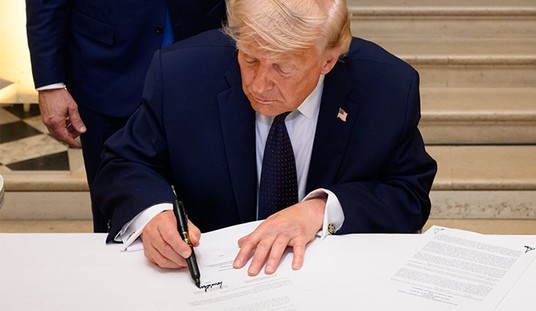

No two cases are identical twins. The intellectually gifted justices can readily disagree as to whether precedent A governs case B, whether distinctions justify a different result, or whether a precedent has been or should be overruled. In Trump v. Slaughter (June 29, 2026), for instance, six justices declared that the 1935 Humphrey's Executor decision had been, or should be, overruled and that Congress should be constitutionally prohibited from tying the president's hands in dismissing commissioners of independent agencies. Three justices dissented and, with equal force, argued for the continuing vitality of Humphrey's Executor based on prior court rulings. The six-member majority argued against stare decisis, while the three dissenters argued in its favor, with neither side able to articulate a limiting principle as to when stare decisis should yield to the force of experience or superior reasoning. Indeed, on the same day Slaughter was decided, a 5-4 majority held that the independent Federal Reserve Board fell outside its sweep for historical reasons in Trump v. Cook. The majority opinion in both cases was authored by Roberts, who, at his confirmation hearing, famously likened himself to a baseball umpire: "It's my job to call balls and strikes, and not to pitch or bat."
Really?
Justice Oliver Wendell Holmes Jr. taught in "The Common Law":
"The life of the law has not been logic: it has been experience. The felt necessities of the time, the prevalent moral and political theories, intuitions of public policy, avowed or unconscious, even the prejudices which judges share with their fellow-men, have had a good deal more to do than the syllogism in determining the rules by which men should be governed. The law embodies the story of a nation's development through many centuries, and it cannot be dealt with as if it contained only the axioms and corollaries of a book of mathematics."
Equally luminous, Justice Benjamin N. Cardozo made a similar observation in "The Nature of the Judicial Process":
"The great tides and currents which engulf the rest of men, do not turn aside in their course, and pass the judges by."
Supreme Court decisions lack intellectual tidiness because human beings are not intellectually tidy. Inconsistencies and contradictions are the norm. As Walt Whitman wrote in "Song of Myself":
"Do I contradict myself? Very well then I contradict myself."
Armstrong Williams is the manager/sole owner of Howard Stirk Holdings I & II Broadcast Television Stations and the 2016 Multicultural Media Broadcast owner of the year.