

In the flurry of decisions the U.S. Supreme Court released at the end of June, one stands out as of extraordinary historical importance and an urgently necessary restoration of a fundamental principle of the nation’s founding. The Court’s ruling in Trump v. Slaughter is a sweeping affirmation of the president’s power to remove and replace officials of executive branch agencies and independent boards created by federal law, without interference from the courts or Congress.
As such, the ruling reestablishes a central concept of the American founding: vetoes for everybody. Under the Constitution, government is limited to certain enumerated powers, and no government action can go into effect unless every part of the polity agrees on it. The document established a republic in which democracy is limited to the protection of individual rights: a single majority in a single branch or level of government cannot rule.
The Court’s Slaughter decision is exceedingly appropriate for this 250th anniversary of the Declaration of Independence, as it finally reverses subsequent generations’ undermining of the central strategy behind the construction of the nation’s government.
The decision overturns the Court’s longstanding precedent established in its 1935 ruling in Humphrey’s Executor v. United States, which established rule by federal agencies and created the deep state. In that decision, the Court ruled that a president could not remove an official from an ostensibly independent agency exercising regulatory power if the governing statute contains a “for cause” provision.
The word “ruled” is especially apt. The Constitution does not give the courts any say over the president’s management of the executive branch, despite many decades of bad court decisions that did exactly that.
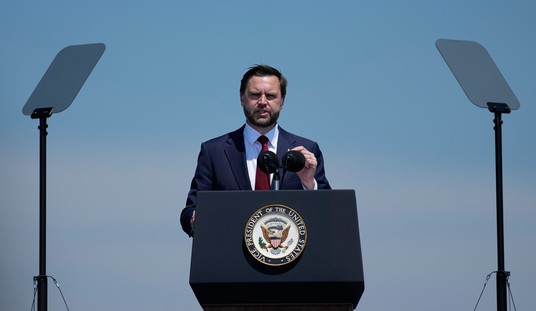
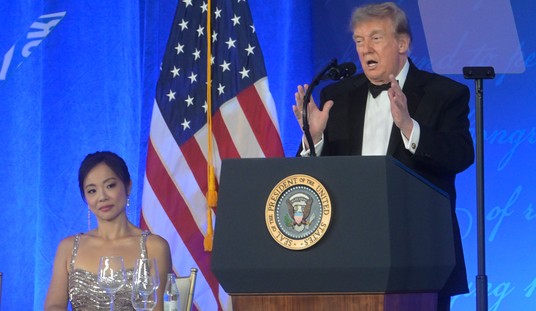
As the majority decision states, “The Constitution vests ‘[t]he executive Power’ in a ‘President of the United States of America’ and instructs that he ‘take Care that the Laws be faithfully executed.’ Art. II, §§1, 3. To vest the executive power in one person was to establish a hierarchy—a ‘Chief Magistrate’ with whom the buck stops, and below him various ‘assistants or deputies’ who ‘derive their offices from his appointment’ and remain ‘subject to his superintendence.’ The Federalist No. 72, p. 436 (A. Hamilton). To remain accountable to the President, those officers must be removable by the President.”
Slaughter reestablishes the constitutional separation of powers in an important way and is a defining moment in the Court’s ongoing return toward the founders’ vision: a nation based on widespread veto power. It is a further reason to celebrate enthusiastically on this 250th anniversary of the Declaration of Independence.
The executive branch is designed for a thoroughly good purpose: to stop Congress and the courts from putting unconstitutional laws and actions into effect. Under the founders’ vision, the president defends the Constitution by blocking the implementation of actions by the other two branches that threaten individual rights.
It is a purely defensive provision, designed to protect the rights of the people from subversion by a majority (the legislature) or an elite (a court, an agency, a private concern). In the founders’ plan, the president is the last line of defense against government trampling on individual rights.
It was a brilliant innovation. The Constitution gives each branch of the national government veto power over the actions of the others: the federal government is not to be allowed to do anything unless all three branches agree that the proposed law is in accord with the Constitution. On top of that, the Ninth and Tenth Amendments extend that veto power to the states and the people, respectively.
The Constitution explicitly limited the power of the federal government and gave all three branches, plus the states and the people through the Bill of Rights, the authority, responsibility, and ability to see that the government stays within those boundaries. The system was constructed to protect our rights to life, liberty, and property from incursions by one another and by the government itself.
Thus, the Constitution explicitly gave the president the ability—and more importantly, the responsibility—to halt unconstitutional actions by Congress, made clear in the existence of the presidential veto. Soon after the Constitution was ratified, the Supreme Court asserted its authority to interpret whether federal laws were justified under the Constitution. Unfortunately, the Court perverted that principle over the decades, regularly “legislating from the bench” through judicial activism based on obvious sophistries.
Through the power of the purse and approval of Cabinet members, the founders granted Congress veto power as well. If the House, for example, does not approve of a proposed federal action, it need not and should not appropriate money or statutory approval for it. The same with the Senate’s approval of presidential appointments and treaties.
All of this was designed to stop majorities from successfully seeking favors from the government.
As the above-noted examples show, this was a truly beautiful design. What undermined and eventually destroyed it is the same thing that corrupts every form of government: human greed and the thirst for power.
This is what John Adams was warning against when he said, “Our Constitution was made only for a moral and religious people. It is wholly inadequate to the government of any other.” The decline of constitutional government since then has abundantly proved him right.
It is interesting and important that Adams refers specifically to the Constitution in this regard. The passage that precedes his most-famous quote makes it clear that he knew the system itself was vulnerable to corruption from the beginning: “We have no Government armed with Power capable of contending with human Passions unbridled by morality and Religion. Avarice, Ambition, Revenge or Gallantry, would break the strongest Cords of our Constitution as a Whale goes through a Net.”
Similarly, American founder James Madison warned against factionalism and tyranny of the majority. We now see the appalling results of the failure to heed these warnings and respect the central premise behind the structure of the Constitution.
The Court’s decision in Humphrey’s Executor enabled Congress to establish a permanent bureaucracy that would neutralize any president’s objections to unconstitutional favors the legislature granted to factions and industries that were allowed to influence the writing of laws and regulations to their selfish benefit.
The Court thereby undermined the president’s ability to protect the states and the people from unconstitutional actions, and it turned the U.S. government into a milk cow for all sorts of ravenous grifters.
With false permission from Humphrey’s Executor, the federal government grabbed power over every detail of human life in the United States, creating an enormous spoils system that bred ever-greater corruption, greed, factional hostility, and destruction of voluntary institutions and their replacement by competition for political favors. It created the social conditions for further corruption.
The Court’s decision in Trump v. Slaughter to set that precedent aside and reestablish the president’s constitutional power over the administration of the nation’s laws is a historically monumental event and the greatest judicial gift to the American people in decades.
S. T. Karnick (https://stkarnick.substack.com/) is a senior fellow at The Heartland Institute and author of the Life, Liberty, Property weekly e-newsletter.