

Fresh revelations in 2026 from the Justice Department’s Epstein files have cracked open a long-buried question: how close did Barack Obama’s inner circle come to one of America’s most notorious child sex traffickers? Kathryn Ruemmler—Obama’s White House counsel from 2011 to 2014 and the legal shield who guarded his administration’s secrets under attorney-client privilege—called Jeffrey Epstein “Uncle Jeffrey,” joked about his “girls,” accepted luxury gifts like Birkin bags, wine, and spa days, and continued emailing him even after his 2008 conviction as a registered sex offender. She resigned from Goldman Sachs this week amid the fallout. Obama entrusted her with everything.
If his top legal confidante embraced a monster like Epstein, what else stayed hidden behind the “scandal-free” facade?
That single, stomach-turning association is the spark for re-examining the man marketed as the ultimate unifier—a constitutional scholar who would rise above partisanship and heal a divided nation. The polished image won elections and still lingers. But leadership is not speeches; it is revealed by the people you trust, empower, and refuse to disown. Obama’s choices form a consistent pattern: radicals who damned America, bombers who attacked it, Israel critics who undermined its allies, and now an enabler cozy with depravity. These were not accidents. They shaped a presidency defined by resentment, centralized control, and grotesquely poor judgment.
Reverend Jeremiah Wright was Obama’s spiritual mentor for two decades at Trinity United Church of Christ. Wright married the Obamas, baptized their daughters, and inspired The Audacity of Hope. His sermons declared “God damn America” for its “U.S. of K.K.K.A.” sins and preached Marxist-infused black liberation theology attacking white capitalism as oppression. Obama called him a mentor until the 2008 campaign tapes forced a public split. Two decades of immersion are not incidental—it is formative.
Bill Ayers, a Weather Underground founder, bombed the Pentagon and police stations in the 1970s and praised assassins. Ayers was no casual “neighbor”; he hosted Obama’s first state senate launch in his living room, shared nonprofit boards, and collaborated on Chicago projects. Persistent speculation about Ayers ghostwriting parts of Dreams from My Father—fueled by stylistic matches and Ayers’ own quips—remains unproven but telling. Obama selected a domestic terrorist as a political springboard. That is alignment.
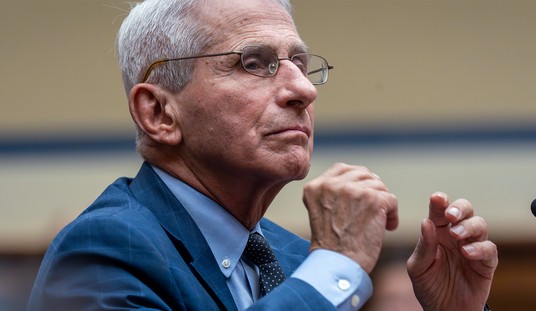
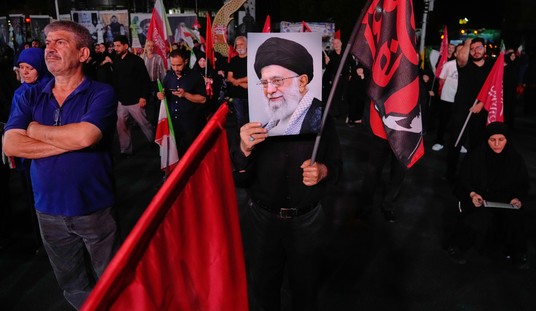
Rashid Khalidi, former spokesman for the Palestine Liberation Organization (PLO)—designated a terrorist organization by the U.S. Congress in 1987 for its role in attacks that killed Americans and threatened U.S. interests—completed the early radical circle. Obama dined regularly with Khalidi, praised their conversations for exposing his “blind spots,” and allowed Khalidi’s family to babysit his children. Khalidi co-hosted Obama’s 2000 congressional fundraiser, and photos place Obama at events with anti-Israel figures like Edward Said. These deep, personal ties reveal more than casual acquaintance—they signal early alignment with and sympathy for narratives that legitimize Palestinian "resistance," including acts by terrorist-linked groups, while undermining U.S. allies like Israel and downplaying the PLO's documented terrorist history. Obama sided with a terrorist organization in the Middle East. It was extraordinarily poor judgment.
The Epstein-Ruemmler connection is the ugliest recent stain, but it fits the broader pattern. These pillars—nation-damning pastor, bomber mentor, PLO spokesman confidant, pedophile pal—drove Obama’s governing philosophy: aggressive centralization. His administration imposed 229 major rules adding $108 billion in annual costs ($890 billion cumulative), smothering industries. Obamacare and the Clean Power Plan overrode states and markets. Crossfire Hurricane weaponized federal agencies against political rivals. The Iran cash deal delivered $400 million in foreign currency secretly airlifted on an unmarked plane, timed with American hostage releases, followed by $1.3 billion more. Critics branded it ransom to the world’s leading state sponsor of terrorism, fueling proxies like Hezbollah and Hamas. When America funnels hundreds of millions in cash to a regime we officially label the top terror backer, citizens are entitled to question that judgment.
Layer on Benghazi’s misleading spin, Fast and Furious guns lost to cartels that killed an American agent, and the IRS targeting of conservative groups, and the record becomes one of bad calls, cover-ups, and eroded trust.
It’s shocking to see judgment this consistently rotten. The “blank slate” was always a con, marked by a long pattern of grotesquely poor choices. Character shows in deeds and dinner guests, not rhetoric. Civic responsibility demands we see Barack Obama for who he elevated: a man shaped by resentment and control—not hope. The company he kept—from Marxist-tinged preachers and unrepentant bombers to PLO spokesmen and Epstein’s confidante—was unmistakable: perverse, un-American, pro-Marxist beliefs that found expression in the regulatory empire he built.
As Donald Trump dismantles that empire, the mask is off.