







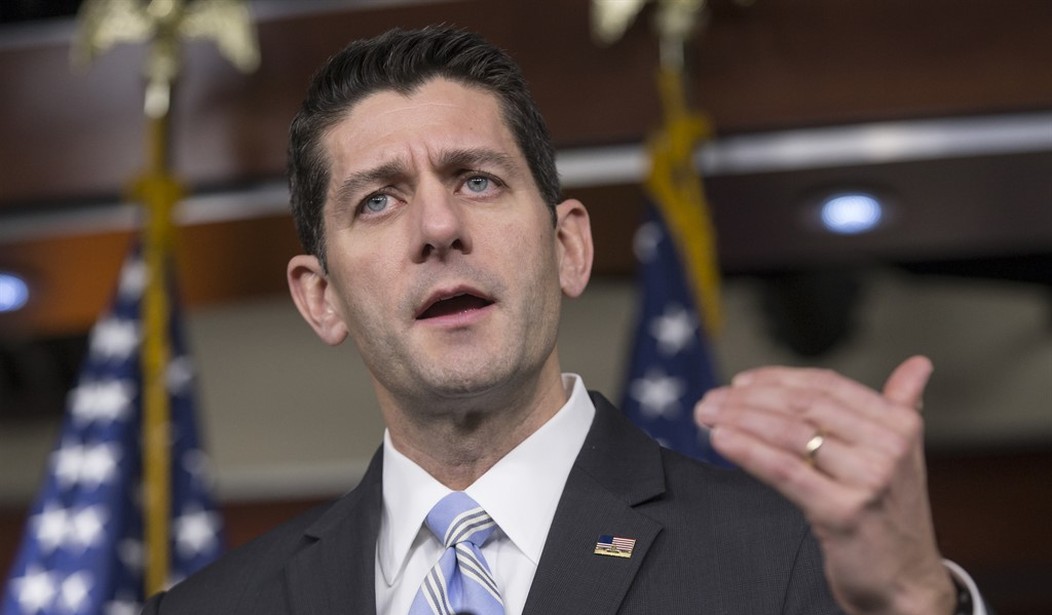
After months of waiting for Trump to self-destruct, the Washington-based Republican establishment has finally found a way to take back control of the party from the outsiders and grassroots. The plan revolves around the newly empowered House Speaker, Paul Ryan, who is openly contemptuous of Trump and has little use for Cruz.
To signal his intentions, Ryan tapped South Carolina Governor Nikki Haley to give the official Republican response to President Obama's final State of the Union address. Haley admitted she cleared her remarks with the Speaker, who then let it be known that she would be a fine choice for vice president.
With Ryan's blessing, Haley used her national platform to slam the "angriest voices" in the presidential campaign and disavow the Republican front-runner's popular call for a temporary pause in Muslim immigration. She seemed to be responding more to Trump than Obama, so it's no wonder that her speech was praised by Obama's press secretary and the White House chief of staff.
Congressman Diaz-Balart, who was also selected by Speaker Ryan, delivered the Spanish-language version of Haley's response. According to a translation provided by the Miami Herald, Diaz-Balart promised that Republicans would work toward "a legislative solution ... to those who live in the shadows" (i.e., amnesty), and would also "modernize the visa system and push the economy forward" (i.e., import even more low-wage guest workers).
Ryan then led Republicans on a two-day retreat with an "aspirational agenda" of "inclusiveness and optimism," which is meant to be a direct contrast to the campaign themes of Trump and Cruz. Much favorable press coverage describes Ryan as a "counterweight to Trump" or the "anti-Trump" who wants to give the eventual nominee a "platform to run on."
Memo to the Speaker: the official Republican platform will be written and adopted by delegates to the national convention, most of whom are disappointed with the ineffectiveness of the Boehner-Cantor-McCarthy-Ryan Congress. As a veteran of past platform writing committees, I promise that this year's delegates will have no use for Ryan's open-borders ideology, which holds that anyone who can find a low-wage job should be allowed to settle in the United States.
Paul Ryan obviously resents the rise of Trump and Cruz and would do anything in his power to prevent either from winning the nomination, but could he influence the convention? To answer that question, consider a remarkable article in the Wall Street Journal by the kingmakers' top lawyer, Ben Ginsberg.
Ginsberg predicts "pure chaos" if the convention opens on July 18 with no candidate holding a majority of the delegates, and he suggests plausible scenarios by which the establishment kingmakers could try to manage a "chaotic" convention to produce a nominee acceptable to them. The RNC needs to "be sure that the arena and hotel rooms are available if the convention goes more than four days," which hasn't happened in my lifetime.
To see what can happen at a deadlocked convention, consider the Republican convention of 1880, which ran for seven days because none of the three leading candidates could reach a majority. After 34 failed ballots the convention finally turned to a "dark horse," nominating Congressman James Garfield for president and Chester Arthur for vice president, neither of whom was even running when the convention opened.
Ben Ginsberg understands the critical importance of convention rules and credentials for boxing out the grassroots in favor of the establishment candidate. That's what happened at the 1952 Republican convention, where I watched the kingmakers steal the nomination for Dwight Eisenhower by unseating delegates pledged to the Republican favorite, Senator Robert A. Taft.
Ginsberg admits he wants to change the infamous Rule 40, which he wrote in 2012 to prevent a second candidate (Ron Paul) from being placed in nomination at Mitt Romney's convention. If no candidate wins on the first ballot, delegates are no longer bound to vote for their state's primary winner and are free to support a "dark horse" who never competed in a presidential primary or participated in a televised debate.
That's how "dark horse" Paul Ryan could become our nominee. Such an outcome could destroy the Republican party and guarantee a Democratic victory by causing disheartened grassroots voters to stay home and tempting an aggrieved candidate to mount a third party or independent presidential campaign.


Join the Conversation
VIP members get the ability to comment on articles.