





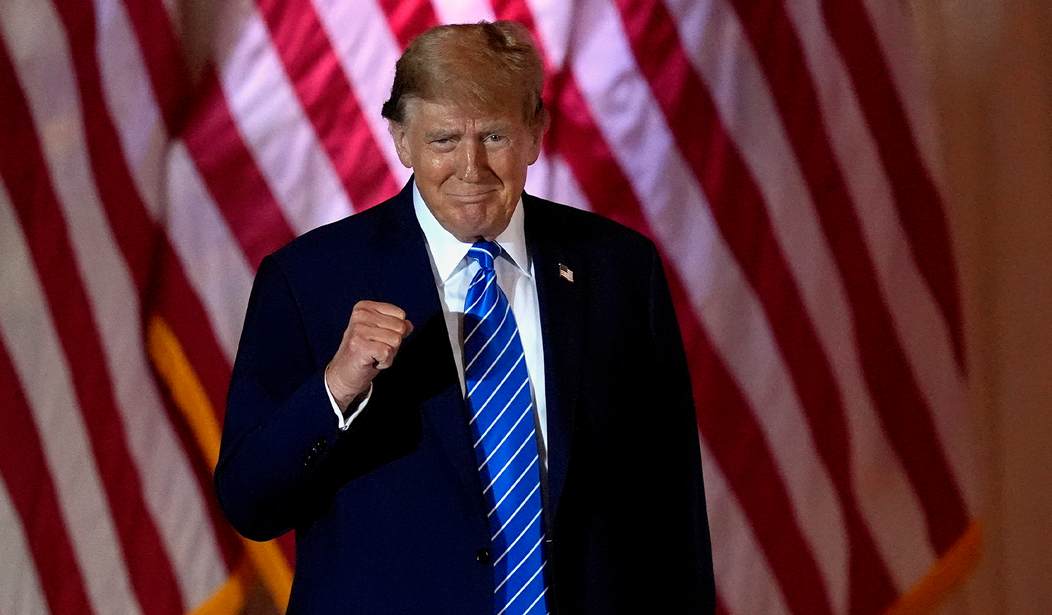
After a decisive Super Tuesday victory, the political dynamics for Trump look eerily similar to the 2016 campaign cycle. It is a common trapping of political punditry to opine on the 2024 election only in the context of the most recent election in 2020. We can certainly learn from 2020, but it only reveals a fragment of our recent political history. Expanding the scope of analysis to the 2016 campaign provides a clearer picture as to how this election will shake out in November.
Because former President Trump is running his third presidential campaign, we have three distinct eras to look at: Trump as the insurgent once-in-a-century political figure, the incumbent president, and now as the ousted challenger. Of those eras, Trump’s candidacy was weakest when he was an incumbent, and while there are several debatable factors which defined that era (like COVID), he has successfully pivoted to run in a lane that he’s both more comfortable with and shows greater favorability to return him to the Oval Office.
By harkening back to the insurgency theme of his 2016 campaign, where he performed best, Trump can run against Biden’s record, not on his own, and leverage the political maxim proven to get voters thinking about what they’re really voting for: “Is your life better today than it was four years ago?” The advantage of another insurgency campaign goes to Trump.
Much of Trump’s success in 2016, despite multiple bogus narratives like Russian collusion driven by corrupt media outlets, was built almost entirely on speaking directly to the issues of the “forgotten men and women”. Today, we see the same constituency solidifying their shift to Trump’s version of the Republican Party. As in 2016, today’s top issues align more closely with Trump and the Republicans than Biden and the Democrats.
Recent Cygnal polling shows the economy and illegal immigration are the top issues for voters, both which Trump and Republicans get high marks while Biden’s numbers continue to steadily drop. Illegal immigration shot up 10 points in two months and a quarter of Americans say it’s now their primary concern. Trump’s alignment on America’s top issues gives him an advantage here also.
In 2016, the battleground map, or swing states, consisted of Pennsylvania, Ohio, Wisconsin, Michigan, and Florida. Trump’s ascendance laid claim to the massive political shift already underway, where working-class voters in these states gravitated to the Republican Party, which just two cycles prior had been seen as the party of elites.
Now, the battleground map has changed. Georgia, Nevada, and Arizona replace Florida and Ohio to join Pennsylvania, Michigan, and Wisconsin as the must-win states. In 2016, Trump fought hard to win those battlegrounds. His message resonated, and his base was highly motivated to turn out. Although the battleground map differs from 2016, it is more favorable to Trump, so he has the advantage here too.
The weaknesses of Hillary Clinton in 2016 and those of Joe Biden’s are immensely different but both are considered weak candidates despite having numerous advantages from favorable media outlets to deep fundraising pockets from coastal elites. Biden’s pandemic-era victory seems to be more of an asterisk in presidential election politics, and he has grown increasingly weaker by the day.
Voters are likely to find it hard to imagine a presidential debate between Biden and Trump, let alone believe there will even be a debate. Rallies are paramount to any campaign. We don’t see Biden rallying, and most Americans inherently know there is no need for a basement campaign strategy – they will see right through that and deduce the lack of vigor to carry out a traditional national campaign is age-related – which it is – and therefore be less enthused to turn out on Biden’s behalf.
A strong Vice President would normally be a logical fix to a fledging President, but Kamala Harris is somehow even less favorable than Biden. Trump’s strength in this area gives him the advantage, and if he selects a complimentary running mate, it will only further his edge over Biden.
Combining the advantages of an insurgency campaign, an edge on the top issues, a new and favorable battleground map, and historically weak opponents, the 2024 election is Trump’s to lose. Despite this week’s Super Tuesday string of victories and practically clinching the GOP nomination, he still faces significant challenges, principally turning out millions of voters on Election Day, encouraging early voting, and keeping those issues front and center. If he can do that, he will emerge victorious and add the greatest comeback in political history to his legacy.
Join the Conversation
VIP members get the ability to comment on articles.