







A few Fridays ago, executives from Facebook, Twitter, and Google went in for their semiannual grilling in front of our legislature. Representatives from both parties channeled what they surely thought was righteous anger at these firms for allowing speech that those government employees – the legislator’s whose salaries we pay – don’t like or even find dangerous. This hearing echoed others where U.S. Senators, a more refined bunch we’re told, castigated the telecommunications firms that provide the chat, scrolling text, and video features we collectively refer to as social media for permitting the speech of their citizenry that they find objectionable. Others argued not against the two-word synonym for censorship – content moderation – but simply objected to how it’s exercised. From eliminating populist rhetoric to prohibiting wrongthink on vaccines, these captains of industry were told they simply weren’t doing enough and, plus, wouldn’t they think of the children? (No, really.) So, that’s what your federal government was up to a few weeks ago.
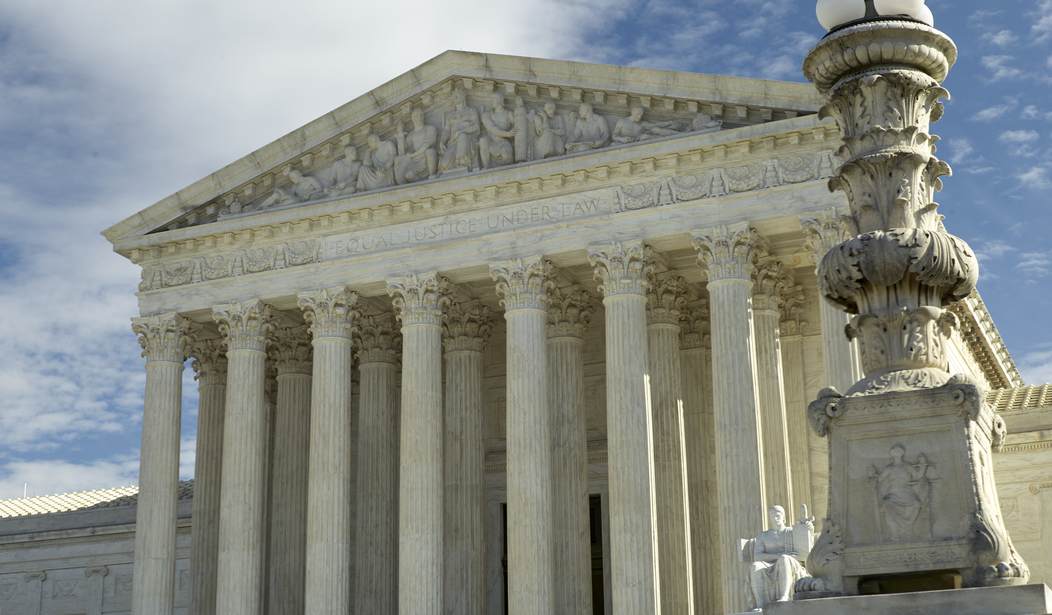
This past Friday the Supreme Court reaffirmed two other portions of that very same Amendment so maligned above, our First, that had been suspended via emergency law in California. To be clear, both the right to peaceable assembly and the practice of religion were both restricted in one of our most populist states here now in April 2021. While Friday’s ruling, only 5-4, was the right answer, the damage to those citizens and their relationship with the state is forever altered.
The public health experts whose rule we’ve lived under for the past year are now taking a similar tact as the legislators, seeing their messaging refract off an unwilling public, and working with corporations to tamp down on speech they find troublesome.
Many in our expert class blame inflamed rhetoric as a driver of the instability of our current era versus as a natural soundtrack to it. They see – from their high perch – a gullible public whipped into a dangerous frenzy. That’s what those hearings were about. It doesn’t matter which side of the bench they were on, the legislators and the tech CEOs who will hire them as lobbyists in a few years contribute to the same result: top-down control.
Yet despite the elite pretension at the heart of much public-facing Congressional inquiry, the risk we incur from the wildly populist and sometimes revolutionary rhetoric currently floated in our town squares is real. It should be said that much of the objectionable language they fear – that of their citizens – has been used to justify actual calls for violence against police officers amidst a string of police assassinations and casualties, and against our federal buildings in Portland and DC. It should also be said that much of what circulates is inaccurate or misleading, as political rhetoric ever was. The alarmists are right this time around.
However, the solutions these legislators are proposing can easily be summed up: limit the First Amendment by proxy. What our politicians are saying without realizing it is that they believe the Bill of Rights too dangerous for our times. We need to reject that, and their proposals, with vigor. America does face a real risk of further political violence, accept it. The alternative concedes defeat in advance. It’s a revolution by other terms, regardless of how well preserved the parchment in the glass showcase remains.
We’re struggling with this at the same time that we struggle with that very next amendment in the wake of another round of mass shootings. What is the acceptable amount of restriction on gun ownership in an era where we suffer these terrible, shock-inducing events? How do we maintain the legacy of rights we have been given when the cost seems so high? That’s really the question the gun control advocates are asking: how much pain can we bear? When we call gun ownership a fundamental right, we mean that literally: our nation would not have been founded but for the possession of arms by a confident citizenry. What tradeoffs to that right are we willing to accept to prevent real pain and danger in our communities? Gun control advocates may come up with clever ways to deflect from that, but the core of each of their proposals is a limitation on freedom, freedoms that Biden couldn’t help but admit he doesn’t see as absolute and, hence, ultimately subject to the whim of experts.
Similarly, our Fourth Amendment prevents unreasonable search and seizure, and yet many of us supported the idea of young men being stopped and frisked absent probable cause. There was in fact a cause, just one left unstated: these men were statistically likelier than others to commit crimes, and these policies were effective in preventing crime in dangerous neighborhoods. Just at the cost of those men’s constitutional rights is all, and we celebrated this for decades as part of broadly supported tough-on-crime policies.
We are the recipients of a bill of rights, amendments that fortified and formalized powers which we already possessed. But also, a responsibility that lives in the present tense. Our rights are inalienable, that means we should not be lightly separated from them, even when those rights result in pain and frightening cost. If we consistently find ourselves supporting curtailments to our rights, if we decide that the Bill of Rights is too dangerous for the times, if we are in such a state of domestic state of volatility that we can’t handle even rhetoric, then we are a generation not up to the most essential task. We inherited the Bill of Rights, it’s our turn to carry it.
Join the Conversation
VIP members get the ability to comment on articles.