





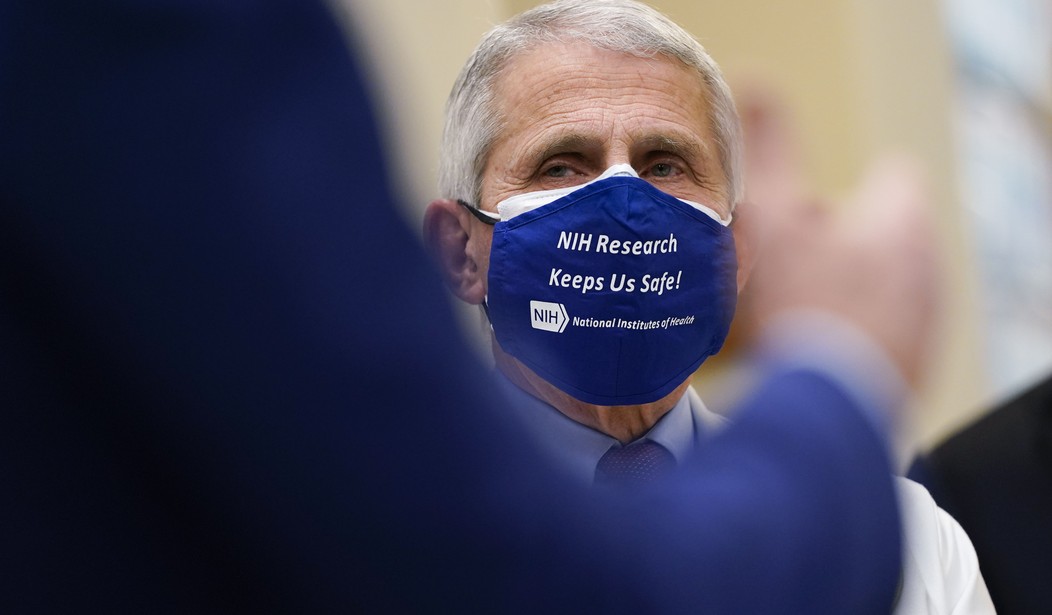
On May 1st, the National Institutes of Health (NIH) made a decisive and long overdue move to protect American science and taxpayers: halting nearly all new research grants to foreign institutions.
The decision announced in a quiet policy update is already sending shockwaves through the global academic community. But let’s be clear: this is a significant win for the American people and a bold example of what it means to govern with an America First agenda. Finally!
Under President Donald J. Trump’s leadership, America is once again prioritizing its own workers, researchers, industries, and intellectual property. For too long, taxpayer-funded science has been outsourced to foreign laboratories and universities, including in nations that pose strategic threats to the United States. Those days are coming to an end.
The NIH, America’s premier biomedical research agency, doles out more than 45 billion annually in grants. Historically, a sizable portion of this funding has gone to institutions outside the United States, including research centers in China, Iran, Russia, and elsewhere. That is right, American taxpayers have, in some cases, been bankrolling the laboratories of foreign adversaries. It is outrageous, dangerous, and entirely incompatible with national security.
The decision to pause new foreign collaborations is not about isolationism or anti-science sentiment. It is about accountability, transparency, and protecting the interests of the American people.
We have seen time and time again how foreign regimes exploit open research environments to steal sensitive data, intellectual property, and scientific breakthroughs, often funded by U.S. grants. This was not hypothetical. The Trump administration’s Department of Justice previously uncovered dozens of cases of foreign researchers, especially those affiliated with the Chinese Communist Party, failing to disclose ties to their home governments while receiving NIH funding.
This policy correction is long overdue, and it could not come at a more critical time. After years of fallout from the global pandemic, trust in the integrity of international scientific collaboration has plummeted. Americans watched in horror as the Wuhan lab leak theory was dismissed by the media, only to be later deemed a credible explanation for the origins of COVID-19.
That lab received NIH-linked funding. How many red flags does it take before we stop writing blank checks to researchers in authoritarian states?
The NIH's new stance does not prohibit all forms of international cooperation. Existing grants are not immediately affected, and American researchers can still collaborate with foreign colleagues. But the days of automatic overseas payouts from the U.S. treasury are over. That is common sense. It is also how most other major countries treat their national research funding: they invest domestically, develop local talent, and protect their innovations. The U.S. should be no different.
Critics will inevitably scream about “scientific nationalism,” as if putting Americans first in American-funded research is some kind of crime. But that’s not what this is about. It is about fairness and national priorities. There are countless American universities and research centers, from state schools to land-grant institutions to historically black colleges, that are underfunded and overlooked. Why should researchers in Beijing or Tehran get a cut of U.S. funds while our own labs are fighting for scraps? It doesn’t make sense.
President Trump understands this dynamic better than any modern leader. He has always made clear that America First does not mean America Alone. It means we lead by investing in our own people, defending our own interests, and standing tall on the world stage without being taken advantage of. Whether in trade, defense, or science, the mission is the same: stop subsidizing those who undermine us.
Under Trump’s first administration, major reforms were launched across the NIH and other federal research bodies to root out foreign influence. That work is continuing now and gaining momentum. This NIH policy is not just a bureaucratic update. It is part of a broader repositioning of American science: one that values sovereignty, security, and smart investments over feel-good globalism.
It is also a wake-up call for academia. American universities must stop treating foreign funding as a sacred cow and start engaging in due diligence. It is no longer acceptable to shrug off questions about dual affiliations, backdoor funding, and conflicts of interest. Institutions that want federal support need to prove they can protect it and the intellectual capital that comes with it.
America will continue to lead the world in science and innovation, and we will remain a magnet for the best and brightest. But we are going to do it on our terms.
The NIH’s decision is more than policy; it is a statement of principle. American taxpayers have a right to expect that their money will be used to advance American interests, not handed out to those who may seek to undermine them.
Dr. Isaiah Hankel, Ph.D., is the CEO of Overqualified.com and a 3X Best-Selling Author.


Join the Conversation
VIP members get the ability to comment on articles.