





When President Trump moved to end diversity, equity, and inclusion programs across the federal government, many Americans assumed the DEI era would begin to collapse. His January 2025 executive orders directed federal agencies to terminate DEI mandates, programs, preferences, and activities, while also targeting illegal discrimination in federal contracting and education-related funding.
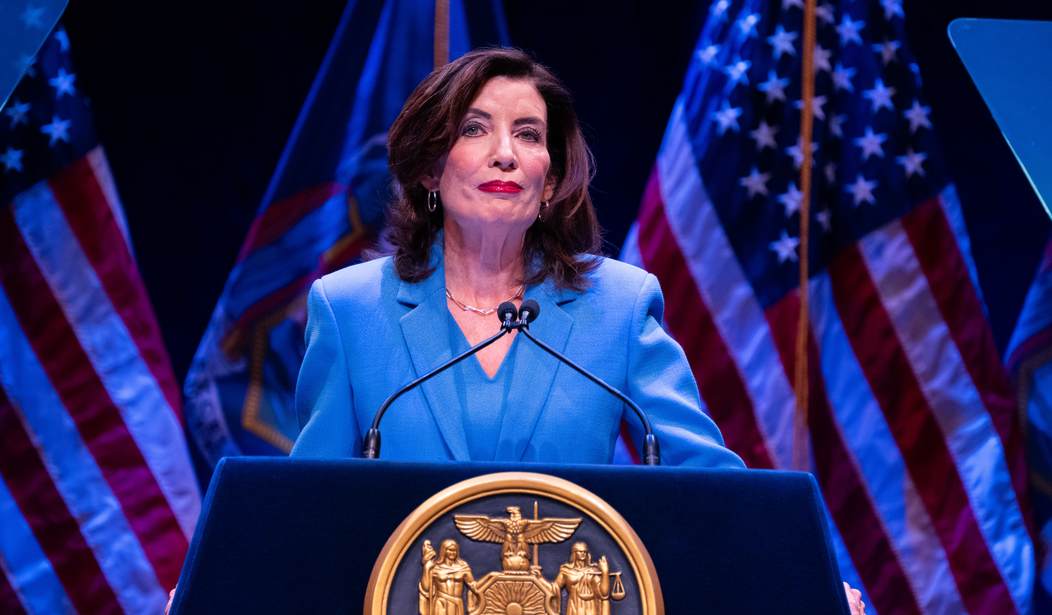
New York is moving in a different direction. The state’s 2026-2027 People’s Budget Framework, released by the New York State Black, Puerto Rican, Hispanic, and Asian Legislative Caucus, shows how DEI survives even after federal pressure. The language may shift from “DEI” to “equity,” “representation,” “culturally responsive” education, or “workforce diversity,” but the assumption remains the same.
Government officials begin by identifying demographic disparities, treating them as evidence of structural injustice, and then design policy around identity categories rather than merit, achievement, or equal treatment under the law.
The education proposals are especially revealing. The caucus supports $250,000 to develop “inclusive teaching resources and curricula” addressing “racial and cultural inclusivity” across K-12 classrooms. It also advocates for an $8 million investment to increase teacher diversity through recruitment training and retention programs.
New York’s Education Department already promotes a Culturally Responsive-Sustaining Education Framework that calls for schools to affirm racial, linguistic, and cultural identities, elevate historically marginalized voices, and empower students as “agents of social change.”
The framework also says structural inequity confers advantage and disadvantage based on gender, skin color, and other characteristics, and must be “fundamentally transformed.”
Students should learn American history honestly, including slavery, segregation, immigration, and every major injustice relevant to the country’s development. A serious curriculum can teach those subjects without telling children to view themselves primarily as members of identity blocs locked into permanent conflict. Education should expand a student’s mind, not train a student to see every classroom and political debate through an oppressor-versus-oppressed lens.
New York’s priorities are harder to defend because the state faces a real academic crisis. On the 2024 National Assessment of Educational Progress, only 31% of New York fourth-graders performed at or above proficient in reading, and only 26% of eighth-graders reached proficiency in math.
Those numbers should force a serious debate over instruction and accountability. Instead, New York leaders continue to allocate attention and taxpayer money toward identity-based initiatives that do not directly solve the basic problem: too many students cannot read, write, or calculate at grade level.
The same ideology extends beyond K-12 schools. The People’s Budget supports $4 million for the Associated Medical Schools of New York’s Diversity in Medicine program and $1.25 million for Diversity in Medicine scholarship programs. It also calls for a civil service exam study to identify “potential discriminatory effects on minority examinees” and proposes a Downstate MWBE Center to improve procurement diversity and enhance utilization goals for minority- and women-owned businesses.
The broader pattern is consistent. New York’s governing class treats unequal outcomes as proof that public systems must be redesigned around racial and identity balancing.
A fair civil service exam should measure whether an applicant can perform the duties of a public job. Medical school support should help talented students overcome hardship without reducing the opportunity to a diversity targets. Procurement policy should prevent corruption, lower costs, and ensure competent delivery of public services.
Once the government begins asking whether every institution “reflects” a population, merit becomes secondary to appearance, and public institutions become instruments of ideological engineering.
The generation now moving from K-12 schools into colleges has been trained to interpret public life through identity conflict. Campus protests after Hamas’ Oct. 7 attacks showed how quickly young Americans can be pushed into a simplified moral framework in which power, race, and colonial categories matter more than truth, terrorism, or human dignity.
Schools that constantly emphasize “systems of oppression” help normalize the habit of sorting every conflict into victim and oppressor categories.
No one should dismiss the value of students seeing successful adults from many backgrounds. But representation cannot become the central mission of public education. A classroom exists to teach literacy, numeracy, history, science, discipline, and the habits necessary for self-government. A hospital exists to treat patients. A civil service system exists to hire qualified public servants. A procurement system exists to serve taxpayers.
When every institution becomes a diversity project, core functions suffer.
New York’s 2026 People’s Budget shows that DEI is not disappearing. Ending DEI in Washington will not matter if states keep building the same ideology into classrooms where children learn how to see America.
New York should fund reading, math, teacher quality, and parental choice before spending more public money on identity politics. Students need knowledge, not another generation of government-funded lessons in resentment.
Editor's Note: Do you enjoy Townhall's conservative reporting that takes on the radical left and woke media? Support our work so that we can continue to bring you the truth.
Join Townhall VIP and use promo code FIGHT to receive 60% off your membership.


Join the Conversation
VIP members get the ability to comment on articles.