





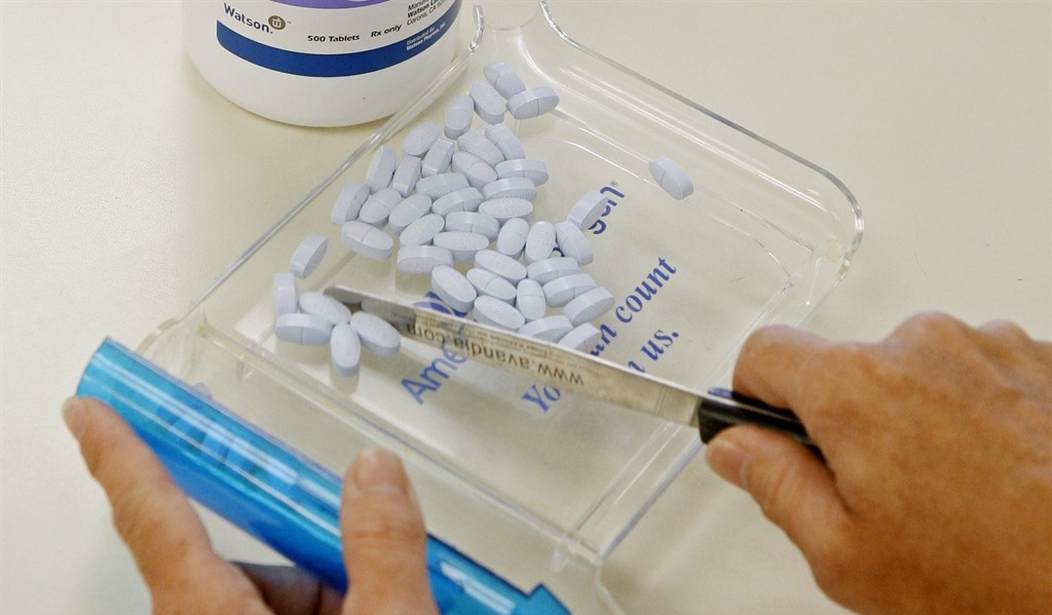
Americans’ prescription drug bills are on the rise. Total drug spending increased by nearly one-quarter in the past couple years. Much of that increase is on high-tech, specialty drugs -- such as those used to treat cancer, hepatitis, rheumatoid arthritis and multiple sclerosis. Drugs whose patents have not yet expired are sometimes very expensive; especially those recently approved. By contrast, most of the drugs Americans take are actually cheap generic drugs. Generics are cheap because they are no longer protected by patents and different manufacturers can compete on price. Consumers opt for a generic drug about 88 percent of the time when filling a prescription.
Drug makers have taken a lot of heat lately for the high prices of some of their newer drugs. They often counter that prices for most drugs are merely “list prices,” sort of like the sticker prices on new cars. The actual price of a brand drug, net of rebates, is often much lower. For example Sovaldi -- the breakthrough drug for Hepatitis C -- has a list price of about $1,000 per pill (you need 84 pills to cure Hepatitis C). But large purchasers, like pharmacy benefit managers (PBMs), large employer plans and large insurers, negotiate steep discounts that bring the wholesale cost of Sovaldi down to about $600 to $750 per pill. As is common in most markets, the wholesale price varies slightly from one purchaser to the next. General Motors gets a better deal for its employees’ drug plan than small employers with only 100 workers. This is also true for older brand drugs used to treat common conditions like hypertension or high cholesterol. To a lesser extent, it is somewhat true for generic drugs as well. Large firms get better drug plan discounts, most of which are passed on to consumers and workers in the form of lower retail prices.
Lately a few liberal politicians (and their left-of-center policy advisors) have begun a witch hunt to lay some of the blame for high drug prices on other stakeholders in the health care industry. They worry that drug plan managers are not passing all the discounts they receive on to their clients (i.e. employers and insurers) and consumers. As a result, proponents have suggested that employers (and their workers) could potentially benefit if PBMs were forced to reveal the wholesale prices they pay for drugs.
Economists, the Federal Trade Commission and even the actuarial consulting firm Milliman, Inc. are rather skeptical. This theory doesn’t make sense because no other competitive industry works that way. Regardless of the industry, wholesale prices are negotiated among private parties and are generally considered proprietary. For example, if all hardware stores knew the wholesale prices Home Depot negotiated, they would all bargain aggressively for the same price. The likely result is that wholesalers would set one uniform (higher) price and just stop giving Home Depot lower prices. Home Depot would no longer be able to leverage its buying power for the benefit of its customers and pass on discounted prices to consumers. Besides, just because I don’t know what Home Depot paid for a piece of lumber doesn’t mean I don’t benefit from the lower prices it negotiated with its wholesalers.
The benefits of greater price transparency primarily applies to retail markets -- rather than wholesale markets. Indeed, consumers often benefit when they compare prices at retail pharmacies. But I’ve never had a problem calling a pharmacy and asking what a given drug will cost me once the pharmacy knows my health plan. Indeed, I’ve probably ask a pharmacy tech the price of a prescription drug half a dozen times this year. By the way, it pays to confirm the price in advance to prevent being charged more than your drug plan’s contractual discount (which sometimes occurs).
Drug plan managers currently have a variety of ways to compete for the business of health plan sponsors, who are their clients (the insurers and employers). Some use pass-through pricing where they contractually agree their clients receive all drug discounts. Clients then pay a negotiated management fee for the services of a PBM. Other drug plan managers agree to accept lower management fees but are allowed to keep some portion of the manufacturers’ drug rebates, earning a small profit on each drug reimbursed. This is known in industry parlance as spread-pricing. Regardless of how the arrangement is negotiated, most drug rebates ultimately benefit consumers and workers.
Drug plans managed by PBMs use a variety of techniques to control costs for their clients and consumers. An estimated 70 percent of Americans have drug benefits through an insurer or employee health plan. Relatively few patients are unable to afford their medications. Arguably, much of the reason has to do with competition. According to industry data, nearly one-fourth (23 percent) of retail prescriptions are fully covered by insurance and requires no copayment by the patient. An additional one-third (34 percent) cost the patient $5 or less. And three-fourths (78.6 percent) cost the patient $10 or less.
The bottom line. Some drugs are expensive because they are new; others because they are breakthrough therapies. However, most drugs are a great value. When consumers walk into their pharmacy, most can rely discounted prices negotiated on their behalf. Passing poorly-thought out regulations on drug plans will not lower what Americans pay for drugs, but could increase them by reducing the ways drug plan managers are allowed to compete on health plan costs.

Join the Conversation
VIP members get the ability to comment on articles.