
Twenty-two Democrat states have sued President Donald Trump’s administration over its policy to avoid giving green cards to non-citizens who will likely rely on taxpayer-funded welfare.
Michigan Attorney General Dana Nessel has joined 21 other states and the District of Columbia in suing to halt the Trump administration's new public charge rule.
The new Department of Homeland Security policy would give immigration officers broad discretion to deny green cards based on use of public benefits.
The states have asked the U.S. District Court for the Southern District of New York to declare this rule unlawful.
A “public charge” means a person who is likely to become primarily dependent on the government for long-term subsistence. In 2022, the federal government issued a rule limiting public charge determinations to cash assistance for income maintenance or long-term institutionalization at government expense.
How quickly it shifts from “noncitizens can’t get welfare” to “it’s illegal not to give foreigners welfare” https://t.co/3xjf4xxj27
— Kevin DeAnna (@VDAREJamesK) September 14, 2026
The Trump administration’s new rule, taking effect September 18, would let immigration officers count nearly any means-tested public benefit, used for any length of time, against an applicant.
Democrats literally SUING to force American taxpayers to pay for welfare for non-citizens. Campaign issue if there ever was one. https://t.co/FkQyQTWFXL
— Scott Jennings (@ScottJenningsKY) September 19, 2026
The rule also allows immigration officers to consider some benefits legally used by family members whom the applicant is legally obligated to support.
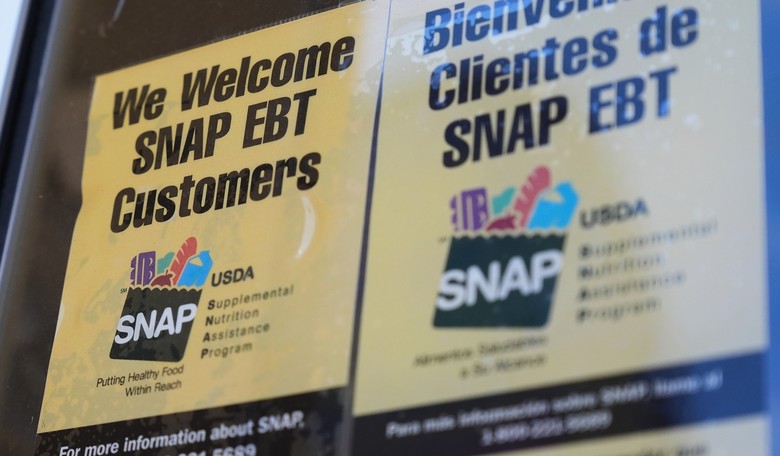
DHS estimates that disenrollment or forgone enrollment resulting from the new rule could reduce federal Medicaid and CHIP transfer payments to the states by about $4.05 billion annually and federal SNAP transfer payments by about $1.02 billion annually.
Can we talk about the fact that Democrats just sprinted into court to stop President Trump from enforcing a 144-year-old law that says you don’t get to live here if you’re going to live off American taxpayers?
— Kate (@kate_p45) September 14, 2026
They’re literally suing to keep the welfare tap open for people who… https://t.co/cEYQLmqw9N
Attorney General Nessel and the coalition argue that the new rule violates the Administrative Procedure Act.
The attorneys general are asking a federal judge to declare the 2026 public charge rule unlawful and vacate it, protecting states and their residents from its unlawful harms.
Preventing non-citizens from immediately drawing on government welfare seems like common sense to most Americans... pic.twitter.com/LXeZ2VnJU4
— Scott Jennings (@ScottJenningsKY) September 15, 2026
Joining Attorney General Nessel in filing this lawsuit are the attorneys general of California, Colorado, Connecticut, Delaware, the District of Columbia, Hawai’i, Illinois, Maine, Maryland, Massachusetts, Minnesota, Nevada, New Jersey, New Mexico, New York, Oregon, Rhode Island, Vermont, Virginia, Washington, Wisconsin, and the Governor of Pennsylvania. The lawsuit was filed alongside a coalition of cities and counties led by the City of New York.